ABA Best Blawgs 2011 – Would You Nominate Us?

We’ve been doing this blogging thing for about twenty months now, and we’ve enjoyed bringing you legal news and irreverent commentary on products liability issues. One of our proudest moments here at Abnormal Use was when we were included on the ABA Journal‘s annual list of the 100 best legal blogs last year. We very much appreciated the support of our readers who nominated us for inclusion on that list. Guess what?  The ABA Journal is now seeking nominations for this year’s list.  We humbly request that you, our dear readers, nominate us for the honor again this year.

You can do so by clicking here and briefly completing the very short nomination form. It should take only a few short moments to complete.

Be sure to tell them what you’ve liked about Abnormal Use this year (as the folks at the ABA Journal are looking for specifics). So far, we’ve had a pretty good year, if we do say so ourselves. We’ve continued to bring you the latest state and federal legal news and case commentaries in the products liability field.  We have interviewed a number of intriguing law professors, practitioners, and Hollywood celebrities (including the writers and producer of the 1991 film Class Action and even Mark-Paul Gosselaar and Breckin Meyer of TNT’s “Franklin & Bash” TV show). We offered some critical commentary on Hot Coffee, the would-be documentary film by plaintiffs attorney Susan Saladoff, which earned us shout-outs from both The New York Times and National Public Radio.  In March, Scientific American picked up a story we did on a series of predictions made in 1931 about the year 2011. We even came up with a comprehensive list of songs about attorneys and judges and authored what we thought was a pretty darn funny April Fool’s Day joke on the Star Wars prequels.  And, of course, each Friday, we have brought you a different legal themed comic book cover (which, you might not realize, is actually pretty difficult, as finding all of those legal comic book covers is sometimes like finding a needle in a haystack). We’ve even set up a page on Facebook. All of this we have enjoyed doing immensely.  Throughout this enterprise, we have also made a number of good friends in the legal blogosphere.

Which brings us back to our humble request for a nomination. Take a look at the nominating form and the ABA Journal‘s brief guidelines for submission.  If you enjoy the commentary we offer here and would like to support us in this endeavor, we would very much appreciate it. Nominations will be accepted until September 9.

Friday Links

Above is the cover of The Perry Mason Mystery Magazine #2, published way back in 1964. We’re not entirely certain what is occurring on the cover of this issue, but we suspect there might be some questionable “lawyer as witness” issues presented to the court. In fact, if that’s Perry Mason kneeling over the body before the police arrive, then might Mason himself be a suspect? Wouldn’t that be the perfect crime? No one would suspect him, primarily because he’s Perry Mason! We’re just supposed to take his word that he’s an innocent passer-by? (See our previous mentions of Perry Mason here and here).

University of St. Thomas law professor Mark Osler of the Osler’s Razor blog digresses from the discussion of law to talk about something far more important: Bruce Springsteen and Patti Smith and their “Because The Night” collaboration. (In other Springsteen news, a fan recently paid $611 for the first issue of the Springsteen fanzine Backstreets, first published in 1980. Finally, in yet another Springsteen news story this week, it appears that Springsteen and Billy Joel may be able to reclaim ownership of some of their songs from the 1970s.).

Back in July of 2010, we remarked upon the Vampire Weekend lawsuit. Remember that? The band’s second album, Contra,  featured a 1983 photograph of a very preppie model on its cover, but apparently, there was an issue of whether the model ever signed a release for that photograph. Litigation ensued.  Well, according to reports, the band settled out of the case, although the band still maintains a claim against the photographer in the suit. We bet they won’t be using a cover model on their third LP.

In case you were in doubt,  you cannot win punitive damages against a dead person in Iowa.

If you like old photographs of forgotten places and times, you’ll love the Shorpy photoblog, which posts high resolution photographs, usually 100 years old or older. Most of the time, there are lots of photographs of New York City and Washington, D.C. and place like that. However, this past week, the site posted a photograph taken in February 1913 in Bluffton, South Carolina, just a few hours from our Columbia office. Take a look here to see what it was like to toil in the oyster business in South Carolina 98 years ago.

The bloggers at The Pop Tort are taking a vacation for the remainder of the summer. Alas.

Kudos to our own Luanne Runge, who was recently elected as the 2012 Chair-elect of the Greenville Chamber of Commerce. She will serve as Chair in 2013. Congratulations also to our own John T. Lay, Jr. (of our new Columbia office, in fact), who was recently appointed Chair of the Business Litigation Committee for the International Association of Defense Counsel. For more information, please see here.

Don’t forget! You can now access Abnormal Use on Facebook.  To do so, click here.

of Luanne Runge, a shareholder in the law firm Gallivan White & Boyd, P.A., as 2012 Chair-elect of the Greenville Chamber by the organization’s Board of Directors. She will serve as Chair in 2013

Attorneys and Google+

Attorneys, save for a small cadre of early adopters, are typically slow to adapt to new technology and social medial utilities.  Accordingly, it may be some time before many practicing attorneys make their way to – or even hear of – Google+ (although invites are already being called “the hottest ticket in law firm marketing”).  You may have seen some of the buzz regarding Google+, and perhaps you were initially dismissive in light of the complexities and/or confusing qualities of Google’s other recent social media platforms, such as Google Wave or Google Buzz (which turned out to be quite a dud).  However, Google+ is the search engine giant’s attempt to compete directly with Facebook by establishing its own social network, but it’s also more than that.  Already, a number of attorneys – mainly those interested in legal technology, social media, or the next big thing – have migrated to Google+, turning it into both an interesting place for the discussion of legal technology and an echo chamber of sorts. In fact, the biggest challenge at this point seems to be convincing potential users to migrate to yet another social media platform.

If you use Facebook, Google+ will seem familiar to you, although it appears to be a bit less aesthetically busy.  The chief difference between Facebook and Google+ is that Google+ starts with the assumption that users have different sets of friends with whom the user will want to share different pieces of information.  In essence, it acknowledges that most true of truisms:  we all live in many separate worlds, and we don’t like for those worlds to collide.  From the very moment you join, you can separate your work friends from your college buddies and so forth.

Google+ does this by establishing what it calls “circles,” user groups to which you must assign those with whom you wish to connect using the site.  For example, you can establish a circle called “family” and assign relatives to that circle.  Similarly, you can create circles centered around interests groups such as law, technology, or even music or sports.  (You can even create a circle for those that you wish to mainly ignore.). When you elect to post something to Google+, you must decide which circle to which you will send the post.  Accordingly, a post sent to one’s sports or family circle will not be published to any other circles.  Users can of course send a single post to multiple circles, one circle in particular, or even one user in particular.  How does this affect attorneys?  Well, for one, it allows us to more easily discuss the law and legal issues on their social networking profile without pestering those who are not interested in that subject matter.  Those of us who use social media realize that there are many different “friends” with whom we have connected who may not wish to learn about the latest legal issue.  One can create a circle called “law” and share legal issues only with that circle and spare one’s remaining friends from any such discussion. This may be easier than maintaining separate personal and professional profiles.

How does this differ from Facebook (which, as you know, we here at Abnormal Use recently joined ourselves)?  Well, Facebook allows one to create different groups and control the level of information that is shared with those particular groups.  However, Facebook did not start with that ability as a core function.  When one becomes friends with another on Facebook, by default, that friend can see all of your information unless you adjust to private settings or assign that user to a particular group that limits the profile information that can be seen.  Further, if you’ve already accumulated hundreds and hundreds of Facebook friends, you’ll need to create certain privacy settings and add each friend individually to each desired privacy setting. That could become quite a hassle. With Google+, when you confirm a connection with another user, you must assign that user to a particular circle or circles as part of the connection process. It’s easier, in part, simply because Google+ is new.  However, Google+ seems to have been designed to ameliorate the “worlds colliding” dilemma, while Facebook has had to retcon itself to address that concern.

As we noted above, the biggest challenge for Google+ is for people – many of whom use multiple social networking utilities – to bring Google+ into the routine.  We’re currently struggling with that, as we already use Twitter, Facebook, and LinkedIn, but the (relatively) new Google+ iPhone app may make that a far easier task. In sum, Google+ is worth investigating.

Abnormal Interviews: Ernest Svenson a/k/a Ernie the Attorney

Today, we here at Abnormal Use continue our series, “Abnormal Interviews,” in which we conduct brief interviews with law professors, practitioners and other commentators in the field. For this latest installment, we turn to Ernest Svenson of the Svenson Law Firm.  He’s a New Orleans attorney and author of the old school law blog, Ernie the Attorney, which began in 2002. As a longtime legal blogger, he knows quite a bit about legal technology, blogging, and social media, so we thought we would pick his brain about those topics. He was kind enough to agree to an interview.

1. You’ve been a legal blogger since 2002. What is the biggest change you’ve noticed in legal blogs since that time, and is it for the better?

The biggest change in law blogging has been the explosion in the number of law blogs and the topics covered. Definitely a wonderful development, in my view. Lawyers are powerful information processors. We can output and consume prodigious amounts of information, and we can parse information for reliability better than most other professionals. Not all, but most.

When I went to law school law reviews were a staple source of new legal analysis, and I was fortunate enough to be an editor of the law review at my school. I have a very strong appreciation for how intricate the process was to publish a law review, especially how long it took. Word processing tools were complicated and expensive, and distribution wasn’t cheap either. Now a law professor who wants to comment on a new legal development can bang something out in a few days, or even a few hours, and upload it to his or her blog where it’s instantly available to anyone with a computer and an internet connection. To me, this is an amazingly beneficial development.

2. What’s the next big thing in social media that attorneys should be aware of?

Google+ seems to be hot, but I’m not sure that it is of high value to attorneys. At least not yet. Frankly, I think that attorneys are still struggling to assimilate some of the “old things” in social media. Divorce lawyers are probably the most keenly versed in the implications of social media in litigation, especially Facebook. But social media will have implications in many spheres besides just litigation.

Still, if lawyers want something to focus on I’d say “geo-location” tools like Foursquare or Facebook Places. As more people buy and use smartphones with GPS capabilities, we’ll see more social networking platforms that leverage information about where you are. This can be good for users (if they want to find a nearby place to eat or buy gas) or bad users (if they inadvertently reveal where they are when they intended to conceal their location, or lie about it). But, whether you view geo-location as good or bad, you need to pay attention to it because it will inevitably be more prevalent.

3. These days, there are many, many social media platforms, such as Facebook, Twitter, LinkedIn, and now, Google Plus. How can attorneys maximize their use of social media without becoming overloaded or spreading themselves to thin with so many sites?

Information overload has two components: output and input. Mostly people fret about receiving too much information. I agree with Clay Shirky (the NYU professor and prominent speaker and author) that we don’t have an “information overload” problem so much as we have a “filter failure” problem. We need to find better ways of filtering inbound information. My main tools are: (1) RSS readers, (2) Twitter and (3) trusted agents (which are really just sub-filters that feed into my RSS Reader).

For information that one outputs, again, there are tools. I have three blogs, or four, if you count my law firm website, and just as many Twitter accounts and Facebook pages. If I had to login to each of those places and post stuff I’d never get anything else done. I use a service called SocialOomph that lets me dump things into buckets that then get parsed out on a regular schedule. Discovering this tool was a boon to my workflow and has eased my stress at the same time that it gives the impression of increasing my output.

4. What do you think is the most overlooked social media utility for attorneys? Why is it overlooked?

Twitter. Before Twitter appeared I spent a lot more time with my RSS Reader, constantly tweaking the information stream so that I could get a strong mix of opinions and viewpoints as well as breaking news. Twitter now supplies that to me with virtually no tweaking, and I can gather that same information as easily on my smartphone as I can on a computer.

Lawyers, and others, tend to dismiss Twitter by saying “I have nothing to say on Twitter.” Fine, but many people that you would find interesting do, and you are missing out on an efficient way to tap into those opinions by ignoring Twitter. Sure, you have to curate your Twitter feed to capture useful views and not shallow ones. But that’s not as hard as most people think, and so they stick to gathering news from traditional sources which have filters to be sure, but filters that are preset for mass markets.

5. As the general public increasingly uses the Internet and social media to communicate, how do you predict that state bars will react to the popularity of this social media among attorneys?

State bars are not as behind on social media as many lawyers think. The Louisiana Bar, my state bar, has a Twitter feed and a Facebook page. Other local bar associations have adopted social media as a cheap and yet effective way of communicating with its members. I predict that social media will be embraced by all bar associations eventually. Proprietary communication methods seem useful, until you realize that getting people to adopt a new communication platform is harder than herding cats. Facebook and Twitter may have funny names, but if more than a half a billion people know how to use those tools it makes sense to use them to talk to your constituents.

6. How can smaller firms and solo practitioners utilize social media and legal technology to simulate the advantages of a larger law practice?

Small firms have advantages now that we are only just beginning to become aware of. Larger is not better unless being larger helps tackle and otherwise insurmountable problem. Small firms can market better now because of social media and the internet, and they can collaborate with other practitioners anywhere in the world. That which is digital moves more quickly to more place and can be analyzed more precisely.

A small firm that wants to become paperless can do so much more quickly than a large firm. And at a much lower cost. Large firms have bloated overhead and are more easily trapped into longer term contracts. All of those large costs have to be passed on to clients. Small firms can work smarter and take advantage of innovation faster, thereby lowering their cost and delivering better service to their clients. Obviously, this assumes that the lawyers in both small and large firms are of the same caliber.

I believe that the quality of lawyering is not dependent on how large a firm is, but rather upon how clever the individual lawyers are. Being clever in arguing the law is paramount, but—increasingly—so is knowing how to use technology to gather information better and faster. Technology is increasingly important in how we persuade. An old (but wise) judge recently admonished a group of lawyers in New Orleans that “jurors expect lawyers to present visually compelling evidence,” adding that any lawyer who says “I’m too old to fool with this technology stuff” when addressing a jury is basically saying “I don’t know how to read very well.”

I couldn’t agree more.

BONUS QUESTION:  What is your favorite pop culture depiction of legal technology?

Probably The New Yorker cartoon where a guy with a hood is robbing a bank and the teller informs him politely that “You know, you can do this just as easily online.

BIOGRAPHY: Ernest Svenson graduated from Loyola Law School in 1985 and then spent two years clerking for the Honorable Adrian Duplantier in the Eastern District of Louisiana.  He has practiced commercial litigation since then, first for a well-respected New Orleans law firm, and more recently as a solo practitioner.  He has started several weblogs, including PDFforLawyers.com and DigitalWorkflowCLE.com.  His Ernie the Attorney site (ernietheattorney.net) was chosen by the ABA Journal as one of the top 100 law weblogs two years in a row.  He believes that the practice of law is largely an “information processing business” and tries to help lawyers find more efficient ways to process their information. You can follow him on Twitter at @ernieattorney.


Friday Links

Depicted above is the cover to America v. The Justice Society #2, published way back in the halcyon days of 1985. We don’t recall this series all too well, although Wikipedia tells us that the narrative was set in an alternate universe and centered around the fabled Justice Society being placed on trial for treason for crimes committed during World War II. (The alleged crimes were apparently brought to life after the discovery of the diary of Batman who, in that universe, had been murdered). Note the apparent bailiff in the foreground drawing his weapon as the The Spectre threatens to disrupt the proceedings. The judge, not wearing a robe, holds his gavel while pondering his options.

Jared Wade at the Risk Management Monitor has a post of interest entitled, “No One Knows If Texting While Driving Bans Have Prevented Car Crashes.” Sure, it makes sense that they might (assuming motorists follow the law), but apparently, after a lengthy study by the Governors Highway Safety Association, no one found evidence in support of the proposition.

In light of the unveiling of Google+ (Google’s attempt to compete directly with Facebook in the social networking realm, for those of you not yet in the kn0w), Denise Howell of the Bag and Baggage legal blog analyzes its terms of service (as well as those of Google’s Picasa service) in this helpful piece. She ultimate concludes: “I’m not personally put off by the license Google asks users to grant, but it could use some clarification and adjustment on the issues of third parties and promotional use.”

Adam Waytz at Slate asks: “Will Americans be able to adapt to the autonomous car?” Back in October of last year, we here at Abnormal Use addressed the driverless car problem and what happens when technology outpaces the law. See here for that apparently forward thinking piece.

Oh, my. The Austin American Statesman reports: “The University of Texas filed suit today against actor Ryan O’Neal in an effort to seize a portrait of Farrah Fawcett by Andy Warhol that the university says was bequeathed to UT by the late actress.” We’d love to see the depositions that might be taken in that lawsuit.

We here at Abnormal Use like to think we have no fear.  Apparently, however, the pressure of opposing viewpoints has scared us into being “fair and balanced.”  According to Plaintiff’s attorney Ronald Miller, Jr. of the Maryland Injury Lawyer Blog, his criticism of our recent Hot Coffee commentary resulted in our lack of praise for the Chamber of Commerce funded documentary, InJustice.  Maybe Miller is right and we did feel pressure to exhibit our best Fox News impersonation?  Or maybe we just felt the need to note the film’s obvious biases?  We will let you decide.

Abnormal Interviews: Megan Erickson, Author of the Social Networking Law Blog

Today, we here at Abnormal Use continue our series, “Abnormal Interviews,” in which we conduct brief interviews with law professors, practitioners and other commentators in the field. For this latest installment, we turn to attorney and social media guru Megan Erickson of Dickinson, Mackaman Tyler & Hagen, P.C. in Des Moines, Iowa. Erickson runs the popular Social Networking Law Blog and practices in the areas of commercial litigation, appellate practice and business law. The interview is as follows:

1.  As the general public increasingly uses the Internet and social media to communicate, how do you predict that state bars will react to the popularity of this new technology among attorneys?

I’m not sure anyone can predict how state bars will respond, but I do think one of the biggest challenges will be in the area of professional regulation/ethics.  In particular, I think we’ve already seen problems arise when the people in charge of regulating others’ online activity are people who are themselves relatively unfamiliar with the technology they want to regulate.  Although people are increasingly accepting of Facebook and online networking, there are still plenty of people out there whose attitudes range from “I’m reluctant to use Facebook” to “Facebook is Satan.”  As we get more and more interactive online tools and Web 2.0 becomes more pervasive, the division between the tech savvy and the tech not-so-savvy becomes more pronounced.   Folks who use these tools find themselves increasingly engaged online and dependent on the technology; folks who inherently distrust the online world feel more compelled to restrict it.  Of course, an unrealistically optimistic view of social media is unhealthy, and there should be some rules in place.  I just think state bars should make a more concerted effort to ensure those rules aren’t being articulated by someone who (regardless of how well-intended) is ill-informed on the very technology being regulated.

2. How can, and how should, lawyers manage their time between work, more traditional marketing and business development, and the usage of social media?

It depends.  (How’s that for a “lawyer” answer?!)  I think every attorney approaches client development and marketing initiatives differently, and attorneys also have different demands and priorities at work and at home.  To the extent you find online tools a convenient, effective, and heck – maybe even fun way to market, then by all means, use them!  Some firms may find it beneficial to experiment a bit.  For example, does it make sense to change a quarterly practice group newsletter mailing to a quarterly e-newsletter?  The answer will depend on the audience preferences, the comfort level of the attorneys in making the change, and the practical realities of whether they have an effective way to make that transition.  Does it make sense for a practice group to give up a newsletter altogether and instead focus efforts on a blog?  Again, the answer should come only after thoughtful consideration.  Some groups may welcome such a change:  it may be easier to start writing a piece when you know you can keep it shorter; it may be more useful to an audience to receive a more concise post than lengthy article; it may be more convenient for some attorneys to try this without imposing a particular schedule or deadline – which may elicit more contributions or make it more convenient for the authors.  Of course, it may be a nightmare for others:  if the group doesn’t have anyone familiar with blog platforms, learning the technology may be unduly burdensome; some groups may not be able to make a blog work without a particular schedule or deadlines; some may spend an inordinate amount of time concerned with search engine optimization, and let SEO overshadow the substance.  If you’re running into too many challenges or you feel like a new technology just isn’t your cup of tea, don’t force it!  Some of us are more comfortable with speaking engagements.  Some of us prefer lunches with clients.  Some want to network at the golf course, while others dedicate themselves to community involvement.  Just as we all have different talents and preferences for traditional forms of client development and networking, we’ll all have different approaches to how we implement or supplement our marketing with social media and other relatively new online tools.

3. What advice would you give to lawyers who are consider using blogs and Twitter to market their firms and practices?

Drawing from my prior answer, you may want to experiment, but don’t force something that isn’t working for you.  Twitter may seem like the cool, new “thing” you’re supposed to be doing – but only participate if it makes sense for you.  If you choose to participate, learn the rules of the road.  You wouldn’t take prospective clients to the golf course without understanding the basics:  teeing up, how to use a ball marker, the difference between a wood and a putter, what to do when your ball goes in the water . . .  (I’m very familiar with that last situation, myself.)  Likewise, don’t use Twitter or other online tools without learning basic etiquette and lingo.  You’ll do yourself more harm than good if you skip this step.

4. Do you believe that blogs and Twitter are successful independent means of generating business, or are they now simply a necessary part of larger contemporary marketing efforts?

As my earlier answers suggest, I think the role of social media in a lawyer’s client development efforts has to be an individualized choice.  My personal opinion is that very few lawyers would be able to – or would want to – use only blogs and Twitter to generate business . . . if for no other reason than effectively using blogs and Twitter itself generates other marketing opportunities.  If your blog is popular, you’ll be asked to speak.  If you have interesting posts, you’ll be called for interviews.  And so on.  To the extent lawyers want to use blogs and Twitter, I think most will want to use them to supplement other marketing efforts – not replace them.

BIOGRAPHY: Megan Erickson is an attorney at the Dickinson, Mackaman, Tyler & Hagen law firm in Des Moines, Iowa where she practices primarily in employment law and also maintains a general practice including but not limited to commercial litigation, appellate practice and business law.  Megan is a frequent author and speaker on legal issues related to technology and social media.  She maintains the Social Networking Law Blog, and has been interviewed and quoted on legal implications related to social media in various publications and websites across the country.

Friday Links

With all the confusion about whether or not Superman is a state actor, we wonder whether or not he should be the one questioning an imprisoned Lois Lane in jail about her guilt or innocence in an apparent counterfeit license plate making scheme. Such is the dilemma posed on the cover of Superman’s Girlfriend Lois Lane #6, depicted above and published way back in 1959. Surely, though, with her knowledge of Superman and the Justice League, Lois could have found a more interesting – and more profitable – criminal enterprise than phony license plates. (Our favorite part: Note the stern face of the prison guard who is apparently glowering at the convict Lois.).

Earlier this year, we interviewed Hollywood showrunner Michael Sardo, the creator of USA’s dramady “Fairly Legal,” a show about a former lawyer turned mediator. Well, according to this post at Deadline Hollywood, it appears that the series is being creatively reworked for its upcoming second season and Sardo will no longer be as involved with the series. (Check out the full transcript of our interview with Sardo here.).

Over at The Business Law Prof Blog, Joshua P. Fershee pauses to reflect upon how some courts have referenced Bob Dylan’s lyrics in their opinions. Don’t forget: It was Dylan’s 70th birthday this past week. We can’t say we’ve ever encountered a court quoting Dylan lyrics, though again, we simply must direct you to the Fifth Circuit’s Talking Heads opinion from way back in 1987. (Oh, and for more Bob Dylan, since this recent blog piece from The New York Times ArtsBeat blog which revisits a 1966 interview with Dylan).

For fans of The Social Network film, Jim Pattilo has a post at the DRI Today blog entitled simply: “End of the Line for Winklevoss Twins in Facebook Appeal.”

Don’t forget: You can follow Abnormal Use on Twitter at @gwblawfirm. (In fact, check out our GWB 2.0 website for all of our social media endeavors as a blog and law firm.).

Friday Links

  • It’s Friday, so as per usual, we bring you legal themed comic book issues. We’re a bit troubled by the revelation in Action Comics #900, issued late last month, in which Superman appears to renounce his American citizenship. How can a comic book superhero so closely associated with the United States of America do such a thing? We’re puzzled. We’re crestfallen. The only other person we can think of offhand who attempted to renounce his American citizenship was Lee Harvey Oswald. That’s not good company. What is Supes thinking? How does this affect the citizenship of Clark Kent? What does Lois think about this decision? Friend of the blog Ryan Steans offers his analysis here, while our pals at The Law and the Multiverse blog analyze the legal issues here.
  • Like many, we’re fans of the late, great novelist David Foster Wallace who, sadly, took his own life two years ago. Just a few weeks ago, Wallace’s last, unfinished novel, The Pale King, saw publication. We’re thankful that one of our readers writes in to report of a products liability lawsuit reference in Wallace’s mostly complete tome:

    Your readers may be interested in an amusing products liability case which appears in the recently published posthumous novel The Pale King by David Foster Wallace. On pp 200-207, a case is described in which a man’s arm is trapped in the doors of a subway train he is trying to catch, the fatal injuries that result, and the subsequent wrongful death litigation. That litigation is described as incredibly complex and such issues are raised as –

    1. “The manufacturer’s specifications for the doors’ pneumatic systems did not adequately explain how the doors could close with such force that a healthy adult male could not withdraw his arm” resulting in the manufacturer’s claim that the deceased “failed to take reasonable action to extricate his arm,” and the ensuing difficulties in refuting this claim.

    2. And, of course, the ever important question of whom to sue, and the conflict arising when the plaintiff realizes “that our legal team’s major criterion for arguing for different companies’, agencies’, and municipal entities’ different liability designations involved those different possible respondents’ cash resources and their respective insurance carriers’ record of settlement in similar cases—that is, that the entire process was about numbers and money rather than anything like justice, responsibility, and the prevention of further wrongful, public, and totally undignified and pointless death.”

    Interesting.

  • Eric Turkewitz of the New York Personal Injury Law Blog predicts that the iPhone GS data controversy will lead to a flurry of subpoenas. He notes that the data would be handy in wreck cases and other contexts, as well. We wonder how receptive Apple would be to subpoenas from all over the country seeking such data. Will they be as resistant to such discovery as Facebook and other such sites? We shall see.
  • By no means is Abnormal Use a career site; we’re not here to help you find jobs. But friend of the blog Monica Handa offers these helpful tips for those seeking legal jobs in these trying and troubling economic times. As the hiring contact for her firm, Monica has seen her fair share of deficient resumes, so perhaps she knows a thing or two about the perils of job seeking and issues relating to such quests. An aside: We might add that when applying for a job at our firm, mentioning your adoration of Abnormal Use is a plus. It’s probably best that they don’t let us bloggers play any role in that process. Oh, well.

Friday Links

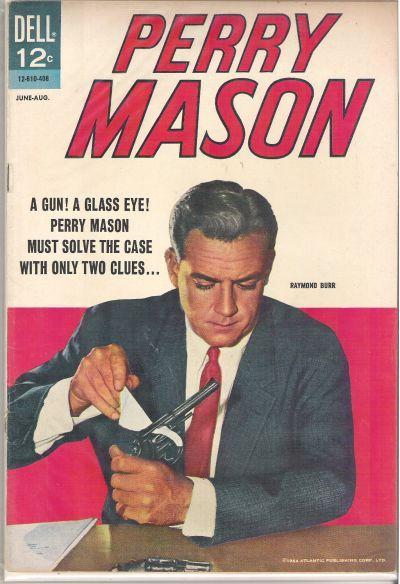
Depicted above is the cover of the Perry Mason Mystery Magazine #1, published way, way back in 1964. Perry Mason is, of course, the archetypal lawyer, but we’re not quite certain what he is doing with the firearm in his possession. The text on the cover tells us that the gun is one of only two clues Perry has to solve a case, but it seems like what he is doing is evidence tampering. Spoliation, anyone? And what did he do with the glass eye?

Steve Bradford at the Business Law Prof Blog has an interesting post on the ethical issues surrounding attorneys seeking colleagues’ advice on Internet listservs and email lists. Apparently, the Oregon State Bar recently addressed the issue. The only point the Oregon State Bar apparently neglected to address is why anyone is still using listservs in 2011.

We send our congratulations to Robert Wilcox, who was selected this week as the new dean of the University of South Carolina School of Law. Wilcox had previously served as the associate dean for academic affairs at the school.

Friend of the blog Jeff Richardson offers these thoughts about the 2011 ABA Techshow at his site, iPhone J.D. As huge followers of the latest technological trends, we sure wish we could have been there. Unfortunately, we could not make it this year. Alas.

Findlaw’s Decided blog has the latest on the ultimate fate of the appeal of the Winklevoss twins in their continuing legal dispute with Facebook. (Yes, yes, we saw The Social Network and dug it and its many deposition scenes, despite the inaccuracy of them.). Oh, and does any duo sound more like a pair of comic book villains that the Winklevoss twins?

Friday Links

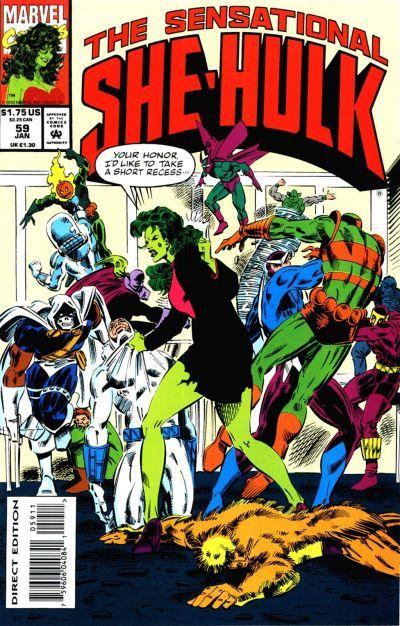
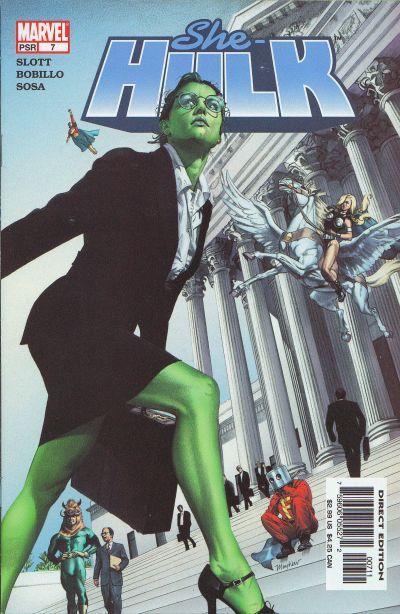
  • Believe it or not, but the Marvel Comics character She-Hulk is an attorney. Above, you’ll see the cover of The Sensational She-Hulk #59, published not so long ago in 1994, during which She-Hulk, clad in her courtroom attire, asks the court for a “short recess” so that she can dispose of the host of super villains who have appeared. (One wonders how they all bypassed the security at the courthouse entrance). Whatever the case, we suspect the request was granted by the trial court judge. She-Hulk’s Wikipedia entry describes her as a “highly skilled lawyer” who has “served as legal counsel to various superheroes on numerous occasions.” She apparently practices at the fictional firm of Goodman, Lieber, Kurtzberg & Holliway which, curiously enough, has its own Wikipedia entry. (Below, at the end of this post, you’ll find the cover of She-Hulk #7, published very recently, only back in 2006. Note that She-Hulk dresses up for hearings and walks up the courthouse steps just like real lawyers do!)
  • The ContractsProf Blog uses a clip from “Seinfeld” to illustrate the principles of Lauvetz v. Alaska Sales & Serv. d/b/a Nat’l Car Rental, 828 P 2d 162 (Alaska 1991). We encourage this method of legal instruction. As you know, we love “Seinfeld.”
  • You may recall that here and here we mentioned the case of Barbour v. Int’l Union United Auto. Aerospace & Agric. Implement Workers of Am., (4th Cir. Feb. 4, 2010) (PDF), in which the Fourth Circuit adopted the last served defendant rule in the removal context. Beware: that case is now no more. Brian Peterson of the West Virginia Legal Weblog reports that the Fourth Circuit, en banc, has issued a new opinion in the case and held that it will not adhere to the last served defendant rule after all. Rather, it has elected to follow the McKinney Intermediate Rule. See the new opinion here. [PDF].
  • Eric Goldman of the Technology & Marketing Law Blog writes about Badella v. Deniro Marketing LLC, 10-03908 CRB (N.D. Cal. Jan 24, 2011), a putative class action brought on behalf of “lonely and vulnerable men” who claimed they were tricked into using an online dating site. The court refused to dismiss all of their claims. Those are going to be some great depositions.
  • We must confess that we love it when Plaintiffs claim one thing in their lawsuits and entirely contradict themselves with posts and pictures on Facebook. This past week, that topic was apparently quite popular, with a story at MSNBC/Reuters and follow-ups here at Overlawyered and here at the Wall Street Journal Law Blog. While you’re off reading those reports, we’re just going to go set our Facebook Wall to private.
  • Deadline Hollywood, a widely read Hollywood blog, reported this week that pay cable giant HBO has bought the rights to “Hot Coffee,” the Susan Saladoff directed documentary about the Stella Liebeck McDonald’s hot coffee case. As you recall, we previously commented upon that film here. This, of course, means that the film will receive a much wider audience than it did at the Sundance Film Festival, where it premiered just a week ago . Writes Deadline Hollywood‘s Mike Fleming:

    EXCLUSIVE: HBO has closed a deal for Hot Coffee, the Susan Saladoff-directed competition documentary which focuses on how corporations have used the memory of outlandish legal verdicts as a way to press for tort reforms and avoid jury trials through arbitration on cases that actually have merit.

    HBO’s Sheila Nevins viewed the documentary after it premiered last Monday. I’m told the deal was mid to high six-figures. HBO licensed the film for broadcast and VOD for 2 years, and will afford the film a qualifying Oscar theatrical run before it airs on the pay channel. Preferred Content’s Kevin Iwashina brokered the sale. Carly Hugo and Alan Oxman produced with Saladoff.

    The film’s title refers to the famous case of a woman”s million dollar judgment from McDonald’s over a spilled cup of coffee. Saladin, a lawyer, focuses on other outrageous cases that illustrated where corporations were negligent or unresponsive. They include a case involving Halliburton, which housed a 19-year old worker overseas in a barracks with men and ignored her concerns. She was gang-raped.

    Although we caught some grief last week for pointing out Saladoff’s career as a Plaintiff’s attorney and longstanding ties to various “civil justice groups,” we stand by our post and look forward to see the film when it hits our television screens.