Colorado’s reasonable approach to distributor liability

One of the more interesting problems in products law is how to handle the middle man. If the retailer does not design or manufacture a product, but merely stocks its shelves, can he be liable to a plaintiff who is injured by the product? Different states handle the question differently.

In Colorado, unless the retailer is also the manufacturer of the allegedly defective product or a component of the product, it can’t be sued. In fact, a product liability suit cannot be maintained against a mere innocent seller of a defective product. Which begs at the obvious follow-up question: what makes a seller “innocent?”
The United States District Court for the District of Colorado was faced with just that question in the recently decided Zapien v. Home Depot, USA, Inc., No. 09-cv-02349-REB-BNB, 2010 WL 3522570 (D. Colo. Sept. 2, 2010). Home Depot rented a sewer snake to the plaintiff, who suffered injuries when it gave him a serious electrical shock. Home Depot filed a motion for summary judgment, claiming that it is an “innocent seller” under the terms of the Colorado products statute.
The “innocent seller” doctrine in Colorado, however, has a few exceptions. First, if the seller knows the product is defective, it is no longer an “innocent.” Second, if the seller alters the product, it is no longer insulated from liability (obviously, because it is no longer just a seller).
There was some tangential evidence in Zapien, based on some comments from a cashier at Home Depot, that the retailer knew that the sewer snake was defective, but the evidence was not allowed on appeal. As a result, Home Depot’s motion for summary judgment was granted.
If you didn’t build it, alter it, or know about it, you shouldn’t be held hostage by a plaintiff who, for whatever reason, can’t pin liability on those who may actually have been responsible for the defect. But if you, as a retailer, alter the product or know something about any problems it has, then it is reasonable that you should be at least partly responsible for any injuries stemming from the product. I acknowledge that “knowledge” is a slippery term that can be stretched, but the general theory is workable. Other states should take note and bring predictability back to retailer liability.

Manufacturer Remains On the Hook in EIFS Litigation in Texas

Since the 1990s, EIFS litigation has been a thorn in the side of the construction and insurance industries. Improper installation of EIFS (Exterior Insulation and Finishing System), sometimes called “synthetic stucco,” on homes across the United States resulted in a tremendous amount of litigation. Class action suits and individual litigation have been plentiful, with defendants often pointing the finger at each other as they ferret out responsibility for who must pay for the damages.

The Texas Supreme Court recently weighed in on some of these issues in Fresh Coat, Inc. v. K-2, Inc., —S.W.3d —-, No. 08-0592, 2010 WL 3277130 (Tex. August 20, 2010). The Court addressed the duty of a synthetic stucco manufacturer to indemnify a contractor that installed the stucco against claims of more than 90 homeowners who sued for structural damage, termite problems, and mold. The defendants settled the litigation with the homeowners, and the case proceeded to trial on the various claims that the defendants brought against each other. The jury awarded judgment to the contractor, Fresh Coat, for all damages requested against the manufacturer, K-2, Inc., which included indemnification for settlements that Fresh Coat made to the homeowners and to the homebuilder. The intermediate court of appeals in Beaumont affirmed the decision, with the exception of the amounts that Fresh Coat paid to the homebuilder. Both K-2, Inc. and Fresh Coat appealed.

In its appeal, K-2 urged the Supreme Court to rule that Fresh Coat, as a contractor for the installation of the synthetic stucco, did not qualify as a “seller” and that EIFS is not a “product,” such that K-2 would not have indemnity obligations arising under Chapter 82 of the Texas Civil Practices and Remedies Code. K-2 claimed that products placed into the stream of commerce and integrated into a house are transformed into real property and no longer retain their status as “products.” The Court disagreed, holding that a product is something distributed or otherwise placed, for any commercial purpose, into the stream of commerce for use or consumption. Here, EIFS was a synthetic stucco system made of component parts manufactured by K-2, that it was placed into the stream of commerce, and it was used in construction of homes.

K-2 further argued that Fresh Coat, as a contractor that obtained and installed EIFS, was not a seller. If Fresh Coat could be characterized as a service provider only, K-2 would not have a statutory requirement to indemnify. The Supreme Court held that Chapter 82’s definition of “seller” neither excludes a seller who is also a service provider nor requires the seller to sell only the product. The Court commented that its approach was consistent with the Third Restatement of Torts, which recognizes that a product seller may also provide services. As Fresh Coat provided the EIFS system and the services to install it, Fresh Coat qualified as a seller.

The Texas Supreme Court also ruled that the manufacturer’s statutory obligation to indemnify covers a settlement payment made by the contractor to the homebuilder, even where the contractor was independently obligated by contract to indemnify the homebuilder. The only exception under Civil Practices and Remedies Code Section 82.002(a)) to a manufacturer’s duty to indemnify sellers for losses arising out of a products liability action is for losses caused by the seller’s negligence, intentional conduct or other act or omission for which the seller would be independently liable. Because Fresh Coat made itself independently liable by contract, K-2 contended that it should not have to indemnify it. The Court held none of the statutory exceptions applied, leaving the manufacturer to bear the full loss.

"Made in China" References May Have Been Prejudicial to Jury

An important reminder: When Plaintiff’s counsel attempts to inject prejudicial statements into litigation, object. A failure to do so can be perilous indeed. In Wicklund v. Pacific Cycle, L.L.C., No. 08-CV-486-GKF-FHM, 2010 WL 3368924 (N.D. Okla. August 23, 2010), Judge Frizzell of the Northern District of Oklahoma considered whether repeated references by the plaintiffs’ attorney to the Chinese origin of the alleged defective product, a bicycle, was grounds for a new trial or relief from judgment. Counsel for the defendant, Pacific Cycle, argued that the plaintiffs’ attorney “repeatedly, deliberately and impermissibly played to the perceived anti-Chinese prejudice of the jurors, thereby irrevocably tainting the verdict.”

For instance, the plaintiffs’ attorney said, “Pacific Cycle has elected to buy cheap Chinese products rather than buying products made in the U.S.” In his closing, the attorney said that “‘Made in China’ are the three words that unfortunately have become somewhat of a concern in this country. Finally, he said:

You know, businesses that have chosen to export jobs to China for cheap labor, for cheap goods, I mean from a business side it’s understandable, but when you choose to do that, if you get quality control issues you have to pay when people get harmed from those. And that’s all that this case is basically about.

The jury awarded the plaintiffs $1,100,107.06 in damages, which did not include any punitive damages but represented $1 million over and above the actual damages, ostensibly for pain and suffering.
The court ruled that it could not award a new trial or relief from judgment because defense counsel had not preserved the issue by objecting at the appropriate times. Nevertheless, we find it a helpful reminder as to what is and is not permissible to state to a jury. A new trial may be granted when, as the court noted, “remarks about a case are made which the court believes may have influenced the jury to the prejudice of either party.” The test is “whether or not improper remarks made it reasonably probable that the verdict was influenced by prejudicial statements.”
The design and manufacture of products continues to become a more international endeavor; the “Japanese” car could be made in the next state, with parts from Germany, the United States, and France. When trying a products case, listen carefully for arguments and remarks which may play to perceived prejudices by members of the jury, and object at the appropriate times to call the court’s attention to the tactic and to preserve the issue on appeal.

Friday Links

Above, you’ll find the cover for Superman’s Pal, Jimmy Olsen #28, published way back in 1958, which depicts Jimmy Olsen as “The Boy Who Killed Superman.” Note that he is in a police line-up, presumably for identification purposes, though the police officer is already presenting the evidence against him. (We love that there is a label tied to a piece of Kryptonite noting that it is “Exhibit B,” even though Olsen has yet to be identified, much less indicted or brought to trial.). We’ll leave it to the criminal lawyers to opine on whether the officer’s asking “Where have you hidden [Superman’s] body?” constitutes a custodial interrogation. However, this being 1958, Jimmy would not yet have been afforded many of the protections fashioned by the Warren Court. Oh, well.

Speaking of comic books, after months and months of commenting upon silly and fun superhero/courtroom comic book covers in our Friday Links posts, we now learn that the Ivy League has taken an interest and created an exhibit on that very subject. Earlier this month, our friends at the Yale Law School Library debuted the exhibit, “Superheroes in Court! Lawyers, Law and Comic Books,”which is curated by Mark S. Zaid. If you find yourself in Connecticut, you must see this exhibition, which runs until December 16, 2010 . See here for some official information on the exhibit, including a handful of covers, some of which even we here had not previously seen. (Thanks to eagle eyed reader Ryan Steans for bringing this New York Times piece on the exhibit to our attention.).

Man, the Wall Street Journal Law Blog beat us to the punch with the Rolling Stones allusion in their piece on the Ninth Circuit’s striking down of a municipal tattoo parlor ban. South Carolina is no stranger to such issues, as it banned tattoo parlors until 2006, when the 36 year old prohibition, which had survived a constitutional challenge in the courts, was repealed by the legislature. For more on the Ninth’s Circuit’s recent ruling, see here, here, and here.

The Evidence Law Prof Blog analyzes a recent North Carolina case regarding the authentication of emails, still a hot topic, even after all of these years of email use.

Civility seems to be the issue of the week. The DRI Blog has a piece by Brett A. Ross entitled “Professionalism: It’s not Just for Kids Anymore,” in which the author notes that “as mature practitioners, we should know better how to respond to bad behavior by our opponents even though it often seems that is not the case.” Meanwhile, Lawyerist has “Are You Civil With Opposing Counsel?,” in which the author’s advice is “Stick to your guns and keep it civil. It will pay off in the long run.” And our pals at Overlawyered have this post, in which they analyze a recent scolding of uncooperative counsel by a U.S. Magistrate.

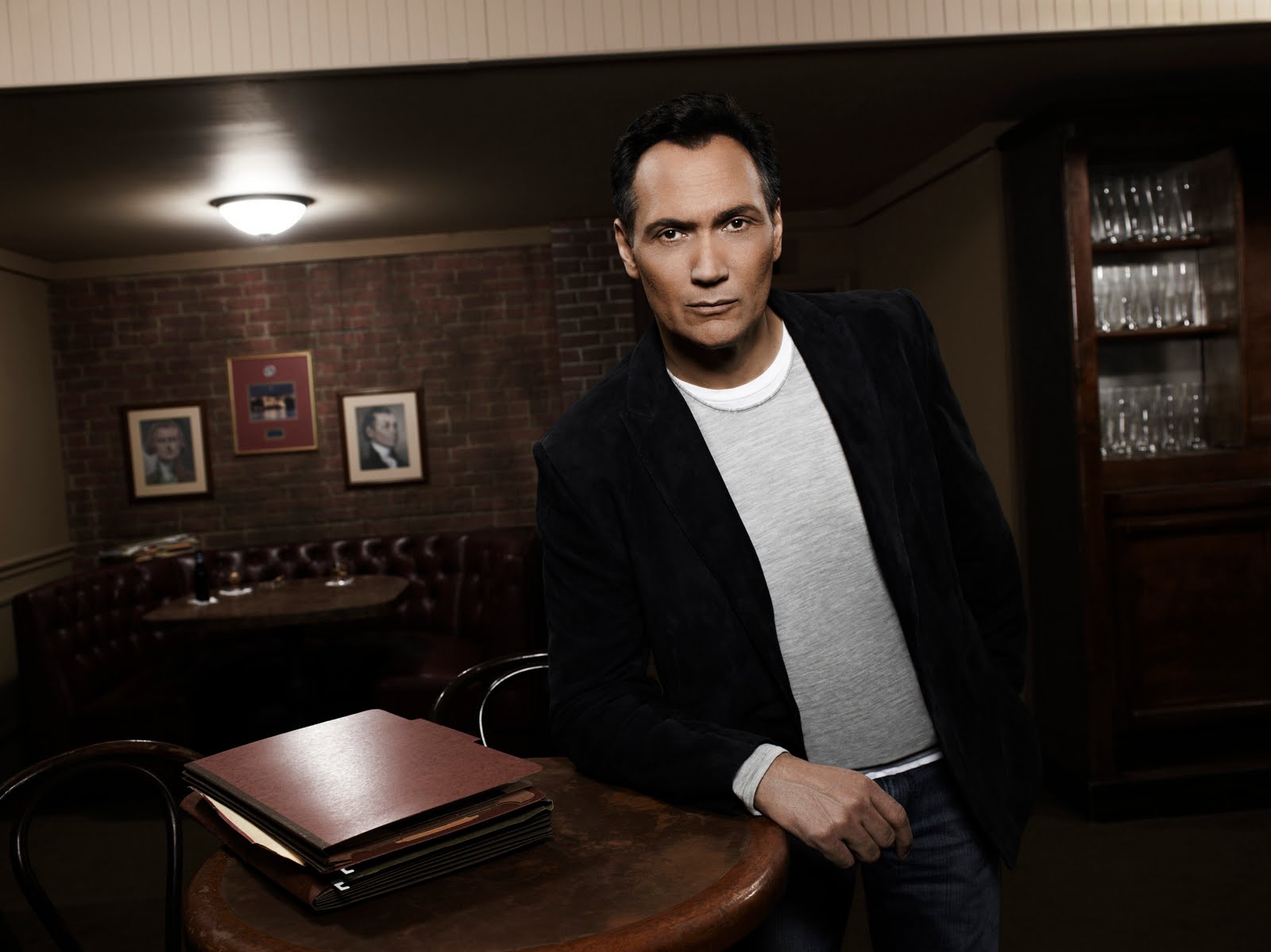
Yesterday, Kevin Couch, one of our intrepid bloggers at this site, posted his review of the new Jimmy Smits legal drama, “Outlaw.” Apparently, the show is about a U.S. Supreme Court Justice, played by Smits, whose frustration with the system causes him to resign his seat on the Court and go about righting wrongs and correcting injustices in the trenches. (It seems he was in a pretty good position to do that on the U.S. Supreme Court, but oh well, it’s television.). Our thought: It would have been much more interesting had this series been a direct sequel to “L.A. Law” and Smits was playing his old character Victor Sifuentes, who had somehow managed to make it all the way from Los Angeles to the nation’s High Court. Another potential benefit of that approach: Susan Dey cameos.

Finally, we learned this week that Bob Dylan, the immortal folk singer, the voice of his generation, will be playing a concert later this year in nearby Clemson. We’ve seen him before and walked away unimpressed, so we leave you with a piece from Seattle Weekly, entitled “Top 7 Reasons to Walk Out of a Bob Dylan Show.” (Full disclosure: we adore our CD of the 1966 “Royal Albert Hall” concert, but that show was some time ago.).

No Lifetime Appointment for Jimmy Smits in New NBC Legal Drama, "Outlaw"

Apparently, and unfortunately, NBC is determined to reboot its fateful 1980s series, “Knight Rider,” in the form of a new legal drama. You heard me right. Today, we here at the legal blog Abnormal Use review NBC’s new television show“Outlaw,” a heavy handed new lawyer show which premiered last night. As a series, it takes the aforementioned “Knight Rider” formula (unfortunately the 2008 version) and attempts to apply it to a would-be legal series. Sigh.

Before I lose the readership in this comparison, allow me some introduction and factual development. “Outlaw” is one of NBC’s attempts to return to scripted programming after “The Jay Leno Show” debacle. I was a bit skeptical of the premise when I read that Jimmy Smits portrays “former Supreme Court Justice Cyrus Garza, a playboy and a gambler who always adhered to a strict interpretation of the law until he realized the system he believed in was flawed.” But there’s always hope, however naive, that NBC will come up with a decent legal drama before the “Law and Order’ concept becomes too worn.

Here’s the plot summary: Cyrus Garza is “arguably the most conservative justice” on the Supreme Court. Cyrus has a problem because he feels like he has let down his dear old dad, a recently deceased lawyer-activist who championed liberal causes. After a one night stand with an twenty-something ACLU member, Cyrus realizes that conservatism is innately wrong, and before resigning his appointment, he grants a new trial to a convicted cop killer. Cyrus joins a law firm (at which Jan from “The Office” is the managing partner) and assembles a team who will fly all over the country righting wrongs perpetrated by our justice system. Cyrus then becomes the head lawyer on the defense team of the cop killer. His team discovers evidence not presented at trial establishing that the dead cop’s husband actually killed the cop. I will affirm that I in no way have embellished the plot. If this were not enough, Cyrus owes his bookie $250,000 and will have to pay at some point during the next three months.

Here’s the deal. As you can tell from my summary, the premise of the show is absurd. But as we’ve noted before, real life law practice can be pretty boring, so I’m not asking the show to be real. Legal Knight Rider though, is a bit much. The dialogue beats you over the head with the idea that Cyrus is sick of preserving a justice system at the expense of the innocent. He actually says things like “I’m hurting the people that I should be protecting.” By the end of the show, after Cyrus and company free the innocent man, it’s clear that “one man can make a difference.” The absurdity of the premise will likely mean the end of the show. Cyrus had his epiphany in episode one. He is now a crusader, a man of great moral fiber. What is left to do now? There’s no internal conflict in the protagonist. Trying to give Cyrus instant depth works against the longevity of Outlaw. And it promotes the same hackneyed legal plots. Moreover, there is no sense that there will ever be any real characters other than Cyrus. He has three lawyers and a private investigator that work under him, but the characters all seem a bit fungible. It’s possible they were cardboard cutouts, or to be less harsh, merely extensions of Cyrus himself, since even this champion of the people can’t be in two places at once or carry on an extended dialogue with himself. I would not be surprised if, at some point in the future, we discover that Cyrus has an evil twin, allowing Cyrus to carry on conversations with evil Cyrus. This would ensure that we all know that Jimmy Smits is the main character on the show.

From a legal standpoint, do you think there is anything questionable about the judge who essentially overturns a murder verdict becoming a lawyer for the criminal defendant? The show also asserts a stale take on jurisprudence, namely, that the court is not really an actor in our legal system. You kind of get the feeling that, without Cyrus preaching about the real meaning of justice, the judiciary would sit around for the next few years, throwing their hands in the air, not knowing what to do about all the terribly conservative legal precedent, and let a lot of innocent prisoners be executed. Thankfully, there is the Outlaw, who I presume to be Cyrus. Now judges everywhere will be able to take some steps to move our system forward. Yet again, one man can make a difference. The passivity attributed to the judiciary is too much. It takes the form of powerlessness rather than stare decisis. I don’t know anyone who thinks that the judiciary is powerless. But apparently Cyrus does, because after all, he quit his lifetime appointment on the world’s most powerful court to dispense some real justice.

That being said, this show isn’t nearly as bad as the freshman lawyer drama, “The Deep End.” To be reminded of why that show lasted 5 episodes or so, please revisit our initial review of that show here. But “Outlaw” isn’t really that good either. It’s obvious that NBC is depending on Smits‘ star power to carry the show. In fact Smits‘ bio on the cast page recites the phrase “critically acclaimed” about Smits or his prior work six times. Notice I said prior work. Will Smits enjoy the same success as had by Joe Mantegna, who spurred CBS’s 2002 Supreme Court drama, “First Monday” to an amazing 4-month, 13-episode run? Only time will tell. Meanwhile, I hope the writer’s will immediately begin to add something to this so-far bland show.

The pilot episode of Outlaw aired at 10 p.m. EDT on NBC. The episode was written by John Eisendrath and directed by Terry George. The cast includes Jimmy Smits (Cyrus Garza), David Ramsay (Al Druzinsky), Ellen Woglam (Mereta Stockman), Carly Pope (Lucinda Pearl), and Jesse Bradford (Eddie Franks).
Successor Liability Sinks Infomercial Tortfeasor

It’s difficult coming up with award-winning content every week. Perhaps that’s why we here at Abnormal Use have not won any awards. Not to be deterred, contributors at the blog scour the web for news and decisions that could provide the kernel of inspiration to set us on our way to winning the blog equivalent of the EGOT. (“30 Rock” premieres on September 23, with a live episode on October 14.) Today, we tread into the sensitive subject of infomercial products.

“In December 2005, James Bishop purchased a Ronco rotissiere oven which was designed, manufactured, marketed, and distributed by Ronco Corporation.” Kentucky Farm Bureau Mut. Ins. Co. v. Ronco Acquisition Corp., No. 2009-CA-001979-MR, 2010 WL 3515808 (Ky. Ct. App. Sept. 10, 2010) [PDF]. Unfortunately for the Bishops, their home burned completely in December 2007, and, even more unfortunately for the Bishops, Farm Bureau pursued a claim against Ronco, asserting that the Ronco oven caused the fire. I’m sure it’s awful having your home burn to ashes. It’s worse when everyone knows that you can’t say no to an infomercial.

Ronco asserts that its oven gives you access to fresh “healthful food [that] has never been easier to prepare.” The webpage also presents testimonials from people who have lost 20+ pounds after buying the oven. Since being a lawyer prevents me from believing anything that I see or hear, let me posit an explanation for this advertising. Consumer A drops $160 + S&H on an oven, and probably more with the purchase of the optional “Rib Basket,” which is “Great for 3 or 4 people.” Upon receipt of the oven, Consumer A realizes that in purchasing the oven, he has spent his food budget for the next two weeks and will be unable to actually buy anything to cook in the oven. By not eating for the next two weeks, Consumer A loses 20 lbs, entirely due to the fact that he purchased the oven. Adding to the absurdity is the notion that the oven’s 3-hour automatic timer allows the consumer to “spend less time cooking and have more time for your active lifestyle.” I’m just guessing that someone who is willing to sit and watch an infomercial, rather than do anything else, to the point where he would order the product, is probably not concerned about an active lifestyle. None of his friends would say that he is at the pinnacle of fitness. He may, in fact, have the nickname, “Rib Basket.”

Fortunately for us, this case has legs. While it may be hard to believe that the original Ronco Corp. went bankrupt, the successor corporation, Ronco Acquisition Corporation, assumed (according to this court) its potential liability in this case via an Asset Purchase Agreement. The Kentucky Court of Appeals then reversed the lower court’s grant of summary judgment to Ronco, and remanded the case. Hopefully, we can bring you more as the facts of this case develop. Until then, you may want to stay away from the oven and try the Pocket Fisherman instead.

South Carolina Supreme Court Re-Issues Opinion in which it Reversed $18 Million Products Liability Verdict

We here at Abnormal Use previously reported on that on March 15, 2010 the South Carolina Supreme Court reversed an $18 million jury verdict against Ford Motor Company, finding that the trial court erred in admitting the testimony of two of the plaintiffs’ experts and admitting evidence of prior sudden acceleration accidents. Watson v. Ford Motor Co., No. 26786, — S.E.2d —, 2010 WL 916109 (S.C. Mar. 15, 2010). Yesterday, the South Carolina Supreme Court “reissued” this opinion, substituting the most recent opinion in the place of the one cited above, after considering Plaintiffs’ and Ford’s motions to clarify and Plaintiffs’ motion for rehearing, all of which were filed after the original opinion. Watson v. Ford Motor Co., No. 26786 (S.C. Sept. 13, 2010).

The difference between the two opinions — the March 15, 2010 opinion and the September 13, 2010 opinion — is that the Court considered an additional issue on appeal presented by Ford. After the jury returned a verdict in favor of Plaintiffs at the trial of this matter, Ford filed post-trial motions, including one for judgment notwithstanding the verdict (“JNOV”). The trial court denied all of Ford’s post-trial motions and on then appeal, it appears that the Court did not consider whether the trial court erred in denying Ford’s JNOV motion. On Plaintiffs’ and Ford’s motions for reconsideration, the South Carolina Supreme Court considered this issue and found that the trial court did err in denying Ford’s JNOV motion.

The September 13, 2010 opinion included its previous analysis of all the issues in the March 15, 2010 opinion that found the trial court erred in qualifying Bill Williams as an expert on cruise control, qualifying Dr. Anderson as an expert on alternative designs, finding that Dr. Anderson’s theory regarding EMI as the cause of the sudden acceleration met the reliability requirements, and admitting evidence of similar incidents involving sudden acceleration in Explorers. In addition to the above, in the re-issued opinion, the Court found that because Plaintiffs’ experts did not present admissible evidence, they “failed to present a case for products liability” because there was no evidence that the cruise control system was defective or unreasonably dangerous. Further, the Court found that Plaintiffs “failed, as a matter of law, to prove an alternative feasible design with respect to the vehicle’s cruise control system” and were entitled to judgment notwithstanding the verdict. The South Carolina Supreme Court therefore found that as a result of all four of the trial court errors, it must reverse the jury’s verdict and enter judgment in favor of Ford.

Justice Costa M. Pleicones, who concurred in a separate opinion in the March 15, 2010 decision, now concurs in part and dissents in part in a separate opinion. Justice Pleicones concurred, as before, with the points made by the majority, merely suggesting that he would have reached the same result by a different route. However, in the September 13, 2010 opinion, Justice Pleicones dissents with the new part of the opinion that finds that Ford was entitled to JNOV, stating that there was evidence in the record to support the trial court’s denial of Ford’s JNOV motion. That evidence consisted of a colloquy between Dr. Anderson and Ford’s counsel in which Dr. Anderson opined that to a reasonable degree of engineering certainty that electrical interference was the cause of the sudden acceleration. Justice Pleicones stated that he would have reversed and remanded.

Finally, as noted by Brain Comer of South Carolina Products Liability Law Blog yesterday, the Court added an additional footnote in its discussion of whether the court erred in admitting Dr. Anderson’s testimony as to both an alternative feasible design and his EMI theory. This footnote cited to the recent opinion in which the Supreme Court adopted the risk-utility test as the exclusive test in products liability design cases — which we discussed here.

What, then, is the significance of this “re-issued” opinion? The prior opinion, as is this one, was instructive on the duties of the trial court as a gatekeeper of the admission of evidence and vividly illustrated how critically important competent expert testimony is to the prosecution of products liability cases. What the most recent opinion adds is that when the appellate court properly strips improper expert testimony from the case, they stand ready to not only remand for a new trial but also outright reverse a trial court’s decision and dismiss it.

Risk-Utility Analysis Applied in Favor of Subrogee

On defendant manufacturer’s motion for summary judgment, the Middle District of Pennsylvania recently applied the risk-utility analysis, finding in favor of Plaintiff, Donegal Mutual Insurance Company (“Donegal“), subrogee of its insured’s claim that a electric clothes dryer manufactured by Electrolux North American (“Electrolux“) was defective. Donegal Mut. Ins. Co. v. Electrolux N. Am., 2010 WL 3169291 (M.D. Penn. Aug. 10, 2010). In November 2006, Donegal’s insured’s house caught fire from a dryer manufactured by Electrolux 10 years earlier due to its bearing assembly design. Donegal instituted a subrogation action against Electrolux, asserting causes of action for negligence, strict liability, and warranty/breach of contract. Electrolux moved for summary judgment on Donegal’s strict liability claim.

On a motion for summary judgment, a court in Pennsylvania first determines “whether the evidence is sufficient for purposes of the threshold risk-utility analysis, to conclude as a matter of law that the product was not unreasonably dangerous.” Id. (citing Surace v. Caterpillar, Inc. , 111 F.3d 1039, 1044 (3d Cir. 1997). If the analysis favors the manufacturer, the product is not unreasonably dangerous and the the plaintiff’s claim does not go to a jury.

Judge Yvette Kane was meticulous in her analysis of each of the 7 factors of the risk-utility test, finding six of the seven factors weighted in favor of plaintiff and against the manufacturer. First, the parties conceded that the clothes dryer had a high utility to its users — only factor in favor of Electrolux. Second, the court was not able to evaluate the statistical rate of injury because Electrolux had not provided it with the number of units it sold similar to the one at issue. Therefore, the court found in favor of the plaintiff on the second factor due to the extent of injury a fire from a dryer could cause. Third, the court found that the bearing assembly design that caused the fire at issue could have been designed safer, finding in favor of plaintiff on this factor. Fourth, the court found in favor of plaintiff because Electrolux had already replaced the bearing assembly design with a different assembly in its newer models. Fifth, the court found that an ordinary user could not avoid the danger posed by an internal mechanism that could cause fires. Therefore, this factor went in favor of plaintiff. Sixth, similar to the fifth factor, the court found insufficient warning of the dangerous condition to an ordinary consumer. Finally, the court found the burden of spreading loss is better placed on the manufacturer.

As a result of the court’s analysis, it found that the risk of harm from the bearing assembly design outweighed its social utility and denied Electrolux’s motion for summary judgment. It appears that this type of test and analysis will often go in favor of plaintiff when the “defect” is an internal mechanism that could have been designed differently and the manufacturer gave no notice to the consumer. Further, the last element, spreading the loss, will almost always go in favor of an plaintiff versus manufacturer. Clearly, manufacturers moving for summary judgment in jurisdictions applying this test face a distinct disadvantage.

Friday Links

We here at Abnormal Use believe that Superman may have an Eighth Amendment claim against Batman based on the conduct depicted above on the cover of World’s Finest #145, published way back in 1964. Of course, that assumes that the Man of Steel can establish that Batman is, for the purposes of his warden duties, a state actor. Can he do so?

“I’ve found, what my clerks do now, when they have interesting cases — They read blogs,” Anthony Kennedy, Associate Justice of the U.S. Supreme Court, August 19, 2010. (Hat tip: The Volokh Conspiracy). Now our hopes are up for a Supreme Court citation.

The Wall Street Journal Law Blog alerts us to the fact that the Burning Man music festival has its own barrister. What about Bonnaroo, though?

If you thought law school was insufficiently wearisome, you might investigate Texas Tech University’s new joint J.D./M.D. program, which the Tex Parte Blog profiled here.

Eric Goldman of the Technology & Marketing Law Blog ponders the Texas Attorney General’s probe of Google’s search engine practices.

Criminal Act Ruled Unforeseeable

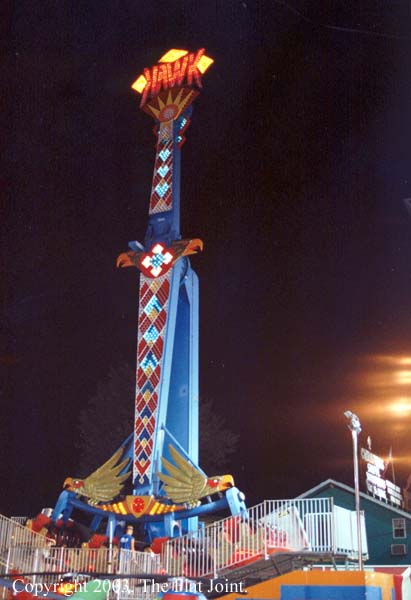
Now that summer is unofficially over (at least here in South Carolina, where heat and humidity tend to stick around until October), this may not be the best time for an amusement park post. But the Tennessee Court of Appeals recently affirmed a grant of summary judgment worth looking at. Pictured above is an amusement park ride known as the Hawk, which spins around a fixed pivot point. The ride was manufactured by an Italian firm, Zamperla.

As detailed here, in 2004, June Carol Alexander fell to her death when the Hawk malfunctioned. The Hawk was installed by Zamperla at Rockin’ Raceway in 1998, and the last contact that Zamperla had with Rockin’ Raceway was in 2000. Truncating the facts, Rockin’ Raceway had hired a general manager, Stan Martin, who, for reasons not apparent, intentionally rewired the Hawk to bypass its safety systems, so that it would work even when the safety harnesses were not properly engaged. In July 2003, there was a close call with a patron, and in 2004, Ms. Alexander was killed.

In an apparent attempt to go after the deep pocket, the plaintiff’s estate dismissed Rockin’ Raceway and Mr. Martin without prejudice to pursue an action solely against Zamperla. The trial court granted Zamperla’s motion for summary judgment, and, in Alexander v. Zamperla, No. E2009-01049-COA-R3-CV, 2010 WL 3385141 (Tenn. Ct. App. August 27, 2010) [PDF], the court of appeals affirmed.

The plaintiffs’ basic argument, in negligence and strict liability, was that this criminal act was foreseeable, and that a design allowing such a criminal act to bypass the ride’s security was foreseeable. Based upon the expert discovery in the case, the court ruled that the plaintiffs’ had not shown any genuine issue of material fact. According to the plaintiffs’ expert, the ride’s safety system was state of the art when it was installed. In addition, no witness could recall ever seeing an incident like this, or anything about Mr. Martin’s background that would have given anyone probability to expect anything like this.

Zamperla is a reminder for manufacturers to affirmatively monitor customers and the news to the extent possible for potential misuses of products that plaintiffs’ attorneys will try to attack as reasonably foreseeable. With some better (more favorable or better thought out) expert discovery, the Alexander plaintiffs could possibly have gotten by summary judgment by introducing some evidence that 1) Martin’s conduct was foreseeable or 2) the Hawk’s design was defective by permitting such manipulation by Martin. Defense lawyers know what happens when a case with bad facts gets in front of a jury. In any event, even in these lean economic times, manufacturers would do well not to forget to monitor the news for “foreseeable” alterations of their products.