Ferrari Issues Recall, Forbids Pinto References in Interoffice E-Mail

In the 1960s and 1970s, the Ford Pinto was dubbed “the barbecue that seats four.” The gas tank, located in an unfortunate location in the back of the car, had an even more unfortunate habit of rupturing, and exploding, if the car was rear ended.

Recent news reports suggest that the new Ferrari 458 Italia may have a similar flame-broiled propensity. According to Ferrari, the heat shield located in the wheel assembly of the car could become deformed, “bringing it too close to the exhaust system and igniting.”
The company has recalled the cars so that the glue adhering the heat shield can be replaced with metal fasteners, because if the adhesive ignites, it could “render the vehicle inoperable and possibly result in a crash,” according to the National Highway Traffic Safety Administration. Yes, we imagine so.
Which begs at least two questions–first, what possessed the designers of this 4.5 liter, 570-horsepower, $230,000 automobile to forgo the metal fasteners in the first place and use glue to adhere the heat shield to the car? And, second, can we choose a Pinto rental while the Ferrari is being fixed? At least the Pinto will be going far slower than 120 mph when it explodes.

California Appellate Court Upholds Summary Judgment Where Expert Offers No Factual Basis for Opinion

The California Court of Appeals recently upheld summary judgment in favor of both defendants, an escalator manufacturer and Nordstrom department store, in a case where a shopper alleged she sustained injuries when an escalator stopped during a power outage. The court held that the opinions of the plaintiff’s motion engineering expert lacked adequate foundation. Bozzi v. Nordstrom, Inc., 111 Cal.Rptr.3d 910 (Cal. Ct. App. 2010).

The plaintiff was riding a Nordstrom escalator when an automobile accident outside the store caused an electrical service interruption, temporarily stopping power inside the store. The lights went out and the escalator stopped. The plaintiff had been holding on to one or both of the handrails, but alleged she was injured when her left foot moved down one step on the escalator. She did not fall. The power was out for approximately one minute before it was restored, at which time the lights came back on, the escalator descended to the first floor, and the plaintiff walked out of the store.

The plainitff sued both parties for negligence and failure to warn and included a strict liability action against the escalator manufacturer. It was the plaintiff’s theory that the defendants should have supplied an alternate power source for the escalator or otherwise have designed and maintained it such that it would have slowed to a gradual stop when the power went out. In support of her theory and in an effort to withstand summary judgment, the plaintiff proffered a motion engineering expert, who opined that there was “certain technology” available at the time of the escalator’s placement in 1985 that would have prevented the abrupt stop of which the plaintiff complained. It was his opinion that the fact that the escalator came to a jolting stop proved that there was a defect, because a properly designed and maintained escalator should not stop abruptly.

Although both the trial and appellate courts held that the plaintiff’s expert was properly qualified, they excluded as speculative and without foundation his conclusion that the escalator’s failure to come to rest in a power outage constituted faulty design or maintanence. An important factor in the courts’ conclusion was that the proffered expert had never seen, ridden or inspected the escalator. The appellate court held that he “relied on nothing more than syllogistic reasoning to conclude that if an escalator stops abruptly, it must have been defectively designed or maintained.”

An opinion is, according to the court, “only as good as the facts and reasoning on which it is based.” Because this expert failed state any facts to support his opinion, it was not appropriate for summary judgment analysis. This case is another illustration of an important defense victory where a plaintiff seeks to create issues of fact by offering unsubstantiated expert opinions.

Happy Labor Day

Happy Labor Day to all! As a public service to you, our dear readers, we provide this link from the Department of Labor about the history of Labor Day, as well as the following quote:

The vital force of labor added materially to the highest standard of living and the greatest production the world has ever known and has brought us closer to the realization of our traditional ideals of economic and political democracy. It is appropriate, therefore, that the nation pay tribute on Labor Day to the creator of so much of the nation’s strength, freedom, and leadership — the American worker.

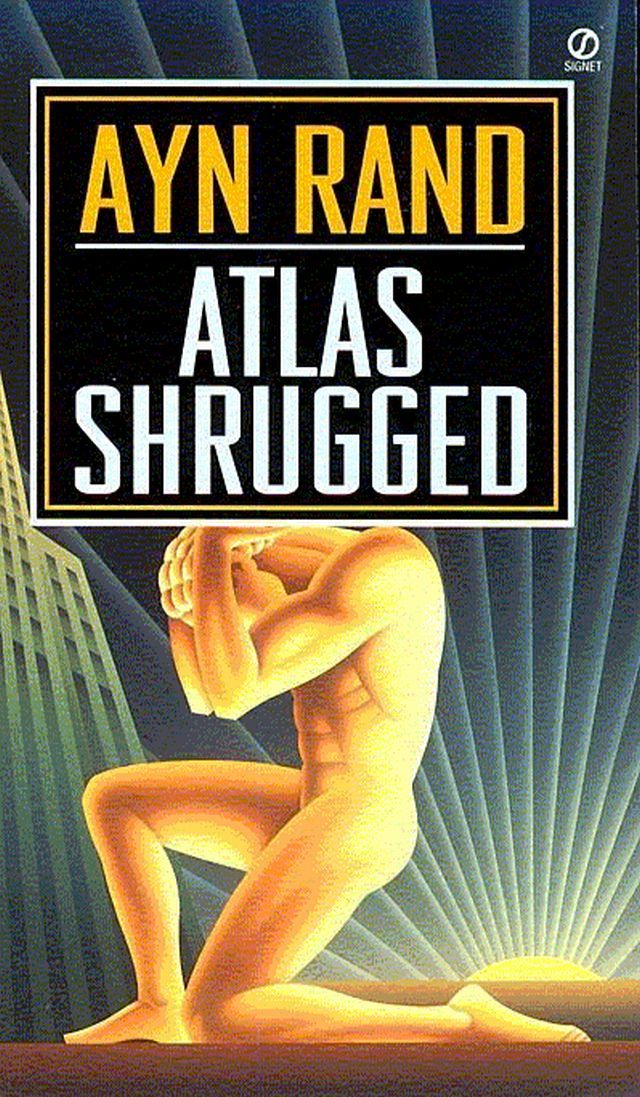
We here at Abnormal Use will celebrate today Ayn Rand-style, by generating revenue and looking for John Galt, although it’s possible we might cut out early and get ready for the evening’s revelry centered around the start of college football. In any event, we urge you, today of all days, to consider the genesis of the day and enjoy the fruits of your labor.

Friday Links

Steven F. Coronado at the DRI Blog has this piece about the perils of jurors updating their Facebook statuses to reflect their thoughts on ongoing trials. If you’re on a juror, it’s probably best not to tweet that you can’t wait to render a guilty verdict.

Okay, now this is, well, awesome. Terry Tottenham, the President of the State Bar of Texas, quotes Bruce Springsteen lyrics not once, but twice, in his column this month in the Texas Bar Journal. Can you guess which two songs he quoted? See here for the column.

We welcome the newly launched South Carolina Tax Credit Blog to our state’s legal blogosphere. (Hat tip: South Carolina Business Law Blog).

We sometimes find ourselves nostalgic for law school, and then we realize what we must be thinking. A former teacher and now a brand new law school student, the author of the blog Tanny’s News recounts what happened last week to a student who was late to class: “One of my esteemed colleagues was late the second day of class, didn’t know the answers when called on the third day of class, and was late again the fourth day of class. In real life, our clients suffer the consequences of our mistakes. So, our whole class, except this student, has to spend the weekend writing a 5-6 page memo on the consequences of lawyers being late to court. As a teacher, I marvel at the brilliance of this plan. I used to do similar things to my students when 2/3 of them were involved in something and I couldn’t pick out which ones were innocent. I always felt badly for the innocent ones, but now I can truly understand how they must have felt.”

After a 21 month absence from the blogosphere, the South Carolina Bid Protests Blog triumphantly returns with a new post. Welcome back!

The Mac Lawyer has this post entitled “5 Essential iPad Apps for Students.” This makes us feel very old, as our only study aids were dusty old copies of Emmanuel outlines.

Here’s the first paragraph of the abstract from Lucille A. Jewel’s article, “I Can Has Lawyer? The Conflict Between the Participatory Culture of the Internet and the Legal Profession,” which is thought provoking: “The Internet allows citizens to comment on public affairs with an amplified and unfiltered voice, creating an open, community-based culture where robust debate flourishes. However, many of the ideals and practices of participatory culture clash with the traditional legal culture as it exists in the United States. This cultural conflict can be seen in emerging narratives, in the form of web blogs and lawyer emails that go “viral,” in which lawyers comment on the lack of humanism within big law firm hiring and firing practices; expose the alienating work environments experienced by low-level contract attorneys; or criticize judges who show hostility toward criminal defense attorneys. ” (Hat tip: Media Law Prof Blog).

We couldn’t resist sharing this gem at the My Legal Fiction blog, entitled “Woody Allen Jokes As Applied To Law School.” (Hat Tip: Legal Underground).

South Carolina Adopts the Risk-Utility Test as the Exclusive Test in Products Liability Design Cases

In a recent landmark decision, the South Carolina Supreme Court brought some welcome clarifications its products liability jurisprudence. Branham v. Ford Motor Co., — S.E.2d —-, No. 26860, 2010 WL 3219499 (S.C. Aug. 16, 2010). That case centered around a 2001 accident involving a 1987 Ford Bronco. The driver was transporting several children, none of whom were wearing seat belts, to her house. The driver took her eyes off of the road at which time a tire left the roadway. The driver overcorrected, causing the vehicle to roll over, ejecting the Plaintiff’s young son. Plaintf filed his lawsuit against Ford and the driver on behalf of his son in the Hampton County, Carolina a venue previously ranked as a “judicial hellhole.”

Of particular note was the court’s decision to join the majority of States that employ the risk-utility test as the exclusive test to be used in a products liability design case. For a plaintiff to successfully advance a design defect claim, he must show that the design of the product caused it to be “unreasonably dangerous.” Under the risk-utility test, this is accomplished by considering numerous factors, including the usefulness and desirability of the product, the cost involved for added safety, the likelihood and potential seriousness of injury, and the obviousness of danger. It also comes with the attendant requirement that Plaintiff show a feasible alternative design. The court rejected Plaintiff’s position that he could prove a design defect by resort to either the risk-utility test or the consumer expectations test, the latter of which is met by showing that the product is unreasonably dangerous to the consumer or user given the conditions and circumstances that foreseeably attend use of the product. That test is more appropriately used for manufacturing defect cases. For design defects, on the other hand, the focus is properly on whether the product was made safe enough, or whether the manufacturer’s failure to adopt a particular design feature proposed by a plaintiff was, on balance, right or wrong, which is the core concern of the risk-utility balancing test.

The court was careful to point out that merely because a product can be made safer, does not mean that a design defect case should see the light of day in front of a jury. To the contrary, most any product can be made safer, and there is danger incident to the use of any product. Hence, a plaintiff must present evidence of a design flaw, show how plaintiff’s alternative design would have prevented the product from being unreasonably dangerous, and include considerations of cost, safety and functionality associated with the alternative design. Here, Plaintiff had actually met the standards set forth under the risk-utility analysis such that the case did not warrant reversal on this issue. However, there were other factors that led the court to reach its decision to reverse and remand for a new trial.

Two evidentiary rulings and the inflammatory nature of Plaintiff’s counsel’s closing argument led to the decision to reverse and remand. First, the court considered introduction of post-manufacture evidence. Whether a product is defective must be measured against information known at the time the product was placed into the stream of commerce. Hence, post-manufacture evidence, or evidence that was not known or available at the time of distribution, is generally inadmissible. Plaintiff was described by the court as “unrelenting” in the pursuit of post-distribution evidence to the point that the error of the lower court in admitting such evidence was not considered harmless. The court noted the policy benefits of such a rule to encourage the continued testing and evaluation of products after initial manufacture and not judge the manufacturer through the lens of hindsight.

Second, the court considered evidence of similar incidents. Such evidence is admissible where there is a substantial similarity between the other incidents and the accident in question, tending to prove or disprove some fact in controversy. Because this type of evidence may be “highly prejudicial,” there is a stringent standard for admissibility requiring a plaintiff to present a factual foundation for the court to determine that the other accidents were substantially similar to the accident at issue. Additionally, such similar incidents must pre-date the manufacture of the product. Here, introduction of Plaintiff’s voluminous evidence of post-manufacture rollover data was error even where the accidents were substantially similar.

Finally, as to Plaintiff’s closing argument, Plaintiff relied heavily on inadmissible evidence, inviting the jury to base its verdict on passion rather than reason. Plaintiff wanted Ford to be punished for harm to both Plaintiff and others, reciting numerous times the number of people killed or severely impaired each year in Ford rollover accidents and contending that Ford found the numbers to be acceptable. Inviting a jury to punish a defendant for other nonparties or strangers to the litigation is forbidden.

Another significant clarification is the court’s holding that, where one claim is dismissed and the dismissal rests on a common element shared by the companion claim, the companion claim must also be dismissed. Here, Plaintiff had alleged claims of both negligence and strict liability in tort. Regardless of the theory on which Plaintiff seeks recovery, he must prove (1) that he was injured by the product, (2) that the product, at the time of the accident, was in essentially the same condition as when it left the hands of the defendant; and (3) that the injury occurred because the product was in a defective condition unreasonably dangerous to the user. Over and above this, a negligence theory merely imposes the additional burden on a plaintiff of demonstrating that the defendant failed to exercise due care in some respect, placing the focus on the manufacturer’s conduct. Because the trial court dismissed the strict liability claim finding the seat belt sleeve was not in a defective condition unreasonably dangerous as a matter of law, it should have also dismissed the companion negligence claim. The fault-based component of negligence is simply of no consequence where there is no showing that the product was defective and unreasonably dangerous.

Not surprisingly, the decision is already the subject of blog commentary. Our friends at the South Carolina Products Liability Law Blog have authored a list of “Ten Takeaways from Branham v. Ford Motor Company“, with which we here at Abnormal Use agree.

Sixth Circuit Allows State Law Negligence Claims

Last year, the Supreme Court decided Wyeth v. Levine [PDF], stating that Congress, through the FDCA, did not intend to preempt state law failure to warn claims. The Sixth Circuit extended Levine in Wimbush v. Wyeth, No.09-3380, 2010 WL 3256029 (6th Cir. Aug. 18, 2010) [PDF], and reasoned that a plaintiff could pursue negligence claims relating to a manufacturer’s decision to bring a drug to market, i.e., a pre-labeling, pre-approval claim.

Mary Buchanan, the Plaintiff’s decedent, developed primary pulmonary hypertension, allegedly caused by her ingestion of Redux, a weight-control drug pulled from the market in 1997. The pulmonary hypertension was the alleged cause of death. It’s unlikely, at least in Ohio, that there would be many more claims like the plaintiff’s. Ohio statutory law would now preempt any negligence claims based on products liability, but Buchanan filed her claim before the statute became effective. Therefore, Wimbush brings us into a strange scenario where, although the drug manufacturer can successfully defend the failure to warn claim, there are other state law claims that are not preempted and allowed by state tort law.

After explaining why the state law negligence claim would be allowed under state law, the Sixth Circuit reversed the district court’s grant of summary judgment in favor of Wyeth. The Court, leaning heavily on Levine, noted that Congress had never enacted an express preemption provision throughout the 70-year history of the FDCA. In light of the history of the scheme, there could be no preemption of state law claims, express or implied. Nevertheless, the Sixth Circuit acknowledged that its decision was breaking new ground:

Finally, we are aware of no federal appeals court decision since Levine concluding that FDA regulation preempts any aspect of state tort law, though we admit that, until today, there is also no post-Levine court of appeals authority for the proposition that the Levine rationale extends beyond the realm of failure-to-warn claims to apply to all pre-approval state law claims.

Wimbush may be used to open a door in other jurisdictions to allow other state law negligence claims in jurisdictions where the standards, statutes of limitations, or venire may be plaintiff-oriented. Look for plaintiffs’ attorneys to test the state law waters with inventive tort actions. I’m sure that there are all manner of pre-approval state law claims that are about to be manufactured.

190 Tons of WalMart Deli Meat Recalled Over Potential Listeria Contamination

People of WalMart beware: 190 tons of the mega-store’s deli meat have reportedly been recalled due to potential Listeria contamination. The affected product comes from Buffalo, New York-based Zemco Industries. According to the USDA press release, the problem was discovered as the result of a retail sample collected by the State of Georgia that confirmed the meat was positive for Listeria monocytogenes.

There have not yet been any reported illnesses associated with the sale of the Zemco deli meat, but according to the USDA, eating food contaminated with Listeria can cause listeriosis, a potentially fatal disease. It also may cause high fever, severe headache, neck stiffness and nausea. Those most susceptible to listeriosis are infants, the elderly, and others with weakened immune systems. Healthy people rarely contract the disease.

As you can see from our previous post here, this is only the latest in a string of food recalls that have taken place this summer. Perhaps the fall will bring better news.

Third Circuit Affirms Summary Judgment in Favor of Ford as a result of Plaintiff’s Lack of Expert Testimony

Have you ever thought that traveling in a vehicle going above 65 miles per hour could cause cancer? One Pennsylvania resident, Ted McCracken (“McCracken”), thought so and asked the Eastern District of Pennsylvania to award him damages as a result of such alleged injury. Pro se Plaintiff McCracken filed an action against Ford Motor Company asserting that he contracted thyroid cancer as a result of the insufficient protection Ford windshields provided from ambient radiation in the air that increases to dangerous levels inside a cabin when a vehicle travels at speeds in excess of 65 miles an hour. McCracken v. Ford Motor Co., No. 09-3995, 2010 WL 3010304 (3d Cir. Aug. 3, 2010) [PDF]. McCracken asserted eight causes of action, including strict products liability and defective design.

Ford filed a motion to dismiss on a number of grounds and the District Court of Pennsylvania dismissed all McCracken’s claims, except for strict products liability and defective design, and entered a scheduling order. Pursuant to this scheduling order, McCracken’s expert report was due on April 6, 2009. After this deadline had passed, McCracken filed a motion for an extension of time to retain an expert and a motion for the appointment of an expert under Fed. R. Evid. 706. The District Court denied his motions and Ford moved for summary judgment based upon McCracken’s lack of expert testimony. The District Court granted summary judgment in favor of Ford and McCracken appealed.

On appeal, McCracken asserted that he submitted sufficient evidence to survive summary judgment even without the testimony of an expert. This evidence included data regarding environmental radiation, a list of books and articles on radiation, the deposition testimony of a representative of the Pennsylvania Department of Environmental Protection, and affidavits from him and his mother stating that they observed increased readings on a Geiger meter when the vehicle accelerated. The Third Circuit found that this “evidence” was not enough to withstand summary judgment on the cause of McCracken’s cancer or the defective design of Ford’s windshields.

McCracken’s second argument on appeal is that the District Court erred in not appointing him an expert. The Third Circuit agreed with the District Court that “the purpose of Rule 706 is not to provide ‘litigation assistance’ to a party unable to retain an expert on its own.” The Third Circuit found no error by the District Court. McCracken asserted four more arguments on appeal, all not worth discussing here, which were all rejected by the Third Circuit.

This case is another example of a Plaintiff asking our Courts to buy into his or her theory of injury based on “because I said so.” The Third Circuit correctly found that Ford was entitled to summary judgement where plaintiff either could not find an expert to support his theory or he disregarded the court’s instructions by failing to find such an expert within their deadlines.

As a side note, this is McCracken’s thirteenth lawsuit asserting this general ambient radiation theory. He has sued numerous defendants including other automobile manufacturers, manufacturers of other types of vehicles that can travel in excess of 65 miles per hour, nuclear power plants, and energy companies. See McCracken v. R.E. Ginna Nuclear Power Plan, LLC, No. 08-cv-6217L, 2010 WL 1404115, at *4 (W.D.N.Y. Mar. 31, 2010).

Friday Links

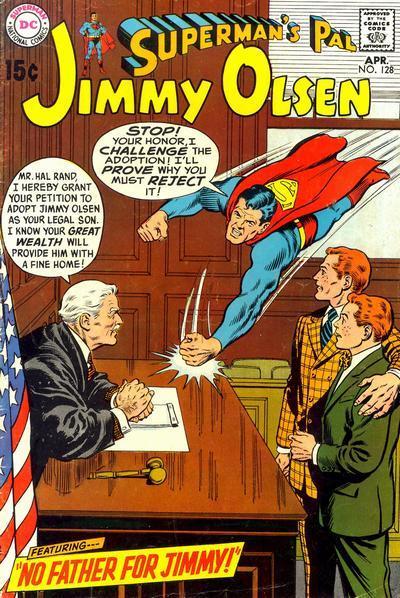
We here at Abnormal Use are not family lawyers, but we like to think that if we were, we would zealously conduct ourselves in the courtroom in the manner that Superman does above, on the cover of Superman’s Pal Jimmy Olsen #128, published way back in July of 1970. Note that the Man of Steel flies through the open courthouse window (apparently bypassing courthouse security) in order to object to archaeologist Hal Rand’s attempt to adopt Jimmy. (Since it’s obviously an adult adoption, perhaps Rand just wanted someone who would be able to inherit from him if he passed away.). Someone should probably tell Superman that banging one’s fist on the judge’s bench is probably ineffective, though. Jimmy apparently prefers great wealth and a fine home to Superman’s offer of a cold and lonely existence at the Fortress of Solitude. Or perhaps the social worker gave up on trying to make an in-home visit to Superman’s secret hideaway. In addition, apparently Superman had not developed his ability to reverse time in 1970. Why would a superhero of Superman’s caliber come flying in as the judge makes his ruling? Wouldn’t it be easier to arrive about ten minutes earlier and push Hal Rand in a great crevasse?

We love history and true crime. The Media LawProf Blog has published the abstract of Edward Larson recent piece in the American Journal of Legal History, “An American Tragedy: Retelling the Leopold-Loeb Story in Popular Culture.” The Leopold and Loeb crimes were the basis – for the most part – of Alfred Hitchcock’s stellar 1948 flick, Rope (which was apparently itself based upon a 1929 play by Patrick Hamilton).

Quote of the Week: “That sum, demanded by a Las Vegas man in a suit against three Utah attorneys, is far in excess of all the money in the world, so there may be collectibility problems,” Walter Olson, commenting here at Overlawyered, in response to news that a Plaintiff in a recent lawsuit has demanded $38 quadrillion. (The dispute apparently also involved a $918 billion lien.). Well, at least the amount in controversy is clear for removal purposes, eh?

Lawyerist reports on an interesting dust-up between an attorney blogger and LegalZoom.

Robin Wheeler at the South Carolina Access to Justice Weblog has a post entitled “Why I Do Pro Bono . . .

The Litigation and Trial Blog has a nice post about the City of Philadelphia’s current attempts to apply its business privilege license requirements to local blogs. For the record, this blog is not, nor has it ever been, based out of Philadelphia.

Pennsylvania ATV Case Highlights the Difference Between Misuse and Unintended Use in Products Cases

In Smith v. Yamaha Motor Corporation, U.S.A., — A.2d —, 2010 WL 3239476 (Pa. Super. Ct. Aug. 18, 2010), an appeals court in Pennsylvania considered whether a trial court erred in granting summary judgment to Yamaha on claims of negligence and strict liability, and whether it erred by striking the report of Plaintiffs’ accident reconstruction expert in its entirety.

On September 23, 1999, Jeffrey Smith, an experienced ATV rider, was attempting to back his Yamaha ATV, more specifically a 1987 Yamaha Big Bear 350, down a hill when his foot slipped and struck the right-rear fender of the ATV. The fender collapsed, and his right leg became trapped between the frame and the wheel. The ATV then rolled back over Mr. Smith, causing him to suffer severe injuries that left him disabled and disfigured. According to the website, this ATV was Yamaha’s first 4×4 ATV:

Mr. Smith and his wife, Susan, sued Yamaha under theories of strict liability, negligence, and breach of warranty, and claimed that the rear fender and instrument panel were defective. Yamaha answered, and asserted that Mr. Smith was contributorily negligent by trying to back the ATV down the hill, and by consuming alcohol (Mr. Smith’s BAC was 75% below the legal limit) and taking drugs (he was ingesting prescription OxyContin for a degenerative back condition).
Yamaha’s motion for summary judgment as to Plaintiffs’ strict liability claims was granted on the grounds that Plaintiff was misusing the ATV at the time of the accident because the ATV manual, which Plaintiff acknowledged receiving, warned against consuming drugs or alcohol in connection with using the ATV, and also counseled against letting the ATV roll backwards on a hill. By doing all of these things, Yamaha argued, Mr. Smith was “operating the vehicle in an unintended manner” (emphasis added). Yamaha’s motion for summary judgment as to Plaintiffs’ claims for negligence was also granted, as was its motion to strike the expert report of Plaintiffs’ accident reconstruction expert, because it raised a new theory of recovery after the statute of limitations had expired.
The appellate court reversed the trial court’s striking of the expert’s report in its entirety, holding that even though part of the report did raise a new recovery theory following the statute of limitation’s expiration, the remainder of the report did not and, therefore, the offending portion should merely have been redacted. The expert, therefore, should have been allowed to propound his theories about the defectiveness of the design of the fender and the availability of alternative designs that would have prevented Plaintiff’s injuries.
With this part of the expert’s report back in evidence, Plaintiffs’ claims under the negligence theory were once again viable. The expert was allowed to opine that Yamaha’s design did not meet the state of the art at the time of design and manufacture of ATVs. The appellate court, therefore, reversed the trial court’s decision to grant Yamaha’s summary judgment motion on Plaintiffs’ negligence claims.
The most instructive portion of this decision, however, was the appellate court’s decision to reverse the granting of Yamaha’s motion for summary judgment on Plaintiffs’ strict liability claims. In doing so, the court explained that “the trial court conflated the doctrine of unintended use with the concept of misuse” (emphasis added). According to the appellate court, Plaintiff was indeed operating the ATV for its intended use–off-road riding. What he may have been doing, however, was misusing the vehicle by operating it in a manner not intended by the manufacturer–backwards and potentially under the influence of drugs and alcohol. Finally:

It is well-settled that a plaintiff’s misuse of a product cannot be grounds for granting summary judgment in favor of the manufacturer under a design defect theory unless it is established that the misuse solely caused the accident while the design defect did not contribute to it.

Because the evidence of Plaintiff’s riding on the date of the accident went to the issue of misuse, rather than unintended use, and because there was evidence that a design defect may have caused or at least contributed to the accident, the trial court’s grant of summary judgment was reversed.