




Certain Meats Accused By The IARC Of Increasing the Risk of Certain Cancers

http://aht.seriouseats.com/archives/2011/05/the-burger-lab-building-a-better-big-mac.html - 22

We regret to inform our readers that various media outlets, including the American Cancer Society Pressroom Blog, have reported that the “International Agency for Research on Cancer (IARC), a part of the World Health Organization, has classified processed meat as a cancer causing agent (carcinogen), and red meat as a probable carcinogen.” These conclusions apparently “are based primarily on evidence showing an increased risk of colorectal cancer” and “also evidence of increased risk of pancreatic and prostate cancer.”

We here at Abnormal Use have questions (after we pick ourselves up off the floor). For starters, how did the IARC reach these conclusions?

According to the WHO, the following is the more detailed basis for the conclusion as to red meat:

After thoroughly reviewing the accumulated scientific literature, a Working Group of 22 experts from 10 countries convened by the IARC Monographs Programme classified the consumption of red meat as probably carcinogenic to humans (Group 2A), based on limited evidence that the consumption of red meat causes cancer in humans and strong mechanistic evidence supporting a carcinogenic effect. This association was observed mainly for colorectal cancer, but associations were also seen for pancreatic cancer and prostate cancer.

As to processed meats, which include “hot dogs (frankfurters), ham, sausages, corned beef, and . . . beef jerky as well as canned meat and meat-based preparations and sauces,” the WHO explains only that “[p]rocessed meat was classified as carcinogenic to humans (Group 1), based on sufficient evidence in humans that the consumption of processed meat causes colorectal cancer.” So, “a Working Group of 22 experts from 10 countries” reviewed “scientific literature” and found “limited evidence” suggestion an “association” between consuming red meat and three types of cancer, and this same group of experts found “sufficient evidence” that the consumption of processed meat “causes” a specific type of cancer? We carnivores at Abnormal Use feel compelled mine down into these conclusions and educate our non-toxic tort lawyer readers on some of these terms that the WHO has used to accuse an American dietary staple of wrongdoing.

First of all, what is a carcinogen?

According to the American Cancer Society, carcinogens are “[s]ubstances and exposures that can lead to cancer.” (emphasis added). It is important to note that “[c]arcinogens do not cause cancer in every case, all the time” and that “[s]ubstances labeled as carcinogens may have different levels of cancer-causing potential.” For example, substances may be carcinogenic only at certain doses or exposure intervals. A person’s genetics may also play in to how carcinogenic a substance is for that person. The IARC places agents into various categories or groups of carcinogens, which are depicted in the image below:

Carcinogens

Red meat has been placed in Group 2A and processed meat has been placed in Group 1.

How do scientists determine whether something is a carcinogen?

How do scientists determine the risk of disease presented by exposure to a particular substance? This is known as the field of epidemiology, which is typically defined as “the scientific study of disease patterns among populations in time and space.” Epidemiologists use various tools to assess risk of disease, including case-control studies, and cohort studies.

A cohort study is “a group of people with defined characteristics who are followed up to determine incidence of, or mortality from, some specific disease, all causes of death, or some other outcome.” With a case control study, “the diseased patient is questioned and examined, and elements from this history taking are knitted together to reveal characteristics or factors that predisposed the patient to the disease.” There are other tools used by epidemiologists, but these are the two which are most relevant to this article.

The goal of the epidemiological study (relevant to this post) is to determine the potential effect to a human being of exposure to a particular substance. An epidemiological study could find an “association” between an exposure and a health effect, which is simply “a relationship between two, or more, variables.” For example, a study of 20 murderers who happened to have all been wearing blue shirts might show that more blue shirts are associated with more murders. Causation, on the other hand, “means that the researchers found that changes in one variable they measured directly caused changes in the other,” which would be for example, “research showing that jumping of a cliff directly causes great physical damage.”

There are potential issues that could weaken a particular study. For example, the results of the study could be due to chance. In our blue shirt murderer example, the fact that all of the murders happened to be wearing blue shirts may simply be due to chance; therefore, the association between blue shirts and murder is meaningless. “Confounding” is also an issue which “involves the possibility that an observed association is due, totally or in part, to the effects of differences between the study groups (other than the exposure under investigation) that could affect their risk of developing the outcome being studied.” Another potential issue is bias, which includes “any systematic error in an epidemiological study that results in an incorrect estimate of the association between exposure and risk of disease.” For example, test subjects may have “recall bias” in that they remember some past exposures and forget others. Ideally, a study will control for these issues to strengthen the results of the study. In general, the more these issues are controlled for, the more reliable the results of the study, and vice versa.

How strong is the link between meat and cancer?

As mentioned above, the IARC has concluded that there may be an “association” between the consumption of red meat and the development of certain type(s) of cancer, and the IARC was able to find a causal link between processed meats and certain types of cancer. Obviously, we know that association is not synonymous with causation, and a reading of the full text version of the WHO article raises other concerns with the study linking the consumption of certain meats to cancer.  For example:

  • Data on the association of red meat with colorectal cancer were only available from 14 cohort studies and 15 case-control studies, and positive associations were only found in half of the cohort studies and less than half of the case-control studies.
  • While the experts believe they can rule out chance, bias, and confound as “unlikely” with processed meat, “[c]hance, bias, and confounding could not be ruled out with the same degree of confidence for the data on red meat consumption” because “no clear association was seen in several of the high quality studies and residual confounding from other diet and lifestyle risk is difficult to exclude.”

Additionally, we feel compelled to point out that the dose makes the poison, and according to the IARC, you have to eat approximately a quarter of a pound of red meat per day to increase your risk of developing cancer by 17 percent.  And you have to eat approximately an eighth of a pound of processed meat per day (apparently the equivalent of two strips of bacon) to increase your risk of cancer by 18%. Also, while the IARC suggests that “[m]eat smoked or cooked over a heated surface or open flame contains PAH,” which allegedly “cause DNA damage,” the IARC admits that “little direct evidence exists that this occurs following meat consumption.”

Without more information regarding: sample size; control for bias, confounding, and chance; and other important information, we at Abnormal Use are not inclined to amend our carnivorous habits.

Ron Swanson

For now, though, red meat and processed meats will have to remain in the list of substances accused by the IARC of containing carcinogens, along with substances such as chlorinated drinking water, pickled vegetables (asian), coffee, hair coloring products, extremely low frequency magnetic fields, salted fish (Chinese style), tea, and various others.

Let’s Leave 911 Out Of Our Food Complaints, Shall We?

Product liability suits involving food products are not uncommon. In fact, one of the most famous product cases of all time, Stella Liebeck v. McDonald’s, involves a familiar beverage. (Don’t worry, dear readers, this is not another post about the Liebeck case.). While we here at Abnormal Use may not always agree with the outcome, we at least respect a plaintiff’s right to litigate legitimate matters in court. On the other hand, we have  little use for claimants who choose other means to air their grievances. Case in point: North Carolina woman Bevalante Hall recently used 911 to complain about her Subway order. According to a report from the Gaston Gazette, Hall called 911 after a Subway employee allegedly made her flatbread pizza with marinara rather than pizza sauce. In the 911 call, Hall stated that she wanted to make a report so she could call investigators with a local television news station. Hall didn’t get quite what she requested. As a result of the call, Hall was jailed for three minutes before being released on a $2,000 bond.

Had Hall taken to the court system, her claim undoubtedly would have been criticized (rightly) as frivolous. A marinara-sauced pizza is not exactly a defective product. After all, Subway clearly advertises its “flatizzas” as being made with marinara sauce. If suit had been filed, however, our focus would have at least been on the merits of the claim (or lack thereof). Unfortunately, Hall’s claim appears to be more about garnering publicity than resolving a grievance. Leave it to us to oblige.

Abnormal Interviews: Daniel Hartis, Author of “Charlotte Beer: A History Of Brewing In The Queen City”

Today, Abnormal Use continues its series, “Abnormal Interviews,” in which this site will conduct interviews with law professors, practitioners and makers of legal themed popular culture. For the latest installment, we turn to Daniel Hartis, author of the relatively new book, Charlotte Beer: A History of Brewing In The Queen City. Why the author of a book about local beer? The answer is two-fold. First, we here at Abnormal Use love to experiment (in moderation of course) with the greatest craft beers our region has to offer. (You may recall that we once interviewed Adam Avery of the Avery Brewing Company regarding his company’s Collaboration Not Litigation Ale.). Second, Mr. Hartis, in his book, explores not just the modern culture of craft beer but also the evolution of the legal and political climate governing breweries in his mighty tome. That gave us just enough of a hook to interview him on our legal blog (which we probably would have done anyway, despite that hook, due to the cool topic).  Mr. Hartis was kind enough to submit to a brief email interview, which appears as follows.

ABNORMAL USE: What is it about Charlotte, North Carolina these days that is so favorable to new breweries?

DANIEL HARTIS: Charlotte has become well-known as a city of transplants, and I think the current craft beer scene in the city is proof of that. Some of these transplants come from other cities with established beer scenes, and I think they expect that here and want to support the local breweries. Charlotte is one of the fastest-growing cities in the nation as well, which doesn’t hurt. We may not match Asheville in terms of numbers of breweries, but a larger population means we’ve probably got a larger number of craft beer drinkers.

AU:  What do you think is the biggest legal obstacle to small brewers in North Carolina?

DH: Up until recently, I would have said zoning. Breweries could only exist in Charlotte’s industrial areas, which really limited them in terms of locations. The City of Charlotte’s planning department, however, just passed a microbrewery text amendment that allows breweries to exist in additional districts. Shortly after, The Olde Mecklenburg Brewery announced that they’d be moving into a larger building down the street, and The Unknown Brewing Company also leased a building just three blocks away from the stadium. Let’s hope that amendment also opens doors for Free Range Brewing, Sycamore Brewing, Regimental Brewing and Dukbone Brewing Co.

Intellectual property rights continue to be an issue, and several lawsuits have been filed in recent years over trademark disputes. Waynesville’s Headwaters Brewing Company rebranded to BearWaters Brewing Company earlier this year after receiving a cease-and-desist letter from Victory Brewing in Pennsylvania. Craft breweries will typically avoid litigation, but expect these trademark disputes to rise in relation to the number of breweries. After all, there are only so many hop puns out there!

AU: What do you think is the biggest obstacle to consumers of craft beer in North Carolina?

DH: To be honest, I think consumers have it pretty good here in NC. In addition to the state’s many great breweries, NC is also home to bars and bottle shops devoted to craft beer. Some of the nation’s best breweries distribute here as well, and if you compared our selection of brands to other states I think you’d come away impressed (SeekaBrew.com is a good site for this).

Speaking personally, I would like to see our breweries here in Charlotte and the rest of NC start packaging in 12 oz. bottles or cans. I understand why they don’t, as bottling and canning lines are expensive and an investment that many young breweries just can’t make. Down the road, though, I hope it’s a lot easier to go into your neighborhood bottle shop and pick up a six-pack of local beer, as opposed to a growler of it at the brewery.

AU: What do you think has been the biggest legal victory for the craft beer movement in the Carolinas?

DH: Without a doubt, the biggest legal victory for craft beer in North Carolina’s history was when Pop the Cap was passed in 2005. Before this point, only beers at 6 percent ABV or less could be sold in the state. This kept out not just a certain craft beer here or there, but entire styles of beer. Go into any bottle shop in Charlotte and I think you’d be hard pressed to find all that many under 6 percent, though session beers are on the rise (and I’m a big fan of lower-alcohol beers, but it’s nice to have options!).

AU: Historically, North Carolina, and Mecklenburg County, in particular, established Prohibition locally before the 18th Amendment became the law of the land nationally. How did we get from there to here?

DH: Before Prohibition, the nation was dotted with small, local breweries, and only recently did the country surpass the number of breweries it boasted prior to “the great experiment.” The reason breweries are popping up all over the country is the same reason they’re thriving in Charlotte: people want to support local businesses, and they want to enjoy a well-crafted beer. Part of it can also be attributed to the aforementioned transplants, I think. The Prohibition sentiment was especially strong in “the Bible belt,” and perhaps a more diverse population helped diminish those attitudes toward alcohol.

AU: How did you come to write a book about the Charlotte craft beer community?

DH: I founded CharlotteBeer.com in January of 2011 out of a desire to write about beer and a way to keep all of Charlotte’s beer information in one central place, for my needs as much as anyone else’s. I went to school for journalism, and so I always tried to maintain a standard of quality writing on the site, even if I was just throwing up a quick paragraph about an event. In the summer of 2012, The History Press – publishers of beer books for cities like Asheville, Baltimore and Charleston – approached me to see if there was enough of a history here in Charlotte to merit a book. At that point, my knowledge of the beer history here started from 2009, the year the Olde Mecklenburg Brewery came to town. After doing some research, though, I discovered a healthy portion of brewing history, especially in regards to the ‘90s breweries. I was excited to pursue that further and learn more, and so I agreed to take the project on.

AU: How has the expansion of social media assisted in the growth of the craft beer movement?

DH: I think social media plays a key role in the craft beer world, though perhaps not more so than in any other industry. When I started the blog a couple of years ago, Blair (@QueenCityBeer) and I were the only ones using the #cltbeer hashtag on Twitter. Over time it really caught on, and now many of the city’s breweries, bars, restaurants and bottle shops use it to share Charlotte beer news, specials or events. It allows them to reach the true beer geeks in the area that follow the hashtag, just as it allows them to share beer-related info with people who may be unfamiliar.

I’ve come to meet so many good people just by talking about beer on Twitter or Facebook. What might seem like a cursory chat on the Internet often develops in a “real-life” friendship, and I’m very grateful to have made so many friends this way.

BONUS QUESTIONS:

AU: Favorite North Carolina beer?

DH: With the number of breweries we have in the state producing great beer, it would be tough for me to choose just one. And that’s the beauty of our beer scene here in Charlotte, too: we are privileged to have a very diverse group of breweries that ensures there is something here for everyone.

AU: Favorite non-local beer?

DH: That really is a difficult question. If I had to choose a favorite, I think I’d go with Founders Brewing’s Kentucky Breakfast Stout (aka KBS). It’s brewed with coffee, chocolate and oatmeal, and then aged in bourbon barrels for a year. And yes, it’s as delicious as it sounds.

AU: Favorite style of beer?

DH: I can honestly say there’s not a style of beer I dislike. For that reason, it’s tough for me to nail down just one favorite style. The mood I’m in, the weather, what I’m doing at the time – these can all dictate the type of beer I drink. That being said, I really enjoy stouts, Baltic porters and smoked beers.

AU: Favorite beer related website?

DH: I regularly visit Beer Pulse for beer news, Oh Beautiful Beer for beer design and Good Beer Hunting for its unique photos and writing. Oh, and First We Feast offers a really fun look at beer (and food) through a pop culture lens.

AU: Favorite song about beer?

DH: It’s not exactly a testament to the responsible enjoyment of fine beverages, but I’ll go with Sublime’s “40 oz. to Freedom.” I was a fan of Sublime well before I could (legally) drink, so it’ll always hold a special place in my heart.

BIOGRAPHY: Daniel Hartis is the founder of CharlotteBeer.com and the author of Charlotte Beer: A History of Brewing in the Queen City. His next book, Beer Lover’s The Carolinas, will be published by the Globe Pequot Press in January 2014. When he’s not writing about beer, he enjoys spending time with his wife and two children. You can follow him on Twitter at @CharlotteBeer.

Friday Links

Lois Lane and Superman have a troubled relationship, it seems. Superman has cross-examined her during a lie detector test in a murder case, confronted her in jail and secured a confession of some sort, and accused her of murdering Lana Lang while Lois sat on the witness stand in a courtroom. Above, on the cover of Superman’s Girlfriend Lois Lane #84, published way, way back in 1968, we see a bit more of the same. “Superman! Identify Me! Tell him I’m Loise Lane . . . your friend,” she exclaims from her jail cell.  Superman replies: “Officer, I give you my word of honor this girl is a dangerous criminal. She must be imprisoned for life!” These two have serious problems.

A Southwestern University law professor has authored an article entitled “Jay-Z’s 99 Problems, Verse 2: A Close Reading With Fourth Amending Guidance For Cops and Perps” about the famous rap song. We direct that prof to our compilation of songs about lawyers.  (Hat Tip: Gawker).

As we we all know, lawyers thrive on caffeine, so check out this advertisement for coffee – from the year 1652. (Hat Tip: Walter Olson).

Once again, we return to the topic of My Cousin Vinny, that movie of movies. In an interview with Will Harris of The Onion AV Club, Ralph Macchio, the actor who played the title character’s cousin and client, shares some memories of that role.  Published earlier this week, the piece includes these thoughts from Macchio:

We all knew it was a funny script, and obviously Joe Pesci was at a peak there, with Goodfellas and everything going on. And Marisa [Tomei]… Who knew she would be the spectacular talent she is? I mean, we knew when we saw her, but who knew that was going to be an Oscar-winning performance? And Fred Gwynne… The whole cast was great. I had the part that was the least funny, but I had to be in the movie. And I got to say “the two yoots.” [Laughs.] People yell that out to me. I could walk down the street today, and someone could yell that out. That, and “I shot the clerk.” But it’s great to have a couple of those. My Cousin Vinny, The Outsiders, The Karate Kid… When I look back at that time, any one of those, you’d be happy with. So I got pretty lucky.

You can see our earlier My Cousin Vinny twentieth anniversary coverage here.

Lastly, be  honest, dear readers. How many of you are actually at work today, and how many skipped to go see The Dark Knight Rises?

Friday Links

Depicted above is the cover of Tales From The Crypt #21, published way, way back in 1950.  Note the newspaper headline: “Cooper Dies in Electric Chair / Convicted Killer Swears Revenge On Judge Hawley As Switch Is Thrown!”  The reader of that paper, presumably Judge Hawley (still in his robe!), looks up to see an undead version of Cooper at the window. Yikes! Here’s the thing: When the executed criminal rose from the chair at the state penitentiary, you’d think the warden or someone would have called Judge Hawley to warn him that a supernatural undead convict – who had only just vowed revenge upon him – was on the way to his chambers!

Friend of the blog Bill Childs, himself of the TortsProf Blog, directs us to this 2009 post from his blog entitled “Some Data Points on Coffee.”  Here’s a teaser: “This year, I decided to ask students to use a food thermometer I have to compare the temperatures of coffee and other hot drinks as served in the Springfield area.”  Check it out.

An important question for our dear readers: Did you get the new Bruce Springsteen album, Wrecking Ball, which was released this past Tuesday? Any thoughts? Here’s one Twitter review we read: “The Boss is back, and he’s really angry.  Really.”

Click here to learn about “assault” “verbal combat” in a Colorado courtroom in 1911. Yes, you read that correctly.

Remember not too long ago when we alluded to big plans in 2012?  Well, they’re almost here.  Stay tuned, and check the site on Monday.

Breaking News: Lawyers are Sleep-Deprived?

We recently came across an article on Yahoo! Finance entitled “America’s 10 Most Sleep-Deprived Professions.”  Intrigued, we thought we would investigate to see if our noble profession made the list.  Sure enough.  Number 2.  The fact that attorneys made the list did not come as a surprise.  The morning crowd at the coffee maker is evidence enough that our profession is immune from blissful slumber.  But what does this study say about our profession?

Let’s take a look:

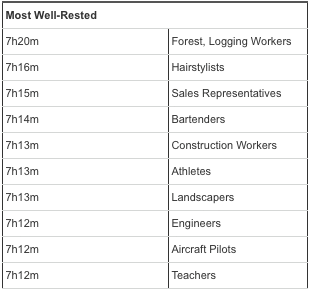
As you can see, there is not a great deal of variance among the professions on the list.  To say that lawyers are more sleep-deprived than police officers because they find one less minute of sleep seems ridiculous.  These sleep figures are based on the self-reported sleep times of 27,157 adults.  In reality, this study may reveal that we think we have less sleep than others – not that we actually get less sleep.

Now take a look at this:

In comparing the “sleep-deprived” with the “well-rested” occupations, it is difficult to decipher many defining characteristics.  On either side of the spectrum, you will find a dichotomy of professions in terms of compensation, hours of work, education-level, and job location.  Perhaps the sleep differential can be attributed to personality types or other behavioral attributes.  That type of analysis, however, would require an advanced psychological degree and is well beyond our expertise (although we do have a copy of the DSM-IV around here somewhere at Abnormal Use headquarters).

So what does all this mean?  Probably very little.  We doubt the 20-minute sleep differential between lawyers and forest loggers is actually statistically significant.  In any event, this study acts as a stark reminder to us all.  We enter this profession knowing that it requires a lot of hours and hard work to be good at it.  We are willing to do it because we love our jobs and we want to do everything we can to best serve our clients.  (Or, in the very least, we have to pay back all these student loans, right?) At the same time, we also have to balance being the best spouses and parents  we can be along with other outside commitments.  There are only so many hours in a day, and sometimes, sleep is the easiest to cut.

The moral of this story is twofold.  First, continue to work hard.  Not only do our clients expect and deserve it, we owe it to ourselves.  After all, nothing is worth doing unless you go all in.  Second, it is imperative that we find a work/life balance.  Life will be much happier when you can enjoy all aspects of it.  Make time for work.  Make time for family.  Make time for a little sleep. And now, I’m off to take a quick nap.

Vice Squad: On Assignment in the Gulf

Dateline: 12:36 pm, CST, Saturday, September 3, 2011, Pensacola, Florida

Vice Squad here, on location from Florida’s panhandle. I’m on assignment this weekend with a bachelor party for an old friend, conducting field research into the depraved and licentious behavior of young American men bound for holy matrimony. This has required me to go undercover, to blend in with my subjects, to become one of them. Do I do this willingly? Of course not. I do it all in the interests of academic integrity and for the benefit of you, my dear reader. Mostly.

To be certain, I am exposing myself to a certain amount of danger in submitting this field report. As I write, I am sitting outside under the swirling clouds of Tropical Depression Lee. It is gently spitting rain and generally punishing this part of the world with a force equivalent to the cooing of a newborn baby. This weather event, touted as causing a current state of emergency, has prompted local residents to look to the sky and casually proclaim, “Meh.”

The greater danger comes from the circumstances surrounding the preparation of this very post. I’m among five of my closest friends. For a bachelor party. At a beachfront Florida town. On Labor Day weekend. On the first college football Saturday of the season. I’m sure you can imagine how popular I am right now, as I sit here preparing this post. I would love to share with you the things that are being said about me. But I can’t, not unless they’re heavily edited, and even then, I don’t think they’d make grammatical sense. So trust me, I’m enduring a significant amount of personal ridicule to file this field report.

Oh, look. The first round of kickoffs just happened.

The trip so far has been filled with observations about the products we depend on in our daily lives. I’ve highlighted five of those observations for your consideration.

1. Google Maps. We’re staying at my buddy Matt’s house in Pensacola. I’ve never previously been to this city, and frankly, had no idea how to get here or how much time it would take. These problems were quickly solved courtesy of the Google machine. Almost instantaneously, we had alternate routes available and estimated times of arrival. For the most direct route, 7.7 hours from Abnormal Use headquarters in Greenville, South Carolina. No sooner had we gotten this information from Google, something funny happened. We turned on Google. In the blink of an eye, the information provided by Google became an enemy. It was questioning our manhood. “Google says it will take almost 8 hours. That’s [redacted]. I bet we can get there in six and a half. Probably six.” The entire car agreed without hesitation. Literally one minute earlier, none of us had any idea where we were going. One minute later, after Google had shown us the way, we had unanimously voted that Google didn’t know what it was talking about. In fact, we saw Google as challenging us. The machine was daring us to beat its time. Challenge accepted, Google. We left Greenville at 5:45 pm.

We pulled into my pal’s Pensacola driveway at 12:30 am–6.7 hours after departure. Unfortunately, Pensacola is a time zone behind Greenville. It was 1:30 back home. We had been on the road for exactly 7.7 hours. Touche, Google.

2. Chick-fil-A. We decided to stop for dinner on the far side of Atlanta, and we decided there was no better place to recharge our batteries than the Original Chick-fil-A location. The original restaurant is in the Atlanta suburb of Hapeville, which backs up to the far side of the Atlanta airport. If you’ve never been here, you need to go. It’s everything you love about Chick-Fil-A, multiplied by everything you love about Waffle House. There’s table service, a full menu of side items like sweet potato souffle and mac and cheese, and it’s open 24 hours. This raises two important points. First, when I say “full menu,” I mean full menu. Specifically, they serve beef. At a Chick-fil-A. Riddle me that. The second point is even more staggering: it’s open 24 hours. Everyone knows that Chick-fil-A is closed on Sundays. And we have found ourselves on more than a few Sunday mornings wishing that our Creator would make a special exception just one time so we could get a chicken biscuit. Our prayers have gone wholly unanswered. This blew our minds, so we asked our resident Chick-fil-A expert and waitress Tammy how this works. Apparently, the original is open until 4 am on Sunday mornings (almost certainly a prime business time) and then closes until Monday morning. However, Tammy has assured us that she is putting a proposal together to see that the original will also close promptly at midnight. We’re fine with this and we support her efforts. After all, if not everyone can get Chick-fil-A on Sunday, then no one shall get Chick-fil-A on Sunday.

3. Automatic Vehicle Collision Detectors. We took my car to Florida. My car does not have an automatic vehicle collision detector, but I had the next worst thing: my buddy Nick. Somewhere on a quiet stretch of I-65, Nick saw a car on my rear quarter (the only other car around for miles, mind you) start to merge into me. Rather than inform me in a clear, cohesive manner that we were about to be involved in a mass fatality situation, Nick releases an incomprehensible cry that can only be described as the mating call of a yeti. It had been dead quiet in my car before, making his cry that much more alarming. I nearly wrecked from the shock value alone. The merging car moved back in its lane before anything more serious happened. Nick collected himself and explained that the car, at its closest point, was a mere inch away from us. Reports from other parts of the vehicle indicated that while we had a close call, it was nowhere near as close as Nick’s freaking out suggested. Certainly, if we were in danger, a collision detector would be useful, and the risk makes me wish I had the capability in my vehicle. But the fact of the matter is that even if I had a collision detector, Nick’s caterwauling would have drowned it out. Maybe a better feature would have been a cone of silence around his seat. This would have been useful for most of the trip.

4. Cigars. I love a good cigar, especially when I’m driving. There are certain risks involved, though, that are not for the untrained aficianado. First, you’ve got to be careful of where you ash. Hot ash in the lap is not pleasant, not as bad as a boiling hot cup of coffee, sure, but still, not good. Second, you’ve got to be careful about checking your blind spot with a stogie in your mouth, unless you just really like a trail of hot ash streaked across your window. Finally, in particular regard to stick shifts, if you’re pushing into third or fifth while holding your cigar, you’re likely to end up with ash in your cd player. Not that I know first hand about any of these problems . . . .  Moving right along.

5. Matt’s TV. Let me begin by saying that I am grateful for Matt opening up his home to us. However, Matt’s TV is a problem. To be fair, it is a large, flat screen manufactured by a reputable company (which shall remain nameless). And it’s designed for 1080p HD picture quality. Unfortunately, Matt is in a service area that can’t deliver that picture quality, so everything you watch ends up looking like a Tim Burton movie–animated computer graphics. The limited amount of football I’ve been able to watch while writing this post looks like Madden ’12. I say all this for 2 reasons. First, technology is great if there’s the ability to use it. There’s no point in having a Porsche if all the roads are dirt. Don’t get me wrong: this isn’t Matt’s fault. He was relocated to Pensacola from an area that had the ability to deliver high picture quality. But second: now that you’ve moved, Matt, you’ve got to get a TV that doesn’t make everything look like it was made by Pixar.

As an epilogue, I understand that Matt is working on getting a new TV. His flat screen is mounted on the wall with an assembly that is rated to support 30 pounds. Matt’s TV weighs 90. This problem may take care of itself in the very near future.  In related news, I predict my next post will consist of live-blogging a TV falling off a wall.  I’ll be sure to write it with a view toward the post becoming admissible evidence, either in regard to Matt’s insurance claim or his wife’s murder trial.

This is the report from the field. Vice Squad out.

South Carolina Snowpocalypse

Today, the snowpocalypose has come to South Carolina. Most news outlets are reporting that the Governor has closed all state offices in all counties today. At least some federal courts in South Carolina will be closed or opening in a delayed fashion. As of this morning, I-85, the interstate that passes through our fair city of Greenville, is still being cleared. If you’re in the Southeastern United States, we’d encourage you to investigate such closings before venturing out into the snow and ice. It might be best simply to hide from the cold with a cup of coffee.

Likewise, we here at Abnormal Use will not be going into the office today. Our friends at the Drug and Device Law blog in Philadelphia might scoff at this South Carolina snowpocalypse as merely a couple of flakes, but we’re not used to this type of weather down here. Neither is anyone else in the state. Thankfully, we spent much of yesterday preparing for the inclement weather.

We trust and hope things will be back to normal tomorrow.

(By the way, depicted above is the cover of Strange Adventures #79, published by DC Comics way, way back in 1957. We’ve been waiting for the perfect opportunity to use it.).

FDA Proposes New Warning Labels to Alert Smokers that Smoking is Bad

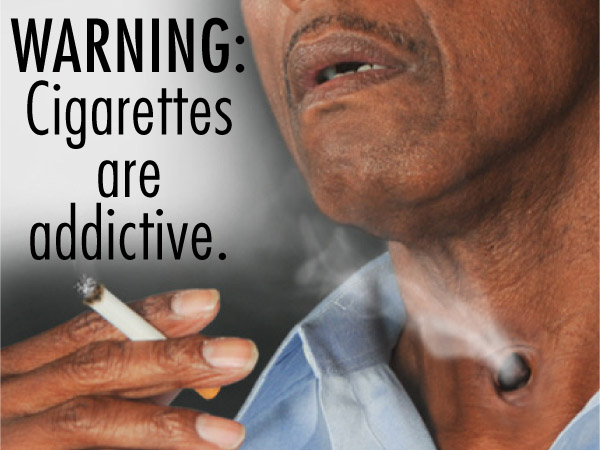
Mmmmmm. Now the cigarette is even closer to my lungs. And I get the added benefit of focusing on lung cancer without worrying about any pesky oral cancer or hairy tongue. Yes, hairy tongue is a real disease, and tobacco use is a contributory factor. (Strangely enough, coffee drinking is also a contributing factor, which is unfortunate for the universe of associates who depend on both coffee and cigarettes to stay awake.) As noted in multiple media, including the New York Times and much of the blogosphere, the FDA is proposing new illustrative warning labels to encourage people to quit smoking. Yum. To see some of the other proposed labels, click here. Here are several different opinions on the impact of this move.

Defense Litigation-oriented opinion: I’ll note that this move is a generation away from paying off for Big Tobacco. It’s hard to imagine that a smoker will succeed in ignoring or not understanding these types of warnings, when the warning is designed to take up 50% of the package area surface. So, certainly, these warnings are favorable to future litigation outcomes for Big Tobacco, which will reduce their anticipated exposure to large jury verdicts. In 20 years, cigarette manufacturers may be more profitable than ever.

Conspiracy-theorist opinion: This is a much easier way to pay lip service to the idea that we want to reduce the overall costs of smoking to the public, than say, banning cigarettes. The federal government doesn’t want to ban cigarettes because according to this website that I know nothing about, the federal government took in $8.5 billion in cigarette taxes in 2009. Way to go progressive tax system! Therefore, these new labels are good for both the government and manufacturers.

College student opinion: Moreover, this is sure to be an effective tool to decrease the existing pool of smokers. Does anyone else think that your typical college student will have a large poster of the above graphic hanging in his room while he smokes, while, at the same time, thinking how smart he is because he appreciates the irony? Meanwhile, because the cost of college will continue to skyrocket, the rest of us will appreciate the irony of the graduate struggling to pay off his student loan debt (because college graduates make all the money) while he looks for money in his budget to buy cigarettes.

Realistic opinion: If you want people to quit smoking, tell them about hairy tongue. Surely, the prospect of hairy tongue is scarier than emphysema.

Defense-litigation perspective resumed: The universe of manufacturing defects in this realm is pretty small. Failure to warn claims will soon be extinct, which will leave design defect claims as the viable strict liability alternative. Surely this labeling program will establish significant comparative negligence. Fraud and civil conspiracy claims will begin to die out as the early generations of smokers die out. What kind of new legal theories will be invented to establish liability over the next generation? This seems like a pretty good time to start a cigarette manufacturing company.