







Woman Sues McDonald’s, Ex-Husband for Turning Her Into a Prostitute

Once again, McDonald’s finds itself drug into the court system.  But this time, the lawsuit has nothing to do with piping hot coffee.  According to reports, Shelley Lynn has filed suit in a California federal court blaming the fast food chain and her ex-husband, Keith Handley, for turning her into a prostitute.  This is not the type of success story McDonald’s typically promotes on its employment applications.

Before we jump to conclusions, there does not appear to be any evidence McDonald’s required the former store clerk to add new meaning to the term “Happy Meal.”  Rather, Lynn claims McDonald’s negligently supervised and retained Handley, who owned a franchise 20 years ago.  According to the complaint, Handley hired Lynn in 1982 as a counter person.  The two started dating in 1985.  Thereafter, Lynn revealed her dream of becoming a Vegas showgirl.  To help her achieve that ambition, Handley reportedly bought Lynn a house in Vegas.  Handley then allegedly pressured Lynn to find a job in a Vegas brothel to help pay for the home.  Succumbing to pressure, Lynn claims she found a job in 1986 at the Chicken Ranch where she became a “top booker.”  She married Handley in 1988, but the two later divorced.  There are no indications from the reports as to how long Lynn claims she remained a prostitute.

We must question how McDonald’s became a player in this lawsuit.  First, we are aware of no evidence at this time that McDonald’s knew or should have known that Handley was a potential sex trafficker.  Lynn alleges in her complaint that McDonald’s did not have a proper procedure for reporting grievances.  However, the only grievance she mentions is an incident where she was allegedly fired for insubordination.  There were no indications that the insubordination arose out of her apparent hesitancy to become a prostitute.  In fact, it appears, at least from the complaint, that Handley allegedly pressured her to enter the business only after she moved to Vegas – when she was no longer a McDonald’s employee.

Second, Lynn will have difficulty showing that it was reasonably foreseeable McKinney would hire an employee, start dating her, move her to Vegas, and force her to become a prostitute.  There’s probably a law school examination question in these facts somewhere. Sure, McDonald’s probably doesn’t want to start a pattern of franchise owners engaging in intimate relationships with employees.  But a relationship by itself is not a grounds for liability in this case.  The issue is whether it was foreseeable McKinney would allegedly force Lynn into prostitution.  There are no allegations of this conduct with any other employees.  The conduct occurred after the period in which Lynn was employed by McDonald’s.  The conduct did not take place on McDonald’s property.  While we here at Abnormal Use are not judges, this doesn’t exactly sound like a case of negligent supervision/retention.

Another Note on Civility – Legal Blogging Edition

We here at Abnormal Use have been doing this blogging thing for about two years now, and we still love it.  One thing we love in particular are comments from our dear readers.  Without you, we would not enjoy this enterprise nearly as much (and, without you, of course, there would be no reason to do it).  We also enjoy good-natured debates with those with whom we disagree.  One of our fondest memories from our college days is getting together with intelligent people with differing views and backgrounds and debating the issues of the day, whether they be political, legal, or social.  You can learn something when you engage in constructive debate with someone who disagrees with you.

Certainly, one of our frequent topics of discussion is the infamous and controversial Stella Liebeck McDonald’s Hot Coffee case.  Our posts on that topic have generated much debate.  Our review of Plaintiff’s attorney Susan Saladoff’s Hot Coffee documentary earned 30 comments, while our initial preview of the film and highlighting of Ms. Saladoff’s background as a trial lawyer received 25 comments.  Our objective FAQ file, which we assembled using the original pleadings, motions, and contemporary news coverage of the case, drew seven comments.  Even the post we authored calling for Ms. Liebeck’s attorney Reed Morgan produce the trial transcript of the case merited 11 comments.

And there’s more.  Even though some of these posts are months old, or even a year old, they continue to receive comments to this day.  Even our post commenting upon Ms. Saladoff’s appearance on “The Colbert Report” still gets a comment or two months later.  One such comment to that post, submitted by a Houston lawyer in late January, is as follows:

I’m amazed at the extent to which your law firm, years later, continues to cheer for a team that lost at the expense of public faith in a justice system that worked — whether you agree that it worked, or whether it serves you in particular, or not. There are salient facts on both sides of this issue. Yes, the coffee was very hot. Yes, she sat in it for 90 seconds. Yes, people should know coffee is hot. And yet, McDonald’s knew its coffee was dangerously hot and callously treated the risk to Ms. Liebeck as a mere cost of business. All of this evidence was heard by the factfinders, the jury. What matters now is that the factfinders heard the evidence — from both sides — and made a decision based on the evidence and the law it was charged to apply. As a member of the bar who has taken the same oath that (I presume) the attorneys in your firm have also taken, I think your continued biased commentary is irresponsible. I’m not saying that you don’t have a constitutional right to say it (questions regarding attorney ethics rules notwithstanding); you probably do. But I think you’re doing more harm than good to our legal system by doing so, and it’s ethically and morally irresponsible to continue to cry about how this jury was wrong and our system is broken simply because they dared to conclude differently than you would have them conclude. I would expect your biased editorialism from a college newspaper, not accomplished members of the bar.

Gee whiz.  For one, if every jury verdict is sacrosanct and immune from criticism of any kind, that’s going to put a lot of appellate lawyers out of business. Sure, we expect criticism and disagreement; that’s part of putting ourselves out there in the legal blogosphere. But our analysis and commentary on an infamous jury verdict is “irresponsible”?   Possibly unethical? Really? Can we no longer analyze and have some fun re-litigating a case which appears to have been misrepresented in the media by those from varying backgrounds, and before our acquisition of the pleadings and motions, discussed for years without reference to the original underlying documents? It’s harmful to our legal system to look back at reevaluate some of the decisions made by the lawyers, the trial court, and the jurors and gauge whether they were right or wrong? Must we consider those jurors infallible?

Sigh. I guess that’s what we get for engaging in this blogging thing. (And by the way, “biased editorialism”? Is there any other kind?)

Or, maybe we just hit a nerve and our making some points that those who have a vested financial interest in the jackpot justice system would prefer that we not make.

Friday Links

If you frequent this site, you know we try to showcase legal themed comic book covers on Fridays. Let us tell you this: that gets more and more challenging each week! So, depicted above is Infamous: Lindsay Lohan #1, published not so long ago in September of 2011 by Bluewater Comics (which often produces quickie celebrity bio titles like these).  On that cover, we see the troubled former starlet taking her mug shot about as seriously as she likely takes everything else in her difficult, difficult life. Whatever the case, we doubt the folks in California would allow a prisoner to be so cavalier during the mug shot process.

As you may recall, in the past, our own Frances Zacher has written a bit about the legal issues involving driverless cars.  In a post called “Autobots – First Casualty,” the author of the Living the Meme blog attempts to pick up where Frances left off and explore the issue in further detail.  Check it out.

Get this!  Accordingly to The Lariat, Baylor Law School – our editor Jim Dedman’s alma mater – recently hosted a “People’s Law School.”  At that event, there was a section dedicated entirely to the McDonald’s hot coffee case! Had we been in Waco that day, we would not have missed it!

Speaking of our editor, last week he was hanging out in Philadelphia on a vacation of sorts and he met and hung out with Max Kennerly, the author of famed Litigation & Trial law blog. It was a great time, we hear.  However, if you had overhead their conversation about blogs, Twitter, and BBSs, you would have thought they were huge nerds.

Oh, and you may remember that we’ve been hinting for a while that we have some big plans in store for you, our dear readers, in 2012.  Today is the last Friday in February.  In just a few weeks, in mid-March, you’ll see our first such  blogging project of note.  Be forewarned: it’s a doozey!

Friday Links

Way, way back in the early 1970’s, there was once a television program called “The Young Lawyers,” which starred Lee J. Cobb, Judy Pace, and Zalman King (who passed away earlier this month at age 69). At some point during the show’s run, Dell Comics published the comic book above dedicated to the program. Its tagline for this issue reads: “When a bomber strikes, who is to blame?” We would suggest that the person to blame is likely the bomber. (Maybe they young lawyers never took Crim Law.).

Max Kennerly of the Litigation & Trial law blog offers this great post entitled “The Real Risks of Writing a Legal Blog.”

As you know, we here at Abnormal Use go to great lengths to chronicle the hot coffee litigation.  Some have accused of us of trying to relitigate a long dead issue (or is it beat a dead horse?).  However, it seems these issues may be more relevant than even we realized.  Just last week, at the local Starbucks drive-thru right here in our own Greenville, South Carolina, we overheard:  “Give me a Venti Americano, two Splendas, and . . . make it extra hot!  I mean, really hot!” Contributory negligence, perhaps? Assumption of risk?  Or something more sinister? Perhaps this zealous customer was seeking a golden payday.  Stay tuned to Abnormal Use to find out.

Here we go again!  According to this report by Jon Campisi at Legal News Line, “[a] Philadelphia woman who claims she became burned by a hot cup of coffee at local Burger King is suing the fast food giant in state court.”  The incident occurred on Valentine’s Day 2010, two  years ago this week, and the Plaintiff alleges that “[t]he lid had not been properly placed on the cup, causing the hot coffee to spill on [the Plaintiff]” when the fast food employee handed it to her at the drive thru.  We’ll be following this one.

Hey, deponents, don’t call your 88 year old grandmother “The Creeper” at your deposition.  Okay? Thanks.

SmartLid Offers New Version of Same Old Product

SmartLid Systems recently unveiled a new disposable coffee cup lid which changes from a dark color to a light color when introduced to heat. The lid is supposed to make it easier on consumers to know when their coffee is hot without the hassle of reading warning labels. A novel idea, to be sure.

While we all like to rely on color changing plastic, we here at Abnormal Use question whether the lid is superior to those pesky warning labels they are designed to replace. According to the company’s website, the “color changing lid works in a universal languge, COLOR!” SmartLid may want to rethink this “unversal” strategy. First, not all people distinguish between the full rainbow of colors we have come to know. For example, how can the lid account for colorblindness? After all, a common symptom of colorblindness is the inability to distinguish between different shades of the same color. Maybe these people don’t fit within SmartLid’s definition of universal.

Second, SmartLid does not even succumb to its own “universal” business model. If heat has a universal color, we imagine it would be “red.” Water faucets differentiate between hot and cold with the colors red and blue, respectively, almost anywhere you go. SmartLid, however, has not adhered solely to the “red is hot” philosophy. SmartLid advertises that it can create the lid in a variety of color options to incorporate a company’s existing brand colors so long as the hot color is lighter than the cold color. How is the customer to know which color means hot?

To alleviate this problem, the rim of the SmartLid remains its cold-state color even after the lid transitions. If customers are not fully informed about the functioning of the SmartLid, we doubt they would be able to recognize this distinction. Of course, SmartLid can always place a label on the lid to explain the transitions. And we thought these lids were supposed us to keep us from having to read.

As is the case with many gimmicks, the producers haven’t thought through all the perils of real life. According to SmartLid, coffee is to be brewed at 190 degrees, but shouldn’t be consumed until the temperature decreases. We assume the lids will change color at this temperature. As the coffee cools, the lid color transitions back to its original state – room temperature – without stopping to tell us when coffee is “safe” to drink. And how could it? Personal preference will always dictate what temperature you want to drink your coffee. Despite the lid, people will still test coffee the old-fashioned way – by sipping it.

There is nothing necessarily “wrong” with the SmartLid. Rather, the lid does little, if anything, to protect from the hazards allegedly associated with drinking a hot beverage. Whether it is a color changing lid or a warning label, the determination of whether to consume hot coffee rests with the consumer.

Friday Links

Depicted above is the cover of Batman Gotham Adventures #27, published not so long ago in 2000.  Here’s our question: If Batman has been, as the cover suggests,  “wrongfully accused” and jailed, why have his jailers permitted him to remain in costume? Surely it is a violation of the Gotham City Detention Center’s policies and procedures to permit a criminal defendant to remain in costume.  We suspect that Batman ultimately escapes this predicament, but we also surmise that if he had been revealed to be Bruce Wayne during his confinement his flight from justice would have been much, more difficult.  By the way, this is not the first time we’ve looked at a cover from this series.  See here for a similarly puzzling cover.

According to this tweet by our own Stuart Mauney, the South Carolina Bar House Delegates debated the rule against perpetuities yesterday.  There’s something we never thought we’d hear of again.  What next? The rule in Shelley’s case?

For years and years, we’ve loved The Onion.  This week, that satirical paper published a piece entitled, “Supreme Court Overturns ‘Right v. Wrong.’”  That’s big news.

Lawyerist asks its lawyer readers: “Is Facebook ruining your life?” We’ll get back to you on that one.

Jeremy Grabill of The Product Liability Monitor pauses to comment upon the release of Susan Saladoff’s “Hot Coffee” documentary on DVD.  Grabill notes: “[F]or every sympathetic plaintiff that Ms. Saladoff (the film’s producer/director) presents, there are no doubt an equal (if not greater) number of truly frivolous claims that could be chronicled, especially in the mass tort context.” As you know, you can follow our continuing coverage of that film and the fabled Stella Liebeck McDonald’s hot coffee case here.

2011: The Year That Was

Wow.  2011 has come and very nearly gone.  That’s the cycle of life, we suppose. But we must pause to confess that we here at Abnormal Use and Gallivan, White & Boyd, P.A. have had one heck of a year.  On the blog front, we hit 500 posts. We were named by the ABA Journal to this year’s ABA Blawg 100 and also named one of the Top 25 Torts Blogs by the LexisNexis Litigation Resource Community. We were cited by The New York Times, Scientific American, and National Public Radio. We caused a stir with our many (some say too many) posts on the infamous Stella Liebeck McDonald’s hot coffee case. And, as per usual, we interviewed a whole host of law professors, practitioners, and pop culture celebs.

On the law firm front, it was also a significant year with many big changes.  We began 2011 as a law firm with a single office in Greenville, South Carolina.  We end 2011 as a larger, more regional firm with three offices in two states.  This past spring, we opened an office in Charlotte, North Carolina. Then, just a few months later, we opened an office in Columbia, South Carolina, just a stone’s throw from the state capitol building.

So, as you can see, it’s been quite a year for us here, both at the blog and within the firm.

Here’s hoping that 2012 is just as exciting.

The Abnormal Use Community

As 2011 draws to a close, we here at Abnormal Use have looked back on the year and shared with you both our favorite posts of 2011 and the Abnormal Interviews we published in the preceding twelve months.  One thing that we have not yet addressed is our great fondness of your reader comments and feedback.  We have received all sorts of comments this year, from congratulations, to praise, to vitriol.  (We certainly opened a can of worms with our discussion of the McDonald’s hot coffee case and our review of a plaintiff’s attorney’s documentary on same).

So, in the coming year, we humbly request that you please keep your thoughts and comments coming.  Even if you disagree with us, we hope you will share your opinions and observations (and judging by the past year, none of you are shy about doing so).

We also remind you that there are several ways to get a hold of us.  We are all into this social media thing and offer such outlets.

The blog itself:  First and foremost, you can comment and communicate with us directly right here on the blog itself. Don’t forget, too, that in the right hand column we feature a complete list of our writers and contributors. If you click on one of those names, you will be taken to that individual’s official biography on our law firm’s website, where you contact that writer directly via email if you wish.

Twitter:  We here at Abnormal Use love Twitter, and we tweet links to each blog post. We also try to interact with our friends and legal colleagues in the Twittersphere.  You can reach us on Twitter at @gwblawfirm.  So, if you like Twitter as much as we do, tweet us!

Facebook:  This year, we finally set up a Facebook page for Abnormal Use.  If you are a sporadic visitor to our website, but a frequent visitor to Facebook, you can follow our updates there without ever having to leave your favorite social network.  Click here to reach us there.

Now that you know all of the ways to reach us, please drop us a line in 2012!

Our Favorite Posts of 2011

Now is the time that we, as consumers of media, are inundated with year end best-of lists. So, just as we did last year, we here at Abnormal Use have collected our favorite posts of this past year – our second full year of existence. If you’ve followed us from the very beginning, you know that we’ve posted at least every business day these past two calendar years. That’s a lot! Looking back over several hundred posts this year, it was difficult to choose our favorites. But, dear readers, the ones we enjoyed the most are linked for you below, along with their author and publication date. Fill yourself with nostalgia, just as we have, and revisit these entries from 2011.

The Stella Liebeck McDonald’s Hot Coffee Case FAQ (Jim Dedman, January 25, 2011)

Marketing vs. The Market: A Debate About Bilingual Warnings (Frances Zacher, February 2, 2011)

Songs about Lawyers, Judges, and Attorneys (Jim Dedman, March 14, 2011)

Star Wars Prequels Unreasonably Dangerous and Defective, South Carolina Federal Court Finds (Jim Dedman, April 1, 2011)

TV Review: TNT’s “Franklin & Bash” (Laura Simons, June 1, 2011)

Sweet Coffee: The Next Great Documentary? (Nick Farr, June 14, 2011)

Film Review: Susan Saladoff’s “Hot Coffee” Documentary (Nick Farr, June 27, 2011)

The Perils of Making Pop Culture References at Depositions (Jim Dedman, August 8, 2011)

Religion and Products Liability Square Off in New Jersey (Nick Farr, August 11, 2011)

Google Crashes – Literally (More on the Driverless Car Dilemma) (Frances Zacher, August 24, 2011)

New Jersey v. Henderson: A Self-Critical Look at the American Judicial System (Steven Buckingham, August 30, 2011)

The Life and Death of R.E.M. (Jim Dedman, September 26, 2011)

Dedman on Dedman v. Dedman (1927) (Jim Dedman, November 1, 2011)

I Want My Halloween (Steven Buckingham, November 3, 2011)

30th Anniversary: “Absence of Malice” (Mills Gallivan, December 13, 2011)

The Ultimate Malpractice: “Miracle on 34th Street” (Steven Buckingham, December 14, 2011)

One Year Ago Today: The Phil Morris/Jackie Chiles Interview

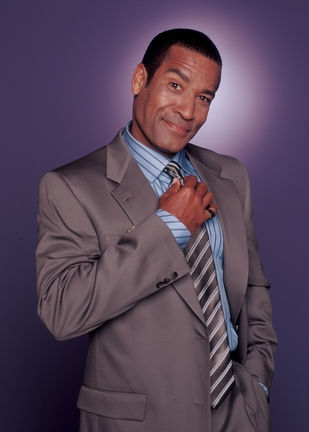
Today is an anniversary of sorts.  One year ago today, on December 6, 2010, we published what was to be a ground breaking, at least for us, interview with the actor who played one of pop culture’s most flamboyant attorneys, Jackie Chiles, the television lawyer from “Seinfeld.”  The character, now infamous, was played by actor Phil Morris.

Last year, he was kind enough to agree to an interview. Needless to say, we were overjoyed.

It took some doing.  We spent six months courting his agents and representatives to arrange the interview.  As fate would have it, Morris was reviving the “Seinfeld” character for a series of Internet videos on Funnyordie.com. Accordingly,  he was looking to promote himself on Internet websites and blogs.  We are sure glad he was. It was a perfect storm.

That success emboldened us a bit, and throughout 2011, we sought out additional interviews with pop culture figures.  In January, we ran an interview with Michael Sardo, the executive producer and creator of the USA television series “Fairly Legal.”  In March, we ran an interview with the writers and creators of the 1991 film Class Action.  We even interviewed Mark-Paul Gosselaar and Breckin Meyer, the two leads from the TNT program “Franklin & Bash,” although for that one, we must confess we were part of a larger press conference call rather than a one-on-one interview.

Spoiler Alert: We have some big things in store for you in 2012.

But it all started with Morris.  We even asked him about one of our favorite topics, the McDonald’s hot coffee case:

AU: What about people filing these lawsuits for burning themselves on hot coffee?

MORRIS: Well, we’re so litigious in this society, too much. It’s way beyond the pale. So that’s where I kinda jump off from Jackie. I certainly wouldn’t put stock in a lot of that stuff. I think, it’s just, we’ve gotten away with way too much here in the United States in terms of the legal ramifications of everything. I think, again like I said, beyond the pale. Jackie is an opportunist. So anything like that is manna for him. But personally, I think we’re really hurting ourselves and shooting ourselves in the foot. Not only are we giving our legal system a bad name, but we’re abusing it! We’re misusing those bits of legal power that we have – we’re fortunate enough to have in this country. It kind of drives me crazy.

So, if you would, take a look back at our fateful interview with Phil Morris from one year ago today.

(And while you’re at it, check out this brand new interview Morris gave to The Onion AV Club just last week!)