






Friday Links

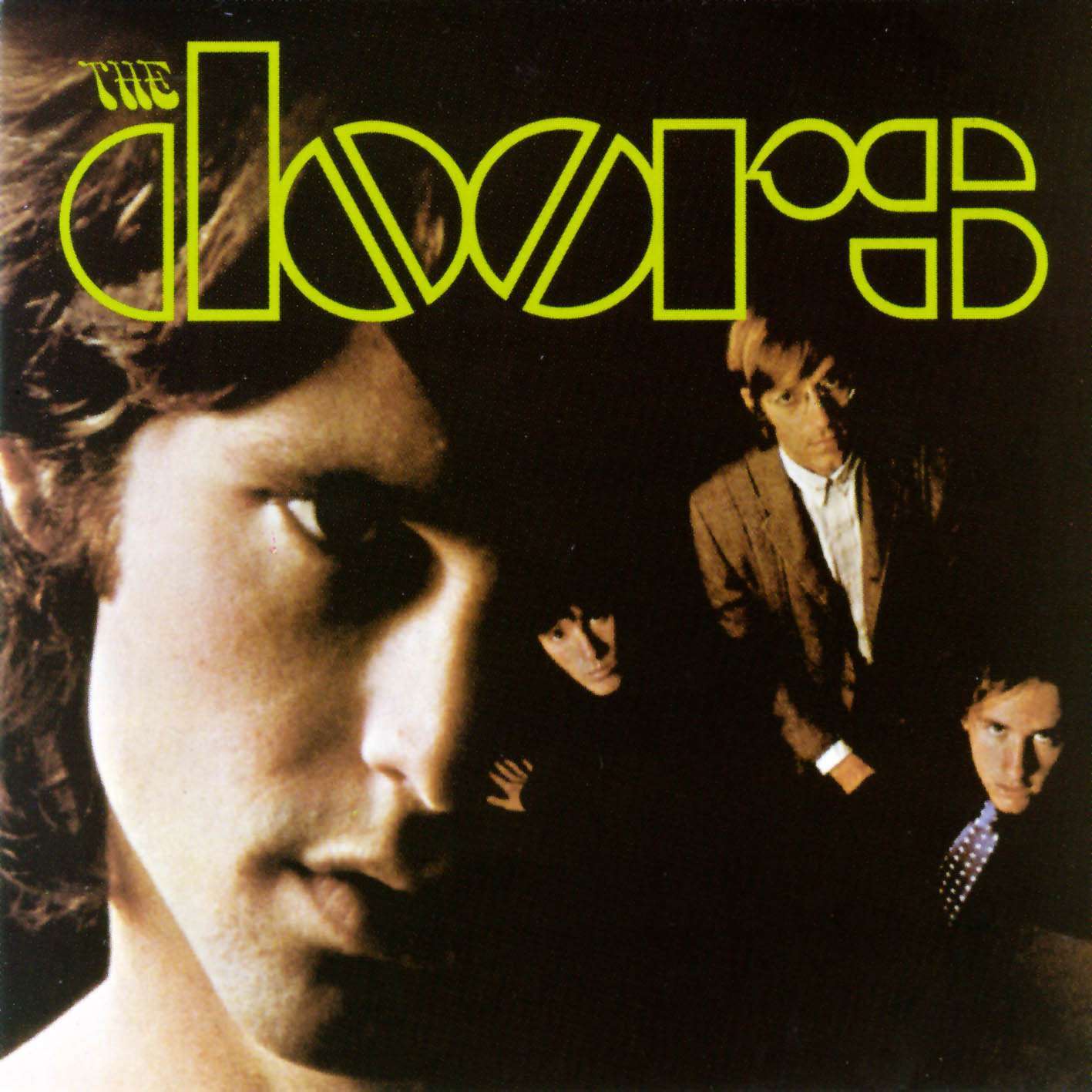
  • We here at Abnormal Use are not sure where we come down on the issue of the possible posthumous pardon of long-dead former Doors frontman Jim Morrison. If you missed this story in the news, Florida governor Charlie Crist is considering a pardon for Morrison for a 1970 conviction for indecent exposure and profanity. That’s a bit puzzling to us. Sure, we could offer you some righteous editorial about currently neglected injustices which are in greater need of attention, but it’s Friday, and we’re too tired to offer such a harangue. We could say that the only reason this made it to the Governor’s desk is that it involves a world famous rock star wrapped in his own bizarre mystique and that petty offenders in the jails receive no such acclaim or calls for assistance. But surely somebody else is going to say that, and our hearts aren’t really in that argument, anyway. But here’s the deal: That criminal conviction is so much a part of the Morrison legend that as fans of rock and roll music we must let it stand. Whether the 1970 conviction was faulty, or whether we as a society have simply come around in forty years to see the underlying conduct as being protected by the First Amendment, let’s not dilute the Doors story with a pardon. (See also The New York Times ArtsBeat blog’s coverage here).
  • If you’re not following Tweets of Old on Twitter, you’re certainly missing out. Here’s how they describe what they do: “We attempt to reveal the lives of our predecessors through the tweets of yesteryear: mostly one-line brevities from old newspapers, as they appeared –or close.” Whatever the case, last week, they tweeted this report about an unusual event at an Oklahoma trial presided over by one Judge Trimble in 1935. Ouch!
  • This week, The Daily Gamecock – the official student newspaper of the University of South Carolina – began a three part series on the University of South Carolina’s law school. The other components of the story are here and here. (Hat Tip: The Faculty Lounge).
  • The 1709 Blog reports on contest pairing Shakespeare and the modern day perils of copyright law. Get this:

    “Music and Intellectual Property” is the title of a one-day conference which CLT Conferences is running on 8 December in Central London. Subtitled “Identifying, Protecting and Enforcing Rights in Music”, the programme features a double input from the 1709 Blog: Ben Challis (General Counsel, Glastonbury Festivals Ltd) speaks on “The Glastonbury Tales: the Practicalities of Festival Life and IP“, while Jeremy Phillips takes the chair for the day. There are some other excellent speakers too, and the day promises to scintillate. You can see the full programme here.

    There’s a competition running along with this conference, the prize being complimentary admission — and the fabled free lunch. It goes like this. Shakespeare’s play Twelfth Night opens with Duke Orsino saying

    “If music be the food of love, play on,
    Give me excess of it”.

    Your task is to complete the following sentence:
    “If music be the food of love, then copyright is …”

    We here at Abnormal Use love contests, so we are going to use this installment of Friday Links to enter (and attempt to win). Our submission: “If music be the food of love, then copyright is the gastric bypass.” Aren’t we clever? Now, if we win the contest, how are we going to convince our managing partner to let us go to London?

  • Feeling nostalgic for law school? Check this out quip from a law student’s blog: “The probability of getting called on in class is inversely related to the degree of preparation spent on said class,” first year law student Tanny writes here at her blog, The Learning Hand, apparently realizing for the first time that lesson we here came to know so long ago.
  • We’re big fans of Rick Hasen’s Election Law Blog, which has been around since 2003, the early days of the legal blogosphere. We are pleased to see that he’s in our part of the country today for a conference. He’s in Atlanta, just two hours south of us, so we recommend he find time for a burger at the The Vortex Bar and Grill, if time permits.
  • Finally, congratulations to our own Stephanie Flynn, blog author and partner at our firm, are in order. This very day, she’s in New York, New York for the ABA Section of Litigation’s 11th Annual Women in Products Liability Workshop. Stephanie will be co-moderating a panel discussion entitled “Legal Marketing: What Technology Works?” beginning at 4:00 p.m. today. It will center around social media and how it can be used to assist in client development and networking. The panel includes Mercedes Colwin of Gordon & Rees, LLP, Kelly Jones of Harris Beach, PLLC, and Jim Smyth of Ezults L.L.C.
Thoughts on a Practical Legal Education

Ah, law school curriculum reform. A popular topic, and one always worth discussing, though true reform rarely occurs. The Law School Innovation Blog alerted us to a recent discussion at the Prawfs Blawg about potential 1L curriculum reform. The author of the Prawfs Blawg post noted that students fail to read cases and statutes closely enough and seem ill-prepared even after their first year. As a part of its post, The Law School Innovation Blog highlighted two comments to the original Prawfs Blawg piece, including one from a law student who complained that law school utilized too much of a “hide the ball” approach, and a response from an attorney who declared that hiding the ball is, in fact, the best method of instruction.

These issues, though, are symptoms of a much larger curricular problem, one that is not solely confined to the first year. As we all know, the first year curriculum is mostly uniform throughout the nation, focusing on the law of no jurisdiction in particular and the common law as it supposedly existed at some point in the eighteenth century. Though first year students do not typically learn the substantive law of an actual jurisdiction, the curriculum is helpful in training students in legal thinking and disabusing them of any judicial system stereotypes they picked up from their poli-sci profs. Are we really going to utilize the Rule in Shelley’s Case in our daily practice? Probably not. But that’s not really the point of the first year, which is to teach law students legal reasoning and analysis.

Despite the occasional outcry against the Socratic method, the first year curriculum is actually quite unique and helpful, despite its natural stresses. Sure, there may be law professors who delight in frightening those young would-be attorneys. But that approach has worked for many a decade, and sometimes, tradition should be emphasized, especially when it is useful.

So, let’s forget first year curriculum reform. Really, it’s the second and third years that are in need of radical overhaul, anyway. After an intensive first year, students drift away from difficult and demanding courses to focus on finding a job (no small feat these days) or perfecting their putting stroke. Many others spend that time taking interesting, though impractical, elective courses which will not serve them in the future. Although some students relish the opportunity to take “bar courses,” few law school graduates take the opportunity – or even have the opportunity – to learn the practical skills that will become their bread and butter.

Licensing entities have taken notice. Some state bars have imposed additional requirements upon law school graduates based upon the assumption that there is still something left for them to learn before entering the profession. For example, here in South Carolina, bar applicants must take a course called “Bridge The Gap,” which by its very name, suggests that there is at least a minor deficit in the education of said graduates. (The Bar has also set up a mentoring program for new attorneys). Although some institutions have implemented practical components into their curriculum, why aren’t most of the law schools out there addressing these issues?

The burden also shifts to the law firm, as the employer of the gap-bridging graduate, to inculcate the tricks of the trade. Larger firms may simply absorb this responsibility as a part of its general associate training. But in these troubling economic times, this can become a problem of import. Many law school graduates, unable to find jobs, are starting their own firms without any practical skills or experienced guidance. How did they find themselves in that position?

What to do? Instead of tweaking first year curriculum, law school administrators should consider more dramatic changes in the law school paradigm. The second and third years can be transformed into true opportunities to learn practical legal skills (as well as everyday ethical issues and the business of law). State bars should be confident that students graduating from accredited institutions have been properly trained both in the nature of substantive law and legal thinking but also practical skills that will be employed on a daily basis as lawyers. Last but not least, law students are consumers of legal education. If we expect them to spend three years of their lives and hundreds of thousands of dollars to enter our profession, there should be no gap to bridge upon graduation.

Friday Links

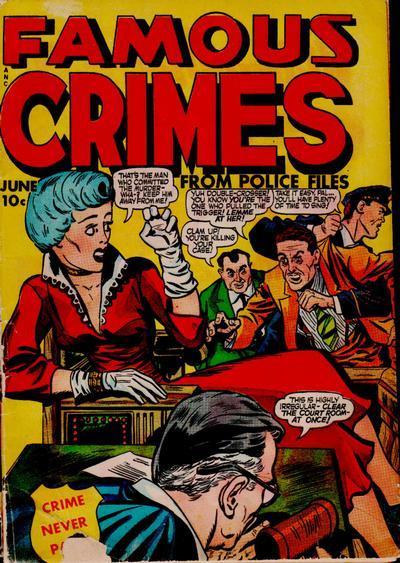
  • The comic book cover above is that of Famous Crimes #10, published way, way back in 1949. This is an odd perspective. Note that judge, responding to the hysteria occurring in his courtroom, exclaims, “This is highly irregular – clear the court room at once!” When is the last time you heard a judge describe something as “highly irregular”?
  • We like to keep tabs on the South Carolina legal blogosphere, even if the blogs from our state aren’t necessarily focused on products liability. So, congratulations to the South Carolina Family Law Blog, which was recently named one of the top fifty divorce blogs.
  • We are disappointed to learn from Gizmodo that Sony has discontinued the Walkman. Yet another technology of yesteryear consigned to the scrapyard of history. Was it only in 1986 that we listened to the Beastie Boys’ License to Ill on our own Walkman? Of course, we shouldn’t complain. Some of the senior partners here are still lamenting the loss of their beloved eight track players, a continuous grieving which prompted one of our junior associates to ask, “What’s an eight track player?” (Additional coverage on the Walkman demise from the Associated Press here and The Consumerist here.).
  • How is it that we only just discovered iPhone J.D., a website and blog dedicated to lawyers using iPhones? It’s like it was created just for us. And it has a Twitter account, too!
  • Last week, we here at Abnormal Use congratulated the Drug and Device Law blog on its fourth birthday. Last Friday, that blog posted one of its annual philosophical and introspective pieces in the wake of the fourth anniversary of its first post. In fact, in that very post, the authors thanked us for our own piece and even noted that they enjoyed our regular posting of legal themed comic book covers on Fridays. However, we did notice that they didn’t get our name quite right – they called us the Abnormally Dangerous blog. This takes us back to high school when the cool kids acknowledged our existence but didn’t get our names fully correct. Well, we’re just going to run with it, and maybe change our name to what they think it is rather than attempt a correction. That’s right, we’re cool now.

Abnormal Interviews: Law Professor Alberto Bernabe

Today, Abnormal Use continues its series, “Abnormal Interviews,” in which this site will conduct brief interviews with law professors, practitioners and other commentators in the field. For the latest installment, we turn to law professor Alberto Bernabe of The John Marshall Law School in Chicago. The interview is as follows:

1. What do you think is the most significant new development in products liability litigation of the last year?

I think that preemption will continue to dominate the discussion for a while. Last year’s Supreme Court opinion in Wyeth v Levine was the most important decision of the year and the Court has two very important preemption cases before it right now. The first one is Bruesewitz v. Wyeth, in which the Court will determine whether the National Childhood Vaccine Injury Act preempts vaccine design defect claims. The second one is Williamson v. Mazda Motor Corp., in which the Court will consider whether federal regulations preempt a claim in state court for damages caused by a car manufacturer’s failure to install a three point seat belt. This case is particularly interesting because it will allow the Court to reconsider its decision in Geier v Honda (decided in 2000) in which the Court found that a state claim was impliedly preempted by the federal regulations that gave automobile manufacturers the choice to use either seat belts or air bags. It will be very interesting to see if, in the wake of Wyeth v. Levine, the Court changes its view. It will also be interesting to see how it contributes to the legacy of retiring Justice Stevens, who wrote the dissenting opinion in Geier and the majority in Levine.

2. What rule or concept in modern products liability jurisprudence do you believe is the most outdated? How would you change it, and why?

There are a few good candidates. One answer is contributory negligence as a complete defense, but this is available in only a few jurisdictions. A more interesting – and perhaps controversial – answer would be that we need to take a careful look at the concept of the so-called “learned intermediary doctrine” in prescription drug cases. I think the policy behind the doctrine made sense when it was developed originally, but it is not frivolous to argue that both the practice of medicine and the marketing of prescription drugs have changed so substantially that we need to re-think the application of the doctrine.

3. Generally, how would you characterize the media coverage of products liability lawsuits and issues?

Inconsistent or incomplete. The typical media coverage tends to focus on generalities rather than the details and it is the details that matter most. Also, in many instances the media is interested in the extreme cases to exploit the “shock value” of the stories. My impression is that the coverage of those types of stories is almost always incomplete. There is little attention given to the argument that litigation can have a positive role to play that often results in more safety for consumers.

4. You also teach ethics. As the general public increasingly uses the Internet and social media to communicate, how do you predict that state bars will react to the popularity of this new technology among attorneys?

I am glad to hear you refer to the use of the Internet “to communicate” because my impression is that a lot of people still think that lawyering over the Internet only relates to “advertising,” which is a mistake. The fact of the matter is that there are a lot more issues that lawyers need to be aware of when it comes to the Internet. Participating in social media, for example, can lead to problems related to the inadvertent establishment of an attorney-client relationship, to the disclosure of confidential information and to duties to prospective clients, all of which can also result in conflicts of interests, disqualification and discipline. State bars will have to find better ways to inform attorneys of the risks they take when using modern technology and of the skills they need to do so safely. Earlier this year, the ABA took a good first step in this direction by issuing a new Ethics Opinion (No. 10-457) that summarizes the state of the law as it relates to the use of websites, but more needs to be done. In particular, state bars need to address the issues that arise when lawyers send metadata within electronic files. A number of jurisdictions have addressed the question, but the opinions are not in agreement. As more and more lawyers exchange documents by e-mail and other electronic means this is going to become a major issue. Many lawyers do not know the kinds of “hidden information” they are sending out in their electronic documents that someone with computer skills can access relatively easily.

5. You maintain a law blog. What is the biggest challenge for you in that enterprise, and how do you confront that challenge?

The biggest challenge is finding the time to do it well. I run two separate blogs – one on Torts and one on Professional Responsibility. It takes a lot of time because I am almost constantly checking other sources for the latest news and information. But it is very rewarding when I get encouraging messages from students, lawyers or other bloggers and when I see other bloggers mentioning my stuff in their blogs.

BONUS QUESTION: What do you think is the most interesting depiction of a products liability lawsuit in popular culture, and why?

In contrast to what I said about media coverage, which often tends to favor defendants, my impression is that movies with product liability themes tend to go the other way. Many portray defendants as villains who don’t care about the risks they create. Two movies come to mind quickly: Class Action (with Gene Hackman) and Thank You For Smoking. Class Action, which is very loosely based on the Ford Pinto case, provides a lot of material for discussion both in terms of products liability and professional ethics. It is also one of the few movies I have seen that illustrates that the most important part of litigation is the process of discovery rather than the trial itself. Thank You for Smoking is a very sarcastic look at the tobacco industry.

BIOGRAPHY: Alberto Bernabe is a Professor of Law at The John Marshall Law School where he teaches Torts and Professional Responsibility. After graduating from law school, Professor Bernabe clerked at the Supreme Court of Puerto Rico and later entered private practice, specializing in personal injury, mass disaster litigation, and media law. Before joining The John Marshall Law School, Professor Bernabe was a teaching fellow at Temple University, where he collaborated in teaching Torts, Products Liability and Legal Ethics. He has also taught Torts, Products Liability, Professional Responsibility and Media Law as a visiting professor at the University of Puerto Rico Law School.

Election Day

After our series of posts seeking nominations for the ABA Journal‘s Top 100 Legal Blogs list, we here at Abnormal Use pause to reflect upon the stress that political candidates must endure. Today, of course, is Election Day, and we would encourage our readers of all political persuasions to venture out to the polls and cast their votes for the candidates of their choice.

Oh, and we don’t know when the ABA Journal will announce its Top 100 Legal Blogs list or whether a blog that is less than a year old, such as ours, might be included thereupon. We can just hope that they’ll decide to let us dine with the cool kids of the legal blogosphere.

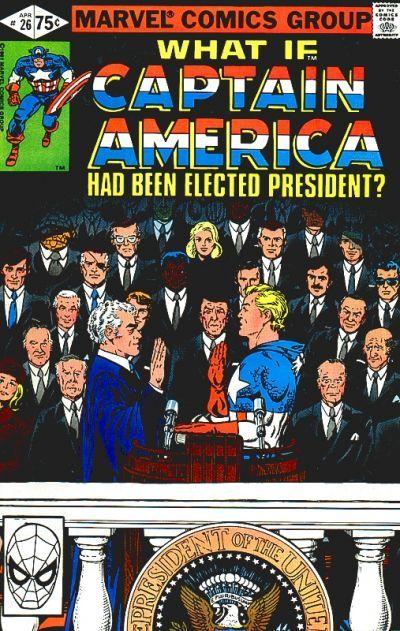
(And yes, we even found a comic book cover to observe this most political of days. That’s What If? #26, published way back in April of 1981, in which the writers speculated what would have happened if Captain America had run for and been elected President of the United States.).

Happy Halloween

We here at Abnormal Use make a rare weekend appearance today to wish all of you a safe and happy Halloween. We trust that you will meet your quota of candy consumption and scary movie watching. We’re still debating our costume, but we’ve narrowed it down to Romero-esque zombie, Lugosi era vampire, or big time Plaintiff’s attorney. Your thoughts?

The image above, of course is the movie poster from the 1978 horror classic, Halloween, directed by John Carpenter and starring Jamie Lee Curtis. We think that Hollywood may have remade this movie sometime recently, but we can’t be bothered to keep up with remakes.

Scary Links

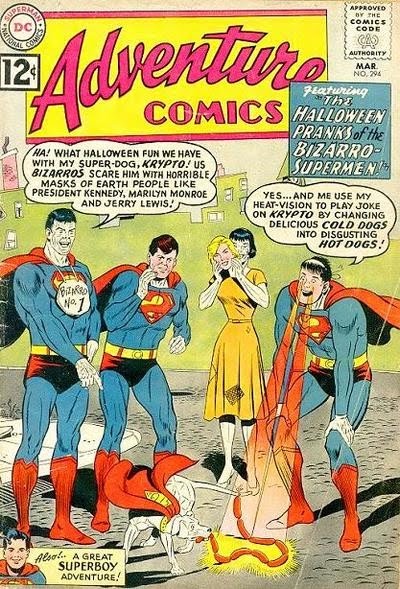
In the spirit of Halloween, we present to you the comic book cover above, Adventure Comics #294, published way back in 1962 (which you might have surmised from the references to JFK, Marilyn Monroe, and Jerry Lewis, all of whom are apparently familiar to Bizarro). With a title like “The Halloween Pranks of the Bizarro Supermen,” though, how can you go wrong?

Rather than link a series of frightfully normal legal news stories, today, we here at Abnormal Use thought we would explore something a bit more apprehension inducing and suited to the holiday at hand. So, to celebrate the occasion, we asked two of our contributors (and our non-blogger associate Nick Farr) to share their thoughts on the movies they fear most. (Specifically excluded are movies about associates attempting to meet billable quotas. We won’t count The Paper Chase, either, although we wonder if anyone still watches that movie, anyway).

Nick Farr: Before I saw The Exorcist as a young teenager, I thought I was pretty tough. The Shining was boring. It” made me laugh. Halloween just left me with a childhood crush on Jamie Lee Curtis. There was something about The Exorcist, however, that affected me in a way that Betsy Palmer (a/k/a Mrs. Pamela Voorhees) yielding a machete simply could not. Maybe if Michael Myers would have spun his head around backwards, Halloween would have been more to me than a breakthrough performance for another Hollywood starlet. Maybe if Pennywise the Clown would have crab-walked down a flight of stairs, I would not have thought of “It” as an adult-sized Bozo. Even today, when I reminisce about Regan walking into that party and innocently proclaiming, “You’re going to die up there,” chills run down my spine, and those feelings I felt seventeen years ago are resurrected. Tonight, I better sleep with the holy water.

Jim Dedman: The scariest movie I’ve seen would be, of course, Stanley Kubrick’s The Shining, although that is not the best story I have about a fear-filled work of cinema. In July of 1999, I was a first quarter law student at Baylor University in Waco, Texas. That month, I faced one of my first – and most dreaded – finals: Civil Procedure. (That frightful test, written and administered by the now retired Professor Trail, was scary enough.). After enduring that test, I took the rest of the day off, drove to Austin, and saw The Blair Witch Project, then out in theatres for only a few days, at the now defunct Dobie Theatre. Shot in a point of view fashion, the film profiled the misadventures of a group of students who venture out into the Maryland woods to explore the Blair Witch myth. The now defunct Dobie was a small, indie venue, and the particular theatre we were in had less than hundred seats. Imagine seeing that movie in such a place before all the hype and newspaper coverage ruined the original guerrilla style marketing of the film. At that time, there were still people who somehow believe the “found footage” was real. Of course, at the end of the day, I can’t say which was more horrifying, the film or the final.

Kevin Couch: I thought long and hard about the movie that terrifies me the most, and I settled on 1985’s Follow that Bird, a film adaptation of the beloved children series, “Sesame Street.” In the film, Big Bird runs away from home, a much madness ensues. Although you may scoff initially, I ask you, what is not terrifying about human-puppet interaction, especially when Miss Finch, a social worker puppet with the nefarious sounding Feathered Friends Society, is given the power to alter the human-puppet relationships foundational to all that is “Sesame Street”? In addition, given the films Big Brother feel that the social worker knows better than the (albeit nontraditional) family, I’m surprised that the film wasn’t re-released for its twenty-fifth anniversary this summer and run at Tea Party rallies. After all, the real horror of the film (again, aside from the human-puppet interaction) comes after the credits. Who really believes that the sinister Miss Finch is content to let Big Bird stay at Sesame Street? No one. She will come like a thief in the night and remove Big Bird from his nest on the basis that it is in his best interest, and Gordon and Maria will be left only with sorrowful years of fighting the system in the family courts. If a nine-foot yellow bird puppet is not safe from government intrusion, how safe do you think you are? And you thought Nosferatu was scary?

And that dear readers, is all we here at Abnormal Use have to say about scary movies. Of course, the rumor is that this very afternoon, the South Carolina Bar will release the names of those who passed this past summer’s bar exam. What could be scarier than the wait for that?

Happy Birthday, Drug and Device Law Blog!

We here at Abnormal Use wish the authors of the Drug and Device Law blog a happy fourth birthday. That site’s first post, its “Disclaimer and Terms of Use,” went live on Saturday, October 28, 2006 (at 11:45 p.m. no less!). The first substantive posts would begin a few weeks later in November 2006, with two posts on November 15, 2006, “The Presumption Against Preemption” and “MDLS in 2006. ” Although its authors have unofficially declared October 30 to be the site’s birthday, we recognize it as today, the anniversary of the inaugural post. We’re sticklers.

The site is run by James M. Beck, Stephen McConnell, Will Sachse, and David Walk, all of the Dechert LLP firm. Mark Hermann, a founder and contributor, retired from the enterprise in December of 2009, having been there from the very beginning four years ago today.

When we here first began to consider the creation of a law blog, we looked to the Drug and Device Law blog (along with Walter Olson and Ted Frank’s Overlawyered blog) for inspiration and ideas. Since that time, we’ve also carefully considered the advice that Hermann offered in his recent article, “Memoirs of a Blogger,” about the perils of being a lawyer blogger.

After ten months of doing this ourselves, we now know that maintaining a law blog is no small feat. But we must congratulate the authors of Drug and Device Law not just for their endurance, but their ability to provide consistent and thorough analysis of the litigation they cover. If you’re interested in products liability generally – and if you’re reading our site, you probably are – you really should be checking out the Drug and Device Law site each day, as well.

So, without further ado, we wish them a happy fourth birthday.

For further reading, check out these philosophical posts they have done on their past blog birthdays:

Friday Links

The comic book cover above is that of Tales of the Unexpected #16, published way back in August of 1957. The “Interplanetary Line-Up” is comprised, apparently, of several costumed party-goers and one actual extraterrestrial, all of whom have been placed in the standard line-up at the police station. It seems that a much easier procedure would have been to simply ask the humans to remove their costumes at the party, thereby utilizing the process of elimination to flush out the alien interloper. Oh, well.

Through this post at the ContractsProf Blog, we are alerted to this open letter from a Boston College 3L seeking to “leave law school, without a degree, at the end of this semester” in exchange for a “full refund of the tuition [the student] paid over the last two and a half years.” The student reasons that this will benefit both parties:

This will benefit both of us: on the one hand, I will be free to return to the teaching career I left to come here. I’ll be able to provide for my family without the crushing weight of my law school loans. On the other hand, this will help BC Law go up in the rankings, since you will not have to report my unemployment at graduation to US News.

The question: If this attempt at contract modification fails, will the student assert that BC’s law school education is unreasonably dangerous and defective? To be determined.

Cynthia Arends of the DRI Blog has this post, entitled “Is 500 Times the Heat of a Jalapeno too Hot?,” which profiles a complaint filed by a couple in Tennessee who allege that Blair’s Mega Death Hot Sauce, served to their son at a Steak-N-Shake restaurant, is “deleterious” and too hot to handle. As Arends notes, surely the fact that the phrase “Mega Death” is in the product name counts for something. (Of course, as litigious as our nation now is, this may prompt a copyright suit by the rock band Megadeth.). Whatever the case, we’ll be keeping our eyes on this case.

Quote of the Day I: “Through the use of chat rooms, any person with a phone line can become a town crier with a voice that resonates farther than it could from any soapbox. Through the use of Web pages, mail exploders, and newsgroups, the same individual can become a pamphleteer. . . . Two hundred years after the framers ratified the Constitution, the Net has taught us what the First Amendment means.” In re J.J., No. D055603, 2010 WL 4033633, at *2 (Cal. Ct. App. Oct. 15, 2010) (striking down probation restrictions that would have prevented 15 year old from using the Internet and social media) (citations omitted) (Hat tip: Technology and Marketing Law Blog).

Quote of the Day II: “I want to make it clear that I’m not after anybody. I don’t want any money. This is not the Lotto. I don’t want to make anybody look bad. I’m just thinking about the next person who comes along and buys a bag of frozen vegetables,” said Tom Hoffman, quoted in this piece in the Lansing State Journal, regarding his finding a frozen frog in his bag of frozen vegetables he had purchased. Somewhere, an attorney, perhaps an in-house counsel, has already printed this article and placed it in a folder labeled “Impeachment.” (Hat Tip: The Consumerist).

The Augusta Chronicle ran a fascinating piece by the Associated Press on this week’s oral argument before the South Carolina Supreme Court regarding the legality of casual poker games. The big news was that the State apparently conceded that under South Carolina’s ancient law banning games of cards or dice, such casual games are permitted. Still no word on whether Monopoly is legal, though. (The Legal Blog Watch has its own post on this matter here.).

The South Carolina Bar’s Law Related Education Committee is seeking attorney judges for their upcoming mock trial competitions. If you’re interested in judging middle or high school mock lawyers in November, February, or March here in South Carolina, please contact Cynthia Cothran at (803) 252-5139 with all deliberate speed.

Finally, happy thirtieth anniversary to Backstreets, the official fan magazine of Bruce Springsteen, the first issue of which was first distributed on October 24, 1980. (Incidentally, this week also marks the thirtieth anniversary of Bruce Springsteen’s The River album, released originally on October 17, 1980).

Abnormal Interviews: Lawyer/Comic Book Collector Mark Zaid

Today, Abnormal Use continues its series, “Abnormal Interviews,” in which this site will conduct brief interviews with law professors, practitioners and other commentators in the field. For our latest installment, we turn to lawyer and comic book collector Mark Zaid of The Law Office of Mark S. Zaid, P.C. in Washington, D.C. If you frequent this site on Fridays, you know that we occasionally – okay, perhaps more than occasionally – feature old comic book covers with legal themes accompanied by our commentary. In one such post, we mentioned Mr. Zaid when discussing a recent Yale Law School exhibit featuring comic books with courtroom covers. That exhibit, “Superheroes in Court! Lawyers, Law and Comic Books,” runs until December 16, 2010 and features much of Mr. Zaid’s collection. In fact, Mr. Zaid contributed so many comic books to the exhibit that he was asked to serve as its curator. Our interview with him is as follows:

1. How did you first become interested in collecting comic books with legal themed or courtroom covers? Do you remember the first one you saw or bought?

It was not too difficult or a stretch of any imagination to start collecting legal related comic books. I actually first started collecting comics with espionage titles or covers as my legal practice area is tied to the Intelligence Community. In essence, I represent spies, i.e., federal employees who work at agencies such as the CIA. At first I was seeking out comics that had legal connections to them such as ashcans (trademark submissions), Library of Congress deposit copies or books that had served as trial exhibits in litigation. As I simply perused through collections I had bought I started to see courtroom covers or titles involving attorneys and a light bulb appeared above my head and I realized that it was impossible for me not to collect this genre as well!

2. How did your interest in these types of comic books lead to the “Superheroes in Court! Lawyers, Law and Comic Books” exhibit at the Yale Law School Library?

Michael Widener, the Rare Book Librarian of Yale Law School, contacted me and invited me to serve as the curator of the exhibit. Apparently he had been asking around the community and one name continually cropped up as the person he should speak with: me. Of course, I jumped at the invitation. How could I resist the opportunity to combine my two passions: the law and comic books!

3. Do you see any consistent themes in the comic books’ portrayal of the legal system? If so, what have you noticed?

As far as character development goes, lawyers for the most part have been favorably portrayed over the decades. There are fortunately more super-heroes who have been lawyers than villains, although there have been our share of those as well. Comic books primarily, at least historically, reflect what is culturally popular in society at the time. Thus, at a time when Perry Mason dominated the television and radio airwaves it should not surprise anyone to see more legal scenes or characters emerge in comic books. But what I am particularly interested in is the impact lawyers have actually had on the comic book industry. Comic book characters, titles and even companies have been born or died because of the role that lawyers have played throughout the last century. It is incredible to truly evaluate the significance of lawyers in helping build the industry that exists today.

4. In our own blog posts featuring legal themed comic book covers, we’ve been surprised at the frequency of comic books artists’ usage of courtroom imagery. Why do you think they continue to return to those types of covers?

Again, I think the answer can be found in what is culturally popular in society at the time. Mr. District Attorney hit the radio airwaves in 1939. Comic books picked up on the character right afterwards. Just think of all the popular hit television/radio shows in every decade since then that have featured lawyers as the primary character if not served as the raison d’etre of the entire program. Comic books are simply following in those footsteps.

5. Of all the legal themed comic books you have collected, what is your favorite cover?

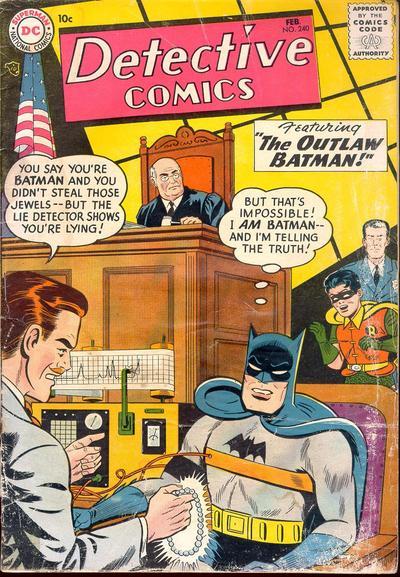
I don’t believe I really have a particular favorite, but I am certainly very partial to Detective Comics #240. It combines both a trial scene of Batman and the use of a polygraph machine. I sued the FBI, Secret Service and DEA over their use of pre-employment polygraph examinations and often handle polygraph challenges throughout the Intelligence, Law Enforcement and Military Communities. What makes the device so special is that the “father” of the modern day polygraph is William Marston. Under the pseudonym Charles Moulton, he created “Wonder Woman” whose magic lasso requires those bound by it to tell the truth. When I testified before the Senate Judiciary Committee in 2001 on the use of polygraphs, I noted how the device and Wonder Woman’s magic lasso shared one thing in common: they were both based on science fiction!

[Editor’s Note: We here at Abnormal Use previously discussed Detective Comics #240, the image of which can be found above, here.]

6. How do you find legal themed comic books covers?

I find the books through a variety of means, but primarily at comic book conventions and through auctions. My search for these books is fairly widely-known within corners of the community so many times other collectors/dealers point them out to me.

BIOGRAPHY: Mark S. Zaid practices in the areas of litigation and lobbying on matters relating to international transactions, torts and crimes, national security, foreign sovereign and diplomatic immunity, defamation and the Freedom of Information/Privacy Acts.

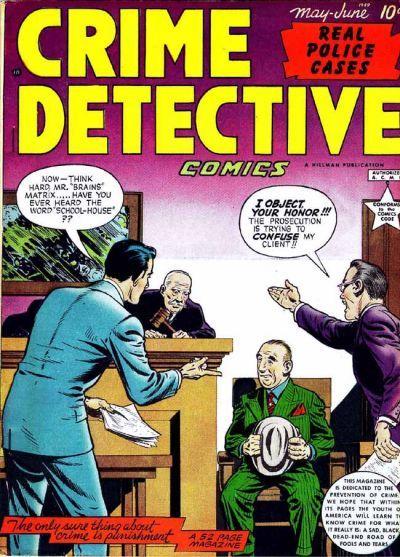
[Editor’s Note: The comic book cover at the top of this blog entry is that of Crime Detective Comics #8, published way back in 1948.]