Abnormal Interviews: Law Professor Jill Wieber Lens

Today, Abnormal Use continues its series, “Abnormal Interviews,” in which this site will conduct brief interviews with law professors, practitioners and other commentators in the field. For the latest installment, we turn to torts professor Jill Wieber Lens of the Baylor Law School in Waco, Texas. The interview, which mostly concerns punitive damages, is as follows:

1. What do you think is the most significant new development in torts or products liability of the last year?

I think one of the most significant developments of the last year was the government’s involvement in creating an alternative to tort law – the BP Oil Spill Fund. The Fund is advertised as a superior alternative — no attorneys taking a portion of the compensation received and the compensation should be paid out faster than in a lawsuit. The Fund may also allow claimants to avoid otherwise troublesome legal arguments like the economic loss doctrine, which if applicable, would preclude BP’s liability in negligence for causing pure economic losses.

At the same time, the BP Fund is very different than the 9/11 Fund. BP is funding it and compensating Kenneth Feinberg for his work. BP benefits directly if claimants apply to the Fund instead of heading to the courtroom. At a minimum, BP saves in legal fees and BP won’t pay any punitive damages within the Fund disbursements. I don’t mean to imply that any of this is necessarily inappropriate, but these are issues that were not present with the 9/11 Fund.

2. What component of punitive damages law do you believe is the least understood by civil litigators? Why?

Between the Supreme Court’s recent decisions in Philip Morris USA v. Williams, 549 U.S. 346 (2007) and Exxon Shipping Co. v. Baker, 128 S. Ct. 2605 (2008), there’s a lot about punitive damages to misunderstand. And it’s not just that litigators are confused; it’s the lower courts, too.

In Exxon, the Court expressed its concern that punitive damages are unpredictable. Numerous lower courts are now integrating the concern for predictability into their constitutional analyses. This is understandable because if the Supreme Court is concerned about predictability, then the lower courts should be concerned also. But Exxon was a common law-based challenge to a punitive damage award. Predictability does not appear to be a constitutional issue. Otherwise, an excessive award would be permissible as long as it was predictably excessive. At the same time, the Supreme Court relied very heavily on its constitutional guideposts — mostly the reprehensibility and ratio between compensatory and punitive damage guideposts — in Exxon, so the guideposts and predictability analyses may not differ all that much. The constitutional relevance of predictability is unknown at this point.

3. Generally, how would you characterize the media coverage of punitive damages issues?

The media coverage of punitive damage issues focuses on the outliers — only the excessive punitive damage awards garner attention. This media coverage, of course, fuels tort reform advocates and has likely contributed to states’ adoption of punitive damage caps or statutes requiring payment of a portion of the award to the state.

It’s also interesting to watch whether the media coverage has influenced the Court. In Exxon, the Court noted that studies undercut the thought of mass runaway awards and show that most punitive damage awards do not greatly exceed the accompanying compensatory damage award. Thus, maybe the Court isn’t so influenced. But after discussing these studies, the Court still suggested reform — pegging punitive damages to the amount of compensatory damages.

4. What do you believe is a defense attorney’s best constitutional argument against the imposition of punitive damages?

The best argument will always depend on the circumstances of the case. If the defendant’s conduct is not that bad, then the degree of reprehensibility guidepost probably provides a strong argument. Still though, the argument is a bit abstract because courts have never really been able to explain the “degree” part of this guidepost. How much more should an award be if the conduct is more reprehensible?

From a litigator’s perspective, the best argument is likely based on the ratio guidepost. It’s relatively easy to compare the amount of compensatory damages to the amount of punitive damages. This is also the same reason that courts have latched onto this guidepost and may explain why the Supreme Court’s ultimate suggestion for reform of punitive damages in Exxon was to peg them to the amount of compensatory damages.

5. What federal or state court opinion has been the biggest surprise for you of late, and why?

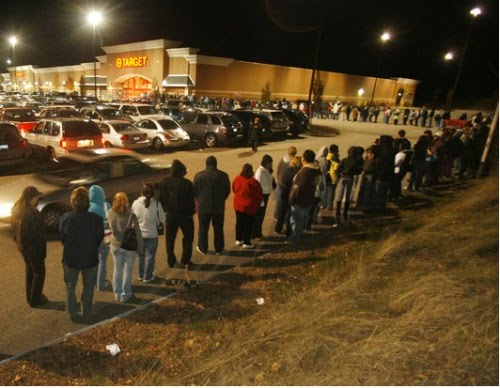
I don’t know if I’m surprised by the result of the opinion, but an opinion that interested me lately was an Oregon Supreme Court decision entitled Patton v. Target Corporation, — P.3d —-, 2010 WL 4539445 (Or. Nov. 12, 2010) It limited the effect of Oregon’s statute mandating that 60 percent of any punitive damage award be paid to the State.

After trial, the jury awarded the plaintiff $900,000 in punitive damages. Before judgment was entered, the parties settled for an unknown amount and jointly requested dismissal. The State intervened, claiming it was entitled to 60 percent of the punitive damage verdict. Based on the language of the statute, making the state a “judgment creditor,” the Oregon Supreme Court determined that the State is not entitled to anything until the judgment was actually entered. And the parties settled before the court entered judgment.

Unless the legislature changes the language of the statute, this decision creates a huge incentive for parties to settle before judgment is entered. And even if the legislature changes the language of the statute enabling the State to recover, this will present interesting questions regarding whether the parties are limited in their ability to settle late in the proceedings if punitive damages are sought.

BONUS QUESTION: What do you think is the most interesting depiction of tort litigation in popular culture, and why?

Honestly, I try to avoid any depictions of the law in popular culture. I have difficulty enjoying them while knowing that they’re unrealistic. But honest depictions of tort litigation would not be too interesting. Can you imagine a show about document review? It wasn’t pure tort litigation, but “The Deposition” episode of “The Office” is one of my favorites. When the attorney asks to ask Michael [Scott] another question, and Michael responds, “I’ll allow it,” as if he’s the judge – that was a great episode.

BIOGRAPHY: Jill Wieber Lens joined the Baylor University School of Law faculty in 2010 as Assistant Professor. In 2009, Professor Lens was a Visiting Assistant Professor at the University of Louisville School of Law. Before entering academia, Professor Lens practiced commercial and appellate litigation in St. Louis, Missouri. She teaches Torts and Appellate Procedure. Her current research interests include tort reform generally and punitive damages.

Friday Links

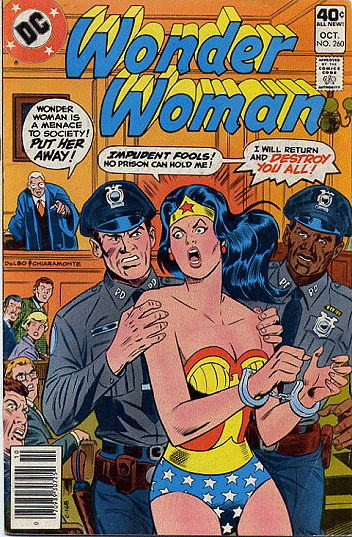
  • The cover of Wonder Woman #260, published way back in 1979, depicts the title heroine, in handcuffs, being ushered out of the courtroom by two bailiffs. The judge sternly pronounces: “Wonder Woman is a menace to society! Put Her Away!”, to which she replies, “Impudent Fools! No prison can hold me! I will return and DESTROY YOU ALL!” This is not good courtroom etiquette. (And, in fact, we’re not certain that Wonder Woman’s costume is appropriate courtroom attire.). However, we must admire Wonder Woman’s restraint in respecting the authority of the bailiffs escorting her out of the courtroom in handcuffs while simultaneously vowing to return and erase them from existence.
  • Do you dig independent films? Greenville, South Carolina based writer and director Chris White this week released Good Life, a twelve minute movie shot at Ristorante Bergamo, an Italian restaurant just a few short blocks from our law firm’s offices. How about that? White describes the plot as follows: “The Girl’s tenth birthday. A perfectly lovely dinner at a downtown restaurant with her father. Presents, candles, cake. Tonight though, it is she who will take care of him.” There are some tender emotional moments in the film, so we expect that some hard hearted litigators may be confused. But most others will enjoy its the simple joy depicted therein. To watch his new film online, click here.
  • Ken Shigley of the Atlanta Injury and Civil Litigation blog shares his remarks from the Bar Admission Ceremony at the Fulton County Courthouse last week. He offers some good tips to the newly minted Georgia lawyers (despite the fact that he’s a Plaintiff’s attorney).
  • We believe that any court in the land would find that 1980’s The Empire Strikes Back is the best film of the Star Wars series as a matter of law. No fact issues there, your honor. Thus, we here at Abnormal Use were saddened to learn of the recent death of Irvin Kershner, that austere film’s director. May he rest in peace.
  • Professor Mark Osler of the University of St. Thomas Law School (who this site interviewed here back in October) recently blogged about his last day of class for his first semester at that institution, which he joined earlier this year. In so doing, he relates that he found the seating chart for his very first class as a professor at Baylor Law School way back in the fall of 2000. Fun fact: One of the contributors to this blog was in that class.
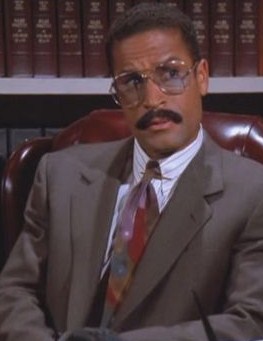
  • We love “Seinfeld,” and we love Twitter. Since Monday, when we published our interview with actor Phil Morris (who played the character “Jackie Chiles” on “Seinfeld,” we’ve learned that Morris is on Twitter. You can find his account here, as well as the one he has set up for the Chiles character here. Finally, Whit Hertford, the writer and actor who is helping Morris with the resurrection of the Chiles character, can be found on Twitter here.
  • Last week’s “Question of the Week” at the ABA Journal was “Which law blogger would you most like to meet, and why?” After his interview with Phil Morris was posted this past week, surely everyone would request Kevin Couch from right here at Abnormal Use?

Beware Jury Instructions (or At Least, Pay Attention to Them)

I have a really long list of really important things that no one taught me in law school. One lesson that always finds itself at or near the top is this: PAY ATTENTION TO JURY INSTRUCTIONS. The smallest error or inconsistency can provide the basis for an appeal, or in some cases an entirely new trial. Never mind whether the jury actually listens to them or not.

Jury instructions served as the basis for appeal in Kokins v. Teleflex, Inc., 621 F.3d 1290 (10th Cir. 2010) (PDF). This suit arose out of an accident involving a city park ranger, who was thrown from a boat after the boat’s steering cable snapped and sustained a permanent injury to her ankle. She sued the manufacturer of the steering cable, alleging that it was defectively designed and unreasonably dangerous. During discovery, the parties determined and agreed that the reason the cable snapped was because water had somehow entered the core of the cable and caused it to rust. The parties could not agree on how the water got there. The plaintiff alleged that the cable was defectively designed and that a simple fix to the design could have prevented the water from entering into the cable’s core. Teleflex, however, provided evidence at trial that the cable was improperly installed, and had not undergone routine maintenance.

The jury entered a verdict for Teleflex, and the plaintiff appealed, taking issue with two aspects of the jury charges. First, as the Court points out:

Colorado law provides two different tests. Under the “consumer expectation” test, the jury is instructed to find defectiveness if the plaintiff proves that a product is dangerous “to an extent beyond that which would be contemplated by the ordinary consumer who purchases it.” Under the “risk-benefit” test, the jury is instructed to conclude that a product is unreasonably dangerous if the plaintiff proves that the risks of a challenged design outweigh its benefits. Appellants submitted instructions proposing that the district court instruct the jury under both tests, but the district court gave only the risk-benefit instruction.

The second dispute focused on Colorado Revised Statute 13-21-403(2), which creates a presumption that a product is not defective once it has been on the market for ten years. Over the plaintiff’s objection that the statute was procedural, not substantive, the Court instructed the jury on the statute.

The Tenth Circuit affirmed the verdict for Teleflex. First, it held that there was no error by the trial court in providing only the “risk-benefit” test to the jury because the case involved primarily technical and scientific information, rejecting the plaintiff’s argument that the jury should also have been instructed on the consumer expectation test because “rust is not rocket science.”

Second, the Court held that the trial court did not err by instructing the jury about the statutory presumption, because the presumption was substantive, rather than procedural, state law.

Although the plaintiff ultimately failed to persuade the Tenth Circuit to reverse the trial court, she successfully convinced the appellate court to consider her arguments, solely on the basis of jury instructions. It’s a good lesson to learn and, as I pointed out, not one you’ll necessarily learn sitting in the typical law school class.

Lawsuit Alleging False Advertising and Misrepresented Prices Comes Week Before Black Friday

Think you’re outsmarting the system by avoiding the hoards of Christmas shoppers and choosing instead to order gifts this year online? Perhaps not always the case, according to a complaint recently filed by seven northern California district attorneys against online retail giant Overstock.com, which is headquartered in Salt Lake City. Just as Christmas shopping reaches its peak, the discount retailer has been forced to defend its advertising and pricing practices, both of which have come under fire in the wake of allegations raised by the lawsuit.

According to the 33-page complaint, filed on November 17 in California’s Alameda County, Overstock has for several years “routinely and systematically made untrue and misleading comparative advertising claims about the prices of its products.” The suit alleges that Overstock used misleading measures to inflate its comparative prices and thus artificially increase the discounts that it claimed to be offering consumers. According to the suit, these misleading statements accompanied virtually every product listing on the Overstock site. Essentially, the complaint alleges that instead of comparing its prices with other merchants’ prices as claimed, Overstock often would make up “list prices” and “compare at” prices based on arbitrary markups over its costs for the products. The complaint seeks $15 in restitution and penalties.

As reported by ConsumerAffairs.com, the complaint cites by way of example one buyer’s purchase of a patio set that Overstock advertised as having a “list price” of $999. The website offered the set for a seemingly huge discount at $449. The buyer who purchased the set, however, found a WalMart sticker on the set listing the sale price as $247, about $200 less than Overstock’s sale price. Vice president and general counsel for Overstock reportedly explained that this particular instance was simply the result of a misunderstanding between Overstock and its vendor. He said that Overstock strives to be as accurate as possible with its pricing because customers can easily check prices that are available elsewhere.

Overstock’s official statement regarding the lawsuit fires back, explaining that it had been in discussions over a period of several years with the California representatives who ultimately filed suit, and that Overstock had been under the impression that “great progress” had been made toward resolution. It thus “profoundly regret[ed]” that these officials chose to file a lawsuit “at what appears to us to be a strategically-timed moment” — i.e. about one week before “Black Friday” and “Cyber Monday.”

It certainly does seem suspicious, if Overstock’s representations are true, that California officials decided after years of discussions, to file suit on the eve of the height of Christmas shopping. Time will tell if media coverage of the suit is enough to turn shoppers away from Overstock this season.

Ohio: Duty to Warn that Football Helmet and Pads Could Cause Heat Stroke

In July 2009, the Southern District of Ohio decided, on the defendant-manufacturers’ motion for summary judgment, that a manufacturer of football equipment has a duty to warn that wearing full pads and a helmet could cause heat stroke. That case followed the well-publicized death of Korey Stringer of the Minnesota Vikings in 2001. Stringer v. National Football League, et al., No. 2:03-cv-665, 2009 WL 6885869 (S.D. Ohio Jul. 10, 2009).

Following Stringer’s death, his widow brought suit. After the summary judgment ruling, the defendant-manufacturers asked the Court to reconsider its decision denying the motion for summary judgment on plaintiff’s failure to warn claim. The defendants asserted that “this court committed clear error in holding that [defendant], as a matter of law, had a duty to warn of the risk of heat exhaustion and heat stroke, and in extending the duty to non-injured, non-users of the products, i.e. the Vikings’ trainers and coaches.” The court found no clear error in its July 2009 decision and denied the defendants’ motion for partial reconsideration.

The Court’s underlying July 2009 decision was brought to our attention as a result of this recent denial of the defendants’ motion for partial reconsideration. While this decision is more than a year old, it provides an interesting set of facts. In 2001, Minnesota Vikings player Korey Stringer died from complications of a heat stroke while practicing at training camp. Stringer was over 300 pounds, and he suffered heat stroke on a hot and humid day while wearing full pads and helmet. Stringer’s widow filed a lawsuit against the equipment manufacturers for failure to warn, design defect, breach of implied warranty and breach of express warranty.

The Court had granted the defendants’ summary judgment on all of the Plaintiffs’ claims except for her failure to warn claim. First, the court found that since the plaintiff could not show an alternative design for the equipment, it was not unreasonably dangerous and the plaintiff’s defective design claim failed. Second, the court found that “strict products liability has effectively preempted implied warranty claims where personal injury is involved.” Third, the court found no evidence that the defendants expressly warranted that the helmet and pads were safe for their intended use.

On plaintiff’s failure to warn claim, the court denied summary judgment because it found that “[d]efendants had a duty to warn of the specific risk of developing heat stroke because it was not an obvious risk, and because the connection between Stringer’s heat stroke and Defendants’ failure to warn was not remote enough to preclude liability as a matter of law.” Further, the court found issues of material fact about whether a warning would have changed the conduct of Viking trainers and prevented Stringer’s injuries.

The aspect of the court’s decision most intriguing to us is the court’s finding that the danger presented by the helmet and shoulder pads was not obvious. Stringer was a 300+ pound football player that was not new to the game and had likely practiced in full gear in the heat for many years prior. How could the danger not be obvious? In determining that the danger was not obvious, the court distinguished the general risk of becoming hotter when wearing a helmet and shoulder pads and the specific risk of developing heat stroke. The court stated that the first was obvious but the specific risk was not. We are still not convinced there is much a difference.

Abnormal Interviews: Actor Phil Morris a/k/a Jackie Chiles from "Seinfeld"

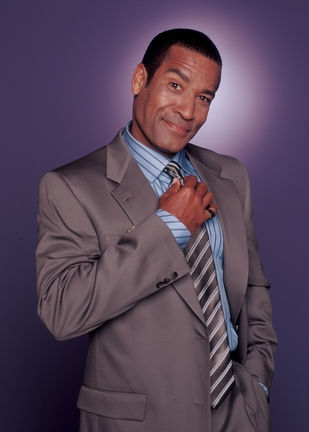
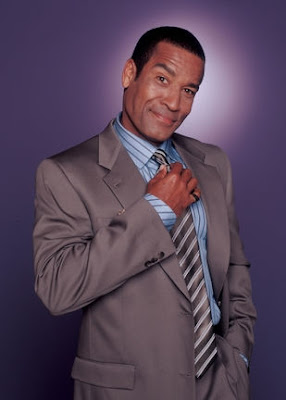
We can hardly believe it ourselves. But we here at Abnormal Use scored an interview with the actor, Phil Morris, who most know as Jackie Chiles, the bombastic, flamboyant, and opportunistic trial lawyer from “Seinfeld.” So, today, Abnormal Use continues its series, “Abnormal Interviews,” which now includes actors, as well as law professors, practitioners, and other commentators in the field. Though the character only appeared in six episodes of the series (including the 1998 finale), Chiles resonated with viewers. Recently, Morris reprised the role for a series of videos posted on the Funny or Die website (two of which have been posted already with three more on the way in the coming weeks). Less than a week ago, Morris was kind enough to submit to a telephone interview with our own Kevin Couch. In the interview, Morris discusses not just his role as Chiles, but also his upcoming projects, his love of superhero comic books, and his past work and influences. Although you may be able to quote many lines of Jackie Chiles “Seinfeld” dialogue, you probably didn’t know that Morris has studied kung fu, collected 20,000 comic books in his life time, and expressed an interest in one day playing the Silver Surfer on screen. His new sitcom, “Love That Girl!,” premieres in January. Our favorite part: Though his signature character is associated with litigiousness, Morris himself is actually skeptical of the modern litigation culture, going so far as to call it “beyond the pale.”

The interview transcript is as follows:

ON THE RETURN OF JACKIE CHILES

KEVIN COUCH: [I]t’s been 12 years since the finale of “Seinfeld,” and you have revived the Jackie Chiles character recently. Can you tell me about that?

PHIL MORRIS: Well, you know, Jackie had a life of his own even during the run of “Seinfeld.” You know, I had done a couple of commercials for Honda and Diet Dr. Pepper. He was one of the few characters, actually maybe the only character, that Larry [David] and Jerry [Seinfeld] would allow to do his own thing outside of the “Seinfeld” universe. So, you know, I mean, I just never really tired of him. I don’t think the public did, and we never got a chance to do a show that was – we had in development, and it was always just kind of percolating beneath my skin, and when the “Curb Your Enthusiasm” shows came out last season with the “Seinfeld” reunion kind of run, or arc, everybody was asking me about Jackie. I mean, you know, it was like Jackie had come back, and Jackie wasn’t even in it. So, I sat down with a friend of mine who’s a pretty high powered agent here in town, and he was asking me about Jackie. You know, we loved this reunion stuff, and we finally had something to talk about at the water cooler again, and you know, the only thing missing is Jackie. Where’s Jackie? I was like, “You know, man, Jackie, that ship has sailed, and blah, blah, blah.” He goes, “Oh, no, it has not sailed. We want that guy back.” And he gave me the idea to kind of put it on the web and, you know, test the waters, see if people were interested. You know, Kevin, I work a lot. I do a lot of shows. I do a lot of stuff. I’m on “Smallville” on the occasion. I’m doing a new show called “Love That Girl!” for TV One. So, it’s not like I was sitting around waiting on stuff to do.

COUCH: Right.

MORRIS: It’s like, this came to me, and as an actor, rarely do you get a character that you feel so committed to and it speaks to you so fully as a Jackie Chiles. So I was like, “Why not?” Let me give it a shot. You know, so, I wrote a couple of these interstitial commercial kind of things. You know, Jackie’s back, and he’s wanting new clients kind of deal. And, a buddy of mine and I who are writing it, he told Funny or Die that we were doing this. And we hadn’t even started. And they came right at us. They were like, “We’ll produce it, we’ll distribute them, we love this guy, he’s perfect for us!” So I wrote these five with Whit’s help, Whit Hertford’s help, and went to Castle Rock and cleared their legal. It took about two months. And the result is kind of, you know, what you see. They’re parceling out one episode or one segment every few weeks and judging the public’s interest. And so far, the public is very interested.

COUCH: [W]ould you be interested in pursuing the Jackie Chiles character further? I mean, it sounds like you’ve got some good feedback from Funny or Die, and from the public on Funny or Die, would that be something you’re interested in pursuing in the future?

MORRIS: Of course, of course. Like I said, it’s rare for an actor to have characters that you so firmly connect to. Now, I don’t really relate to Jackie personally, but as an actor, I get it completely. So, I find that it’s refreshing for me to try to fit into that skin all the time, and like I said, I have barely scratched the surface of Jackie Chiles, so it’d be great to be able to pursue this path, you know, the computer screen and maybe into a television series, or I don’t even know what’s next for him, but I really don’t think there’s a limit.
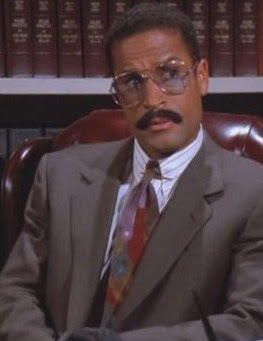
COUCH: [H]ow much of you is in Jackie? Is he a completely foreign character, or is there some part of you that can identify with who Jackie is?

MORRIS: Well, I’m sure you have people in your family or people that you know that you can imitate or you can represent because they’re such great characters, but they’re not – it’s not really you, but you know them so well, you know, and I think Jackie is a combination of many men that I have grown up with and seen, from my father to my great uncle, Uncle Phil, my namesake, that just remind me of this kind of force of nature that is Jackie Chiles. You know, of course, Johnnie Cochran is in there as well. He was the template. For my purposes as an actor, Jackie is a hustler, he’s a pimp, he’s a preacher, and he’s an attorney. So, do I relate to all those things? I relate to them. Are they Phil Morris? No, not all of them.

COUCH: Did you have a chance to meet Johnnie Cochran?

MORRIS: I did, actually. Interestingly enough, we went to the same barber shop for years and years and years here in Los Angeles. So, I would see him as a kid come in and pontificate on everything from the Raiders moving to L.A. to any of the number of egregious acts of civil unrest. So I think I was doing some subconscious study on him for a long, long time.

COUCH: [B]ut you never had a chance to discuss the Chiles character with him?

MORRIS: Yeah, I did. And he loved it. I mean, I think he thought it was very flattering – at first.

COUCH: At first. Understood. Of course, one of the story lines from “Seinfeld” was, I guess, Kramer’s burns from the hot coffee. Do you have any feeling about that? What about people filing these lawsuits for burning themselves on hot coffee?

MORRIS: Well, we’re so litigious in this society, too much. It’s way beyond the pale. So that’s where I kinda jump off from Jackie. I certainly wouldn’t put stock in a lot of that stuff. I think, it’s just, we’ve gotten away with way too much here in the United States in terms of the legal ramifications of everything. I think, again like I said, beyond the pale. Jackie is an opportunist. So anything like that is manna for him. But personally, I think we’re really hurting ourselves and shooting ourselves in the foot. Not only are we giving our legal system a bad name, but we’re abusing it! We’re misusing those bits of legal power that we have – we’re fortunate enough to have in this country. It kind of drives me crazy.

COUCH: Have you ever had any lawyers come up to you and talk about Jackie Chiles?

MORRIS: All the time.

COUCH: What’s common in what they talk to you about?

MORRIS: Most of them – all of them, to me, are very positive. In fact, there is a Jackie Chiles Law Society at the University of Utah. I bet you didn’t know that!

COUCH: I did not go to the University of Utah, or I assure you, I would have been a member.

MORRIS: Is that crazy? So, anyway, their club, their society is about the public’s perception of law as the media represents it. And it’s very interesting, a very interesting phenomenon. But, yeah, most of the lawyers that come up to me are very supportive. They get the joke! You know what I’m saying? And I think people need to know that. As crazy as we think lawyers are and as crazy as the lawyers might actually be – on a whole, especially when it comes to Jackie – they get it! They’re like – man, this man is a lightning rod for all that’s good and all that’s bad.

COUCH: Anybody talk to you about not getting the joke?

MORRIS: No. Not one lawyer has gone – you know, “What the heck are you doing, I can’t understand why people even like this character!” Not one. Not one has come up to me with any sort of negative spin on this [character].

COUCH: It’s not the first time you’ve played a lawyer. I’ve got to ask you about Tyrone Jackson. I don’t know if anybody else will know who Tyrone Jackson is. But you played a character on “The Young and the Restless,” right?

MORRIS: You’re good, Kevin, you are good!

COUCH: Well, you know, I have the Internet to thank for that. . . . Is [there] anything from Tyrone that’s in the Jackie Chiles character?

MORRIS: Only his determination. That’s it. Tyrone actually was a very good natured, “Johnny Be Goode” kind of character, and Jackie certainly isn’t that. But what they have in common is their dogged determination to make sure the truth – as far as they see it – will out. That’s pretty much the only connection there.

COMIC BOOK SUPERHEROES

COUCH: Like you mentioned earlier, you’ve done a lot of different work – voice work and animated features, Doc Saturday, Jonah Hex, work in the “Justice League.” . . . I guess you’re a fan of this genre of entertainment?

MORRIS: Yep, oh, yeah.

COUCH: What motivated that? . . . From what I can tell your sister [actress Iona Morris] has done some voice work and animation, as well.

MORRIS: She actually turned me on to voice over work early on. I was so busy with the on camera stuff. Voice over is not easy. It’s a very clique-ish insider type of circle that you get into. But, hey, I’m a comic book fan, man. I’m sitting here right now in my bedroom, and I’m looking at the 20,000 comic books I have in my library. 20,000!

COUCH: Wow. That is impressive.

MORRIS: I’ve collected since I was a child. So, all of that helps me as an actor. It helps my imagination. It helps my fantasy life. All that stuff. So, it’s a natural to kind of transition into voice-overs. I’m just a child. Man, I haven’t grown up.

COUCH: Are you a fan of anything in particular in the comic book genre?

MORRIS: Now, I’m a big fan of the writers. Before, I used to be a Marvel guy. When you’re a kid you kinda take allegiances with either Marvel or DC – those are the two big dogs. But there’s a lot of independent books out there, and a lot of writers and artists that – now that I’m in that world – that I’ve known and been fortunate enough to become friends with. I really like the writing. Obviously, it’s not kid stuff anymore. They’re dealing with some interesting themes in the comic book world.
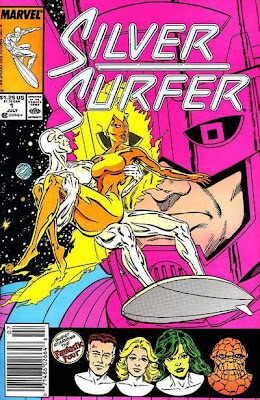
COUCH: Well, you mentioned earlier you played a super hero on “Smallville.” Do you have a favorite superhero? If you could play one, who would it be?

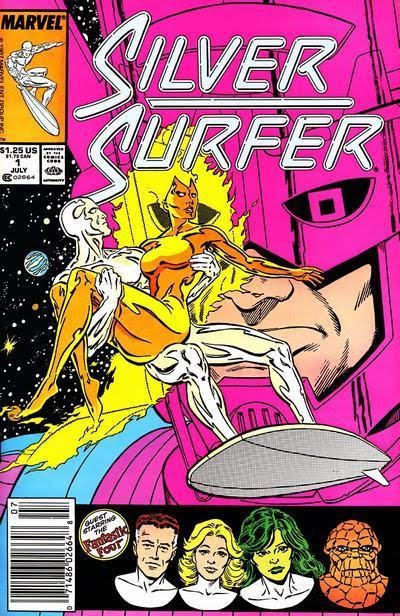
MORRIS: It would be the Silver Surfer, actually, from the Fantastic Four comics. He was a very existential, philosophical being who kind of belonged to no world and no universe, and sometimes, I feel like that. [Laughs.]

COUCH: Well, I’m sure it wasn’t hard to play a super hero right after playing a lawyer, right?

MORRIS: [Laughs.] You know, perfect study. I’ll have to be honest with you.

COUCH: You would agree that lawyers are pretty much like super heroes?

MORRIS: No doubt, no doubt. You’ll get no argument from me, Kevin.

ROLE AS PRODUCER

COUCH: You ever think about doing anything other than being an actor? Like, being something like a lawyer?

MORRIS: I was very interested in automotive design for a long, long time. When it got a bit too math intensive, I bounced out of that. You know, I think I sort of expanded my ability to create and express within this particular career choice. You know, Jackie, I wrote and produced, and obviously, am Jackie. Since then, I’ve produced something else that we want to turn into a feature film. So, I went from producing nothing in 30 years of acting to the last couple of months producing two very diverse and very extravagant products. I would really like to pursue that more – to produce and to write and use all of my skills as opposed to just the acting part of my tool kit.

COUCH: Is there anything you’re working on now as far as production or writing?

MORRIS: There’s a movie that we’re trying to put together called Surf Men, which is a historical piece about the turn of the century, actually 1880’s, Reconstruction lifesaving service back in the East Coast which is a precursor of the Coast Guard and the African American lifesaving crew that was a part of that service. It’s an incredible story, so my buddy Dennis Haysbert from “The Unit” and “24” and the Allstate commercials – he and I are producers on this project. And we’re very excited to get it out there and have people see what we’re really all about beyond our acting skills.

KUNG FU HOBBY

COUCH: Now, you’re a kung fu guy.

MORRIS: I am.

COUCH: How’d you get into that?

MORRIS: Well, my dad [Greg Morris] did the original “Mission Impossible” . . . years ago, back in the sixties. At first, they started to take karate lessons because they were doing some exotic hand-to-hand combat then – it really wasn’t seen. So, when my dad started, I started. In ’66, I was seven. So, I’ve been involved with the martial arts since I was seven years old. This particular master that I study with now, Hawkins Cheung, I’ve been with for a little over 20 years. I started with him here in Los Angeles, and he was Bruce Lee’s best friend back in Hong Kong. So, there was no better teacher I could find than him. And I was a huge Bruce Lee fan, so it just fell right in my lap. I’ve been with him for over 20 years.

COUCH: So if I were to anger you in some way during this interview, would you be more likely to file a lawsuit Jackie Chiles style or just put me in some kind of kung fu grip?

MORRIS: I think I’d just file a lawsuit. Jackie would come after me if I put hands on you. He would say, “You should know better.” And I should. I need to walk away. I’d rather come after you with humor. [Laughs.]

COUCH: Now, you talked about your dad, Greg Morris. You grew up in a household where he was an actor. Did you ever think to yourself, “He’s got a much cooler job than being a lawyer?”

MORRIS: Yeah, I think so. Yeah.

HIS INFLUENCES

COUCH: . . . [W]ho else helped shape your career – who have you wanted to be as far as an actor and now maybe this production and writing?

MORRIS: A big influence – not as much personally, although I do know him personally, professionally, in terms of his legacy is Sidney Poitier. I remember when my father came up, he was one of the first African Americans to present an image on television that was palpable, acceptable, mainstream, strong, intelligent. It was a huge deal in the country, period, but especially in my community. And certainly one of the great idols and icons in my community, Sidney Poitier. And I had the fortune to meet him as a child and to see him come to our house, hear him speak, he was a good friend of my father’s. And every time I run into Sidney, he has great words of wisdom and is always checking on my well-being and my understanding of this business beyond just being an actor. So, he’s been a huge influence. The way he carries himself, his intelligence, his bearing. So two of the greatest – Sidney in film and my father in television – were two of the greatest influences a young African American actor could have. Those two. Bill Cosby, ironically enough. Another very good friend of my father’s who is such a solid individual. He’s a professor. He’s very much a family man. A staple of entertainment, black, white, indifferent, for years and years and years. In fact, decades. So he’s been a very close friend. Not so much personally [that] I call him up on the phone and say, “Hey, Bill, what do you think about this?” Just that when you grow up the way I grew up, the influences are everywhere. You’re fortunate, and you’re smart, if you take a page out of the people’s books who’ve been there before you. I’m hoping to find that and further that in my own creative career.

HIS NEW SITCOM, “LOVE THAT GIRL!”

COUCH: . . . You have got a new sitcom coming. Tell me about that.

MORRIS: Yeah. Martin Lawrence is one of our producers, and Bentley Kyle Evans, who produced the “Martin” show and “The Jamie Foxx Show,” created a show called “Love That Girl!” starring Tatyana Ali from the “Fresh Prince.” It’s basically – Tatyana plays this young divorcee’ who moves back to Los Angeles and deals with her father. I play her dad. And deals with her brother, played by Alphonso McAuley and her crazy neighbors. It’s really a traditional four camera sitcom that is just funny and has great value and is not just good for my community but good for television overall, and TV One is a brand new network that has been out maybe five or six years and is being run by some of the most forward thinking African American executives I’ve ever worked with. We air in January. We have a 26 show initial order. So, I think the public will like that, as well.

FAVORITE ROLES

COUCH: Do you have a favorite project that you’ve done? You’ve done a multitude, you know, “Star Trek” and all the other stuff that you’ve done. Can you point to a favorite? Is that hard to do?

MORRIS: It’s kind of hard to do because I’ve done so much and so different. I loved “The Young and The Restless.” I really did. We started talking about that a little bit. That was a great initial offering for, again, a young actor.

COUCH: I tried to look that up on YouTube. I did not find any Tyrone Jackson videos. I don’t know if there’s some legal reason for that. But if we can dig one of those up, we’ll put that up.

MORRIS: I don’t know where that would exist either. “The Young and The Restless” has been on forever. They’re a daily show, so the archives have got to be very convoluted, but “The Young and The Restless” was great. Certainly, “Seinfeld” was phenomenal. I did a television movie for Disney called “Tracks of Glory” about Marshall “Major” Taylor who was a world champion cyclist. That’s a project that not a lot of people saw, but again, very close to my heart and helped me a lot as a creative person. I did the new “Love Boat.” This was a weird one to pick up and talk about. The new “Love Boat” I did with Robert Urich and Joan Severance, and it was one of the most incredible times I’ve ever had. First of all, Robert Urich was a fabulous guy. He had had – he was post-operative cancer, he’s since passed away from cancer. But to know him was just a joy, and he just was a brilliant guy, and I got a chance to work with him. I worked with Peter Graves on the new “Mission Impossible,” which was phenomenal. Here, he was my Uncle Peter, I grew up with him and his kids, now we’re working together! It was just – I’ve had a great life, a great creative life, Kevin.

FURTHER READING ON PHIL AND GREG MORRIS

Friday Links

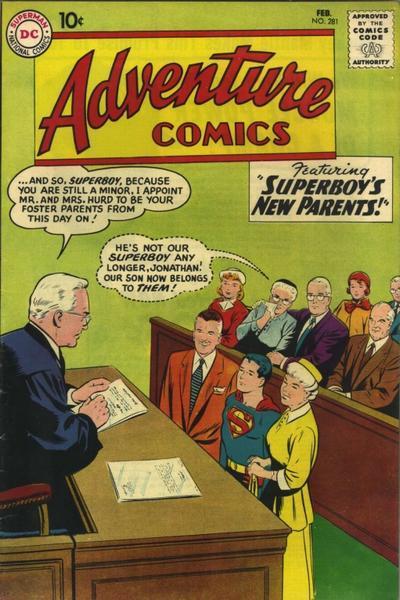
  • In the comic book cover above, Adventure Comics #281, published way back in 1961, Superboy is made the foster child of Mr. and Mrs. Hurd (as Ma and Pa Kent watch from elsewhere in the courtroom). The question: What’s with Superman and adoptions? A few months ago, we showed you the cover of Superman’s Pal Jimmy Olsen #128, published way back in 1970, in which Superman flies through a courthouse window to thwart the adoption of an adult Jimmy Olsen by a wealthy benefactor. (Further, this does not appear to be the same courtroom into which Superboy flew in Adventure Comics # 213).
  • The Onion has a little bit of fun with the old television show, “L.A. Law.” Has it really been sixteen years since it went off the air? We should mention that in a recent conversation one of our junior associates mentioned that she had never heard of that program. Sigh.
  • According to this post at The New York Times ArtsBeat blog, Guns N’ Roses frontman Axl Rose is suing the makers of the Guitar Hero video game. His claim? He says the company breached its promise not to feature or depict his former bandmate Slash in the video game.
  • A few weeks ago, we reported on a contest sponsored by The 1709 Blog mashing up Shakespeare and the perils of modern copyright law. We here at Abnormal Use entered the contest, but alas, we did not win. However, you can see the submission of all the entrants, including that of the winner, by going here and here.
  • This is not, by any means, a real estate litigation blog, but we really, really hope there is a trespass to try title suit coming after a woman in Spain has claimed ownership of the sun.
  • The New York Times reports on the recent discovery of a 1791 lawsuit against Mozart. Even he was not immune to litigation, it seems. Kudos to University of South Carolina music history professor Peter Hoyt for his scholarship on this issue.

Safer Holiday Shopping and Playing Tips from the CPSC

Now that the Thanksgiving holiday has passed, the shopping season is officially under way! Last week, the U.S. Consumer Product Safety Commission (“CPSC”) released tips for a “Safer Holiday Toy Shopping and Playing Experience.” If you are one of those shoppers that got their holiday shopping finished at 3:00 a.m. on Black Friday, these tips come too late. For all other sane people, the CPSC’s tips are helpful to consider when shopping during the upcoming holidays.

According to the CPSC, from 2008 to 2010, both toy recalls and toy-related fatalities have declined. The CPSC attributes the decrease in recalls and fatalities with the increased safeguards put in placed in the recent years. Some of those safeguards included establishing lead paint and lead content limits, tracking imports and converting voluntary toy standards into mandatory standards.

Despite the decrease in toy recalls and toy-related fatalities over the past several years, the CPSC reported that toy-related injuries are increasing. “In 2009, there were an estimated 186,000 emergency room-treated injuries related to toys with children younger than 15, which is up from 152,000 injuries in 2005.” While these injuries may be associated with a toy, they were not necessarily caused by the toy. Regardless, this increase in injuries is a concern of the CPSC and, therefore, it released three main tips to help keep the holiday season incident-free:

1. Always choose age appropriate toys.
2. Always include safety gear when purchasing sports-related or ride-on toys.
3. Always take note of the location of play — avoid traffic, water, kitchens, and bathrooms.

In addition to the above, the CPSC recommended avoiding balloons and magnets for small children, immediately discarding wrapping when a toy is opened, and supervising children when they are charging batteries. The CPSC hopes that with these tips, shoppers will be armed with considerations when buying toys for their family members. Happy shopping!

What Role Would Toxicogenomics Play in Causation

I’m sure research on the human genome will reveal some spectacular results, such as explaining why once a person reaches age 60, he feels compelled to buy bright, white tennis shoes, and to continue upping the brightness and whiteness as he ages, to the point where he will eventually wear shoes equipped with xenon headlamps. (As an aside, I wonder how the pioneers satisfied this primal urge.) Today, we give a hat tip and comment on this post by Christopher J. Robinette at the TortsProf blog discussing a word we had never heard before: toxicogenomics. Robinette cites this article from LegalNewsline discussing the advances in science and what “the study of the relationship among the cell’s genome, chemicals in the environment, and disease” could mean in the future of toxic tort. We don’t live in 1958 anymore, and we know that cigarette smoking and exposure to asbestos can cause lung disease. The question then, is, when we map an individual’s genome, how specific can we get with causation in relation to genetics and exposure to certain toxicants.

The LegalNewsline article focuses on the potential for toxicogenomics in causation, pointing to better evidence in linking exposure to disease. When science links exposure to disease, this should lead to an explosion in litigation. By the same token, science can lead to better evidence in defense of a toxicant-exposure case.

While all this remains to be seen, the impacts will not be felt merely in causation. Litigation outcomes inform future courses of action for people not parties to the action (or so we learned in torts class). Indeed, is it that hard to imagine that certain employers could require genome testing of their employees? After all, one central theme of products liability is imagining all the inane things that a potential plaintiff could do and defending design in a court. Isn’t a failure to warn claim really a “you should have protected me from myself” claim. Certainly you can see a plaintiff testifying in a case of occupational exposure that his employer should have protected him from his genetic predispositions. Employer-mandated pre-employment genetic testing would be a reasonable means of defense in a lawsuit, but there certainly would be some resistance to this cellular “love pat.”

I would hazard a guess that within ten years, we will see the first wave of pre-employment genome screening. Removal of asbestos from products and warnings on cigarette packs demand this. I’m just glad that, as a lawyer, I personally don’t have to worry about occupational exposure to anything but stress, but maybe the bar will start genome testing for pre-disposition toward substance abuse. Until then, products like Four Loko should be banned from the market. Right?

The ABA Journal’s Blawg 100

We here at Abnormal Use are very pleased to announce that our humble blog was selected yesterday for inclusion in the ABA Journal‘s Blawg 100, the “annual list of the best of the blawgosphere.” It was less than a year ago, in January, when we began this fateful enterprise, and we’ve posted each business day since that time on the latest products liability cases and news. Now, after nearly 250 posts, almost a dozen interviews with law professors and practitioners, and a sizable quantity of Friday Links, we’re not quite veterans, but we believe we’re starting to get the hang of the slings and arrows of this blogging thing.

When we first heard the news we weren’t quite certain how to react. We tried to play it cool, but we were never successful at creating such a facade. Cynical as we purport to be, we’re actually rank sentimentalists at heart, and we’re quite honored to be included among the other seven torts blogs, those being the Boston Personal Injury Lawyer Blog, the Drug and Device Law Blog, the FDA Law Blog, Jackson on Consumer Class Actions and Mass Torts, Marler Blog, New York Personal Injury Law Blog, and The Pop Tort. We’re still a little shocked.

This project would certainly not have been possible without the support of our firm. Kudos also go to our two principal authors Phil Reeves and Stephanie Flynn, as well as our five associate contributors: Kevin Couch, Jim Dedman, Mary Giorgi, Laura Simons, and Frances Zacher. We also thank former contributor Dan Eller for his work on the project during 2010.

Further, we would not be what we are today without the support of other blogs, including the Drug and Device Law blog as well as the Overlawyered and Point of Law blogs, all of which served as an inspiration to us as we prepared to enter the blogosphere just over a year ago.

Finally, we thank everyone who nominated us for inclusion in the list. We’ve got just one more favor to ask. After announcing the final 100 blawgs, the ABA Journal is now asking its readers to vote for the best of the final 100 in 12 substantive categories. Our blog is included in the Torts category, and we ask that you register at the ABA Journal‘s site and cast a vote for us here.

And if that’s not enough, we’ve got some big things in store for you in the coming weeks. Don’t forget: You can follow Abnormal Use on Twitter at @gwblawfirm. (In fact, check out our GWB 2.0 website for all of our social media endeavors as a blog and law firm.).

Thank you again, dear readers, for your visits to our site and support. We very much appreciate it, and we are looking forward to bringing you another year of commentary in 2011.