Gallivan, White, & Boyd, P.A. Opens Charlotte, North Carolina Office

Big news today from GWB headquarters. We are opening an office in Charlotte, North Carolina. Here’s the text of our preliminary press release on the matter:

GALLIVAN, WHITE & BOYD, P.A. OPENS CHARLOTTE, NC OFFICE

Greenville, S.C. – Gallivan, White and Boyd, P.A., headquartered in Greenville, S.C., is pleased to announce that it is opening an office in Charlotte, N.C. The firm was founded more than six decades ago in Greenville, S.C. and is one of the Southeast’s leading litigation and business law firms. C. William McGee, the firm’s Managing Shareholder, stated, “We have seen a significant increase in the demand for our services in North Carolina. Our new Charlotte office will allow the firm to serve our clients more effectively and efficiently throughout the region. We look forward to providing our clients with a full array of business and litigation services throughout the state.”

With 44 attorneys and 56 support staff, Gallivan, White & Boyd was ranked by Chambers USA in 2010 as a leading law firm for business. The firm was also ranked by U.S. News and Best Lawyers as a Best Law Firm. Its new office, located in SouthPark at 5960 Fairview Road, opened in March, 2011.
More details to come shortly.

Songs about Lawyers, Judges, and Attorneys

Over the last few months, we here at Abnormal Use have corresponded regularly with our friends at the Drug and Device Law blog, most notably Steve McConnell and Jim Beck, about both the law and popular culture. The subject of our conversations inevitably turned to music, a topic held dear by us all. Although our two blogs have previously quibbled on musical issues, we were elated to hear that Steve is a big fan of Bruce Springsteen and the late, great Arthur Lee. We have also learned that Jim Beck has a keen knowledge of The Rolling Stones. Over the course of these many discussions, we decided we would combine our two topics of interest – the law and music – and cobble together a list of songs, both popular and obscure, about the law and lawyers.

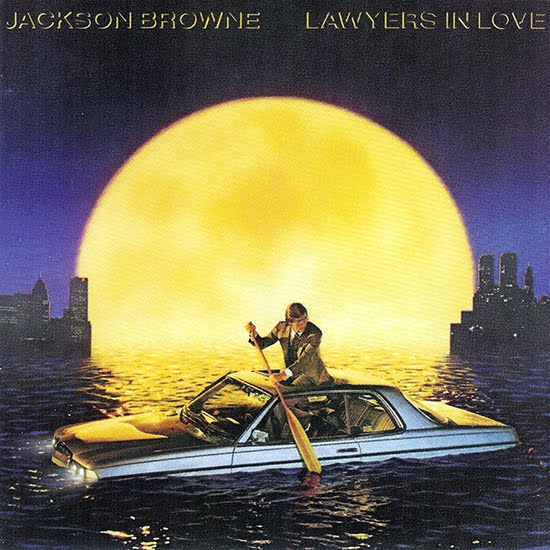
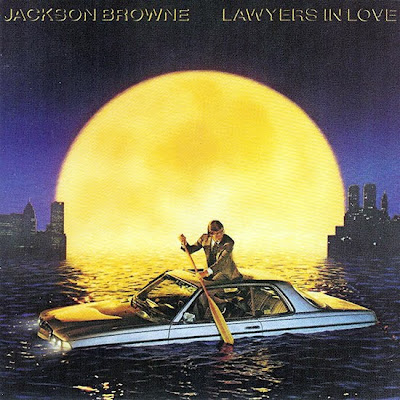
Steve and Jim took the first stab at a list, and they were kind enough to give us a sneak preview. Accordingly, armed with the knowledge of the songs they selected, we here decided that we would attempt to expand that list, rather than repeat what they listed. So, we won’t be including tunes like Warren Zevon’s “Lawyers, Guns, and Money” or Jackson Browne’s “Lawyers in Love,” because Steve and Jim beat us to those and several others that come to mind. See here for their thorough and entertaining list that they posted this morning (at the very same moment our post went live), and couple that with our list below. You can then fill your own iTunes library until it’s full with tunes about attorneys, jurisprudence, and the hallowed halls of courthouses.

We’ll start with a list of songs which happen to mention the law or lawyers

AC/DC – “Rock ‘N’ Roll Singer” (“My Daddy was workin‘ 9 to 5 when my Momma was havin‘ me / By the time I was half alive I knew what I was gonna be / I left school and grew my hair / They didn’t understand / They wanted me to be respected as a doctor or a lawyer man/ But I had other plans”)

The Auteurs – “Underground Movies” (“She’s got a credo in underground movies / Her father is a lawyer / Who paid for the fitting and fixtures /And a house with bay windows.”)

B.B. King – “She’s My Baby” (“Hey, she’s my lawyer when I’m in trouble.”)

Beastie Boys – “Car Thief” (“Said good-bye to my girl, my lawyers, and accountants.”)

Belle and Sebastian – “Legal Man” (“Not withstanding provisions of clauses 1, 2, 3, and 4 / Extend contractual period, me and you for evermore.”)

Bob Dylan – “Cry A While” (“I might need a good lawyer, could be a funeral mad trial.”)

Bob Dylan – “Walls of Red Wing” (“Oh, some of us will wind up in St. Cloud prison / And some of us’ll end up to be lawyers and things / And some of us’ll stand to meet you on your crossroads / From inside the grounds of the walls of Red Wing.”)

Bon Jovi – “Blood on Blood” (“Now Bobby, an uptown lawyer Danny, a medicine man / And me, I’m just the singer in a long haired rock ‘n’ roll band / Through the years and miles between us it’s been a long and lonely ride / But if I got that call in the dead of the night, I’d be right by your side.”)

Bruce Springsteen – “Atlantic City” (“The D.A. can’t get no relief.”)

Bryan Adams – “Not Guilty” (“Do I have to prove my innocence? / Don’t need a lawyer with a fat degree / Cause if lovin‘ you is against the law / Then you better lock me up and throw away the key.”)

Camper Van Beethoven – “Good Guys and Bad Guys” (“Well there are good guys and there are bad guys / And there are crooks and criminals / There are doctors and there are lawyers / And there are folks like you and me.”)

Carly Simon – “Coming to Get You” (“Lovers and lawyers in Arkansas / Laid down the law.”)

Chuck Berry – “Brown Eyed Handsome Man” (“Arrested on charges of unemployment / He was sitting in the witness stand / The judge’s wife called up the district attorney / Said you free that brown eyed man / You want your job you better free that brown eyed man.”)

Chuck Brodsky – “Talk to My Lawyer” (“I was walking outside of City Hall – I slipped and I had a terrible fall / It was negligence on the part of I don’t care who / I fell so hard I was seeing stars / Dollar signs and men from Mars / And the man who helped me up said I ought to sue / He was a lawyer, he was all out of breath.”)

The Clash – “Guns on the Roof” (“Sue the lawyers and burn all the papers / Unlock the key of the legal papers / A jury of a billion faces / Shouted out condemned out of hand.”)

The Clash – “Midnight Log” (“Cooking up the books / A respected occupation / The anchor and foundation of multi-corporations / They don’t believe in crime / They don’t know that it exists / But to understand / What’s right and wrong / The lawyers work in shifts.”)

The Coral – “Liezah” (“So, lawyers doctors please beware of that girl with wavy hair / She will cut you down to size / Reveal the truth behind your disguise.”)

Creed – “My Own Prison” (“A court is in session / A verdict is in / No appeal on the docket today / Just my own sin.”)

Dance Hall Crashers – “Sue Us” (“I heard you had a mind to sue / Why I don’t know? / I guess your lawyers will tell us.”)

Dave Frishberg – “My Attorney Bernie” (“I’m impressed with my attorney Bernie / I’m impressed with his influential friends.”)

David Bowie – “I Have Not Been to Oxford” (“And the prison priests are decent / My attorney seems sincere / I fear my days are numbered / Lord, get me out of here.”)

Dead Kennedys – “When Ya Get Drafted” (“If you can’t afford a slick attorney we might make you a spy.”)

Dire Straits – “Telegraph Road” (“Then came the lawyers, then came the rules.”)

Don Henley – “The End of the Innocence” (“The lawyers clean up all details / since daddy had to lie.”)

Don Henley – “Garden of Allah” (“Today I made and appearance downtown / I am an expert witness, because I say I am / And I said, “Gentleman, and I use that word loosely, I will testify for you, I’m a gun for hire, I’m a saint, I’m a liar Because there are no facts, no truth, just data to be manipulated, I can get you any result you like / What’s it worth to you?”)

The Eagles – “Get Over It” (“Let’s kill all the lawyers, kill ’em tonight.”)

The Eurythmics – “Sisters Are Doin‘ It For Themselves” (“We got doctors, lawyers, and politicians, too.”)

Fishbone – “Ma and Pa” (“Well, there’s a lot of money / For all the attorneys.”)

Fountains of Wayne – “California Sex Lawyer” (“I’ve got a license to love.”)

Frank Zappa – “Brown Shoes Don’t Make It” (“Gotta meet the Guerneys and a dozen gray attorneys.”)

Frank Zappa – “Heavenly Bank Account” (“He says the grace while the lawyers chew.”)

Geoff Berner – “My Dad’s A Lawyer” (“It’s a privilege to announce my dad’s a lawyer.”)

George Harrison – “Sue Me, Sue You Blues” (“Bring your lawyer, and I’ll bring mine / Get together, we could have a bad time.”)

George Harrison – “Wreck of the Hesperus” (“I’m not a power of attorney / But I can rock as good as Gibraltar.”)

Guns N’ Roses – “You Could Be Mine” (“Don’t forget to call my lawyers with ridiculous demands.”)

Jewel – “Who Will Save Your Soul” (” . . . [A]nother lawyer’s bill . . .”)

Kitty Wells – “Will your Lawyer Talk to God” (“Your lawyer called and said he had the papers all prepared / To sign my name was all I had to do / He saw the judge, now he seen me, there’s only one thing left / Will your lawyer talk to God for you?”)

Lou Reed – “Dirty Blvd.” (“Where’s the proof, man? Let me speak to my attorney.”)

Mojo Nixon – “Destroy All Lawyers” (There’s a plague on the planet, and they went to law school.”)

Neil Young – “Sixty to Zero” (“There’s a judge in the city / He goes to work every day / Spends his life in the courthouse / Keeps his perspective that way.”)

Neil Young – “Drivin‘ Thunder” (“I stopped into the courthouse / I had to pay some bills / Got talking with the judge / About the finer points of my driving skills.”)

Panic at the Disco – “Build God, Then We’ll Talk” (“The missus will stay with the cheating attorney.”)

Pink Floyd – “The Trial” (“The evidence before the court is incontrovertible / There’s no need for the jury to retire / In all my years of judging I have never heard before / Of someone more deserving the full penalty of law.”)

The Pogues – “Repeal of the Licensing Laws” (Instrumental)

R.E.M. – “Can’t Get There From Here” (“Lawyer Jeff he knows the lowdown.”)

The Roots – “Table of Contents (Parts 1 & 2)” (“Cutting through like attorneys at law that’s car chasin‘.”)

Todd Rundgren – “Lord Chancellor’s Nightmare Song” (“And bound on that journey you find your attorney.”)

Tom Paxton – “One Million Lawyers” (“In ten years we’re gonna have one million lawyers / How much can a poor nation stand?”)

A Tribe Called Quest – “Show Business” (“Get a good lawyer, so problems won’t pile.”)Tom Petty – “Accused of Love” (“Well, the attorney grins / The witness is drug in / With his face half hid in the shadow / Sworn to God and state, the truth arrives too late / and defense goes out the window”)

Warren Zevon – “Mr. Bad Example” (“Of course I went to law school and took a law degree / and counseled all my clients to plead insanity.”)

Weezer – “Jamie” (“Jamie, believe me, I won’t let you down / Cuz you are the best lawyer in town.”)

Willie Nelson – “Mama, Don’t Let Your Babies Grow Up To Be Cowboys” (“Make ’em be doctors and lawyers and such.”)
As noted in the Drug and Device Law blog’s post, many law songs mention the criminal process. Here’s a brief list of some other such songs we identified:

10 CC – “Good Morning, Judge” (“Well, good morning Judge / How are you today ? / I’m in trouble please put me away.”)

Black Flag – “Police Story” (“I go to court for my crime / Stand in line, pay bail / I may serve time.”)

Bruce Springsteen – “Johnny 99” (“Well your honor I do believe I’d be better off dead / And if you can take a man’s life for the thoughts that’s in his head / Then won’t you sit back in that chair and think it over judge one more time / And let ’em shave off my hair and put me on that execution line.”)

Bruce Springsteen – “Highway Patrolmen” (“My name is Joe Roberts I work for the state / I’m a sergeant out of Perrineville barracks number 8.”)

Bruce Springsteen – “State Trooper” (“Mister state trooper, please don’t stop me . . . .”)

Bukka White – “District Attorney Blues” (“A District Attorney sho‘ is hard on a man / He taken me from my woman / Cause her to love some other man / District Attorney sho‘ is hard on a man / He will take a woman’s man and leave her cold in hand.”)

The Clash – “Know Your Rights” (“You have the right to remain silent / You are warned that anything you say can and will be taken down and used as evidence against you.”)

Elvis Costello – “I Stand Accused” (“Girl, I stand accused / People say I love you / Yeah, I stand accused / Oh, but what can I do? / You belong to some other guy / Hope I never have to testify / If loving you is a big crime / I’ve been guilty a long time.”)

Fiona Apple – “Criminal” (“What I need is a good defense ’cause I’m feeling like a criminal.”)

Furry Lewis – “Judge Boushay Blues” (“Good morning judge, what may be my fine?”)

Joe Perry Project – “Never Wanna Stop” (“Judge and the jury and the district attorney / Gonna try to put my ass in jail.”)

Johnny Cash – “Hung My Head” (“Here in the court house / The whole town was there / I see the judge / High up in the chair / Explain to the court room / What went through your mind / And we’ll ask the jury / What verdict they find.”)

The Kingston Trio – “Bad Man’s Blunder” (“The judge and the jury, they did agree. They all said murder in the first degree. The judge said, saying: I don’t know whether to hang you or not, but this here killin‘ of deputy sheriffs, just naturally got to stop!” (“You’ve got a point there, judge!”)

The Kingston Trio – “Tom Dooley” (“This time tomorrow / Reckon where I’ll be Down in some lonesome valley / Hangin‘ from a white oak tree.”)

LL Cool J – “Illegal Search” (“I got cash and real attorneys on the case.”)

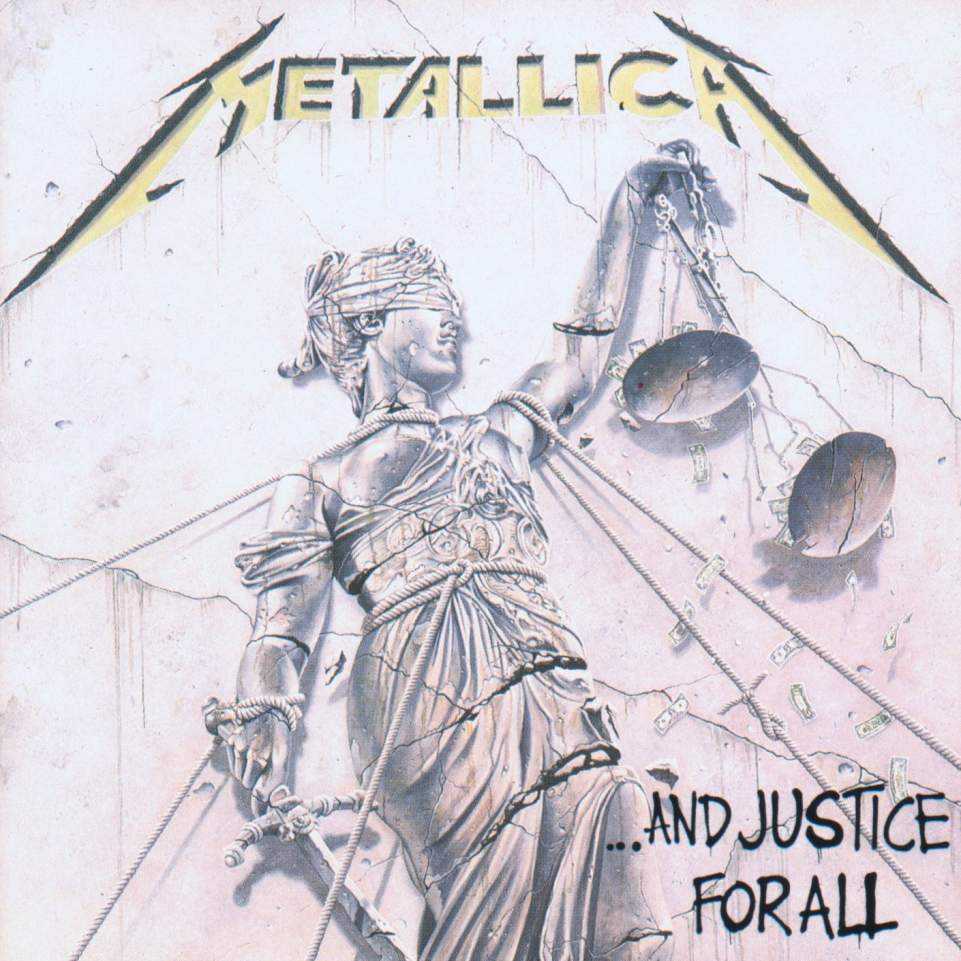
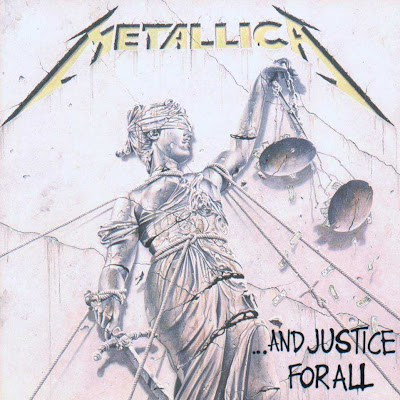
Metallica – “And Justice for All” (“Halls of justice, painted green / Money talking, Power wolves beset your door / Hear them stalking.”)

Morrissey – “I’ve Changed My Plea To Guilty” (“I’ve changed my plea to guilty / Because freedom is wasted on me.”)

The Specials – “Stupid Marriage” (“Court in session. What do you mean ‘Oy, oy, oy‘? Must have court in session. Order. My name is Judge Roughneck, And I will not tolerate any disobedience in my courtroom. Rude boy, you have been brought in Front of me and charged with smashing this woman’s window. Before I sentence you, What have you got to say in your defense?”)

Was Not Was – “Dad, I’m in Jail” (“Say hi to mom / From jail!”)
We also located a few songs about family law (although we suspect there are many more):

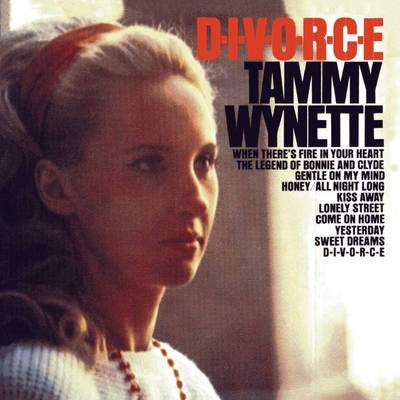
Tammy Wynette – “D-I-V-O-R-C-E” (“Our D-I-V-O-R-C-E becomes final today.”).

Steely Dan – “Haitian Divorce” (“This is your Haitian divorce.”).

Weird Al Yankovic – “Alimony” (“Lawyer’s callin‘ me on the telephony / Tryin‘ to squeeze some blood from a stony, stony.”)

There aren’t too many songs about products liability. However, we did manage to come up with a few songs that at least sound like they might be about that type of litigation:

Alice in Chains – “Angry Chair”

Beck – “Broken Drum”

Belle X1 – “The Ribs of A Broken Umbrella

Built to Spill – “Broken Chairs”

As for bands that just might have named themselves after products liability issues, what about Dangerous Toys?

Keeping in mind their beat, the folks at the Drug and Device Law blog also came up with a list of songs about drugs. Well, as they note, way too many rock songs are about drugs, but there are some at least that sound like they might be about the the prescription medication industry:

Candlebox – “Happy Pills”

Eels – “Novocaine for the Soul”

Entrance – “Valium Blues”

Fugazi – “Give Me The Cure”

Morphine – “Cure for Pain”

Neil Young – “The Needle and the Damage Done”

New York Dolls – “Pills”

Pink Floyd – “Comfortably Numb”

Ramones – “I Wanna Be Sedated”

U2 – “Miracle Drug”

The Velvet Underground – “I’m Waiting for the Man”

The Verve – “The Drugs Don’t Work”

Let’s not forget the Alanis Morissette’s album Jagged Little Pill, either, or the rock groups named Codeine and Ted Leo and the Pharmacists. And, of course, if you’re looking for band names that sounds related to the pharmaceutical industry, what about The Cure?

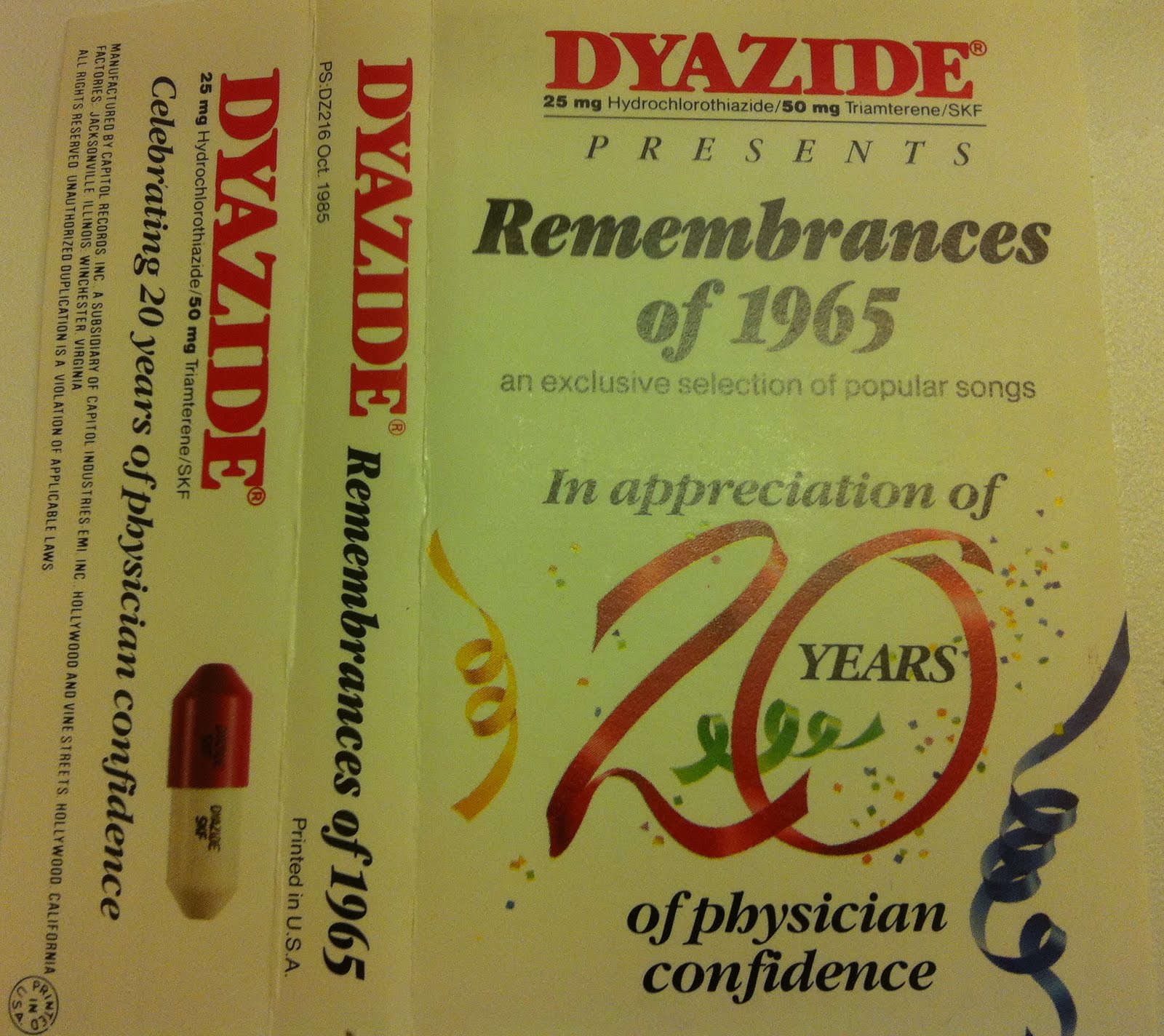
Back in the halcyon days of the 1980s, we encountered one cassette tape of popular music actually produced by a major pharmaceutical company. We had to dig through our forlorn box of old cassettes, but we did manage to find it, and here’s an image of the cassette’s cover:
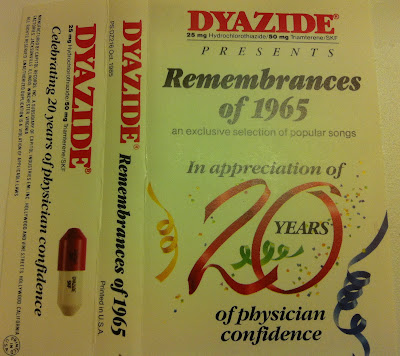
A joint production of Smith, Kline, and French (now a part of GlaxoSmithKline) and Capitol Records, the 1985 cassette celebrated the twentieth anniversary of the release of the prescription drug Dyazide. In so doing, the release included a number of songs from 1965. We’ve scoured the Internet for information on this release and found little, if anything. So, in the interests of posterity, we present you the track list of songs from 1965 included thereon:

SIDE ONE

1. Beach Boys – “California Girls”
2. Cher – “All I Really Want to Do”
3. The Seekers – “Another You”
4. Mel Carter – “Hold Me, Thrill Me, Kiss Me”
5. Gary Lewis and the Playboys – “This Diamond Ring”

SIDE TWO

1. Jackie DeShannon – “What The World Needs Now”
2. The Beach Boys – “Help Me, Rhonda”
3. The Lettermen – “Theme from ‘A Summer Place'”
4. Freddie and the Dreamers – “I’m Telling You Now”
5. Al Martino – “Spanish Eyes”
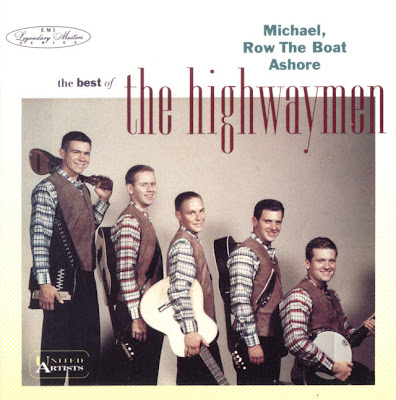
While on the subject of lawyers and music, we would be quite remiss if we did not mention The Honorable Stephen S. Trott, a justice of the U.S. Court of Appeals for the Ninth Circuit, who was a member of the folk group The Highwaymen in the late 50s early 60s.

Further, we must note that although our friends at the Drug and Device Law blog did include “I Fought The Law” (originally by the Bobby Fuller Four, later covered by The Clash) on their list, they neglected to mention the subsequent covers by The Dead Kennedys, Green Day, Unknown Hinson, and Bell X1 (only some of which are worth a listen). We’ll forgive them that.

Finally, dear readers, if you’ve noticed that a song is missing from either our list or that of the Drug and Device Law blog, please feel free to leave us a comment with the omitted song(s). We’re sure we’ve missed many, many others. Also, if you happen to be a law blogger yourself, we encourage you to write your own post with your own list of songs we missed (or even a Top 10 list of your all time favorite songs that mention the law or lawyers).

Friday Links

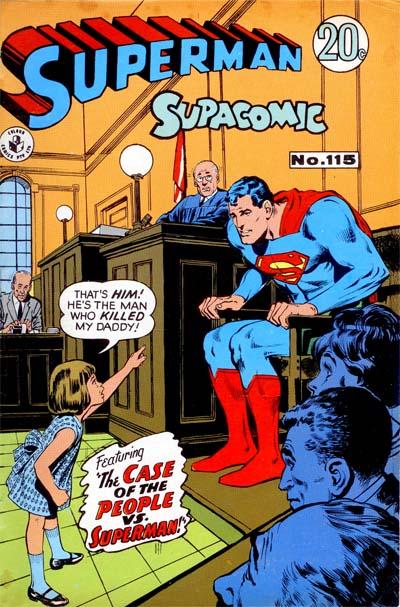
  • Superman is identified as a murderer by a child witness on the cover of Superman Supacomic #115, depicted above and published way back in 1969. There are a few problems with this scene, of course, including the fact that the child witness cannot be testifying if Superman is in the witness stand himself. Further, aren’t there all sorts of laws that seek to protect child witnesses? The inconsistencies may be explained by the fact that this series – containing reprints of American Superman titles – was actually published in Australia. But, in the end, this is a fun cover, as we see not only the judge and members of the jury, but also the court reporter dutifully transcribing the proceedings.
  • As you know, we here at Abnormal Use love Twitter, and we follow many, many legal personalities thereon. However, we must direct your attention to @SCBarrister, a brand new legal parody account which emerged last week. It’s quite funny. Think of it as the South Carolina Twitter version of the old Anonymous Lawyer blog.
  • Best legal headline of the week? It’s got to be “Zoo sea lions face legal hurdle” from last Saturday’s issue of The State. Let’s hope the sea lions aren’t pro se.
  • Earlier this week, we interviewed the two authors of the funny and clever Law and the Multiverse blog. Friend of the blog Alberto Bernabe, who runs the Professional Responsibility blog, recently commented upon one of their posts in his own piece, entitled “Did She-Hulk violate the rules against solicitation of clients?” Of course, Bernabe didn’t do a post when we mentioned She-Hulk’s legal career. Alas.
  • You’ve got to give Colin Miller of the EvidenceProf Blog some props for his Radiohead reference in his post entitled “(Not) OK Computer: Supreme Court of Georgia Finds Computer Printout Not an Original or Duplicate for Best Evidence Purposes.” We’ve been trying to work Radiohead references into our posts for the past fourteen months, but as of yet, we’ve been unsuccessful.

King of Torts Dethroned

Stanley Chesley, a class-action plaintiffs’ lawyer who became rich and famous for collecting billions of dollars for his clients in various lawsuits throughout his career, is now facing disbarment, the possibility of paying back $7.5 million in fees, and, arguably worse, a “professional death sentence.” The so-called “Master of Disaster” reportedly built his career around a simple strategy: swoop in after a disaster, round up as many clients as possible, and launch a “legal assault” against as many of the deep-pocketed bad guys as possible. How might one who follows such a business model go astray? He allegedly got greedy, with conduct his hearing officer called “shocking and reprehensible” behavior related his keeping far more than his share of a $200 million product liability settlement in Kentucky.

The case at issue was a 1998 class-action lawsuit involving the now withdrawn anti-obesity drug fen-phen, which consisted of more than 400 plaintiffs and was pending in Kentucky’s Boone County. The Wall Street Journal Law Blog reports that Chesley was not initially involved in the litigation, but at some point “muscled” his way into the case and strong-armed the attorneys into sharing fees with him in exchange for his “expertise” in handling class actions. Apparently, though, those attorneys did not notify the plaintiffs of the new arrangement.

The suit eventually resulted in a $200 million settlement with the maker of fen-phen, of which the plaintiffs’ lawyers reportedly kept tens of millions of dollars more than permitted. Of the total settlement, Chesley reportedly received a $20 million fee for his helping settle the case, including a reported additional $4 million for convincing the sitting judge to increase the attorneys’ take on the settlement to 49 percent. That judge later resigned from the bench when it was discovered he allegedly took financial benefit from the settlement in a secret deal.

Of the four plaintiffs’ attorneys involved in that case, three faced criminal charges of fraud and conspiracy. Two were sentenced to 25 and to 20 years in federal prison. As reported at Overlawyered, at the time of those guilty verdicts, it was a mystery as to why Chesley was not similarly charged. Despite that omission, Kentucky’s trial commissioner recently issued his opinion that Chesley should lose his Kentucky law license permanently and return more than $7.5 million in fees collected in the settlement.

Hot Coffee: Take Two (In Florida)

We here at Abnormal Use garnered a bit of buzz with our recent comments on Susan Saladoff’s Hot Coffee documentary and the Stella Liebeck litigation. Some of our critics have interpreted our remarks as an attempt to re-litigate that infamous McDonald’s case. Those critics scolded us and purported that “it’s over.” They advised us to simply “move on” and write on other topics. Perhaps those critics were right. Certainly, the details of a 1994 lawsuit must be irrelevant in today’s legal landscape. However, someone forgot to tell Florida’s Cynthia Gamrot.
According to the local ABC news affiliate, Ms. Gamrot recently ordered a cup of coffee at a Chick-Fil-A drive-thru in St. Petersburg, Florida. She allegedly spilled coffee in her lap and sustained second- and third-degree burns after the cup’s lid “popped off.” The coffee was served at a temperature somewhere between 170 and 200 degrees which was reportedly in accordance with Chick-Fil-A corporate policy. As a result, she sued the owner of the St. Petersburg Chick-Fil-A. (The report did not specify the jurisdiction in which the case was filed). Sound familiar?
In response to Ms. Gamrot’s lawsuit, Tampa’s ABC Action News tested the serving temperature of 33 cups of coffee from 10 national restaurant chains – a task reminiscent of law clerk Danny Jarrett’s work in the Liebeck case. The station’s study indicated that the majority of the coffee was served between 150 and 180 degrees. It should be noted, however, that the coffee served in the 150-degree temperature range came primarily from Arby’s and Wendy’s – two restaurants that do not serve breakfast and are not historically known for their coffee. Starbucks, Dunkin Donuts, Krispy Kreme, and McDonalds all tested in the 168 to 180 degree range.
Back in 1994, Plaintiff’s expert Dr. Charles Baxter opined during the Liebeck trial that the optimal temperature to serve coffee was between 155 and 160 degrees. Defense expert Dr. Turner Osler indicated that coffee served at a temperature as low as 130 degrees could result in burns similar to those sustained by Ms. Liebeck. Further, Reed Morgan, Ms. Liebeck’s counsel, theorized that any coffee served over 140 degrees was “unreasonably dangerous.” If this testimony from the Liebeck trial is true, why do top fast food chains continue to serve an allegedly “dangerous product?” Either restaurants have a diabolical agenda to harm their patrons or they have recognized that people enjoy their coffee piping hot.
The ABC affiliate’s study demonstrates that the Liebeck case did little, if anything, to alter the manner in which fast food restaurants serve coffee. Further, it reveals that the conduct of McDonald’s in the early 1990s conformed to industry standards – both then and now. Critics of the restaurant chain – and those who attempt to use the Liebeck case to advance the agenda of the Plaintiffs’ bar – simply fail to acknowledge the fact that coffee, by its very nature, is meant to be served hot. No one wants to consume a lukewarm cup of sub-140 degree coffee. Restaurants recognize this fact, as do consumers of coffee. Why can’t the trial bar? If Mr. Morgan honestly believes that any coffee served at a temperature greater than 140 degrees is “unreasonably dangerous,” then he essentially argues that coffee should be taken off of restaurant menus. Starbucks did not become a morning staple because of its iced coffee selections.
In no way are we here at Abnormal Use intending to trivialize the injuries of coffee burn victims.
No one is disputing the severity of Ms. Liebeck or Ms. Gamrot’s burns. We do, however, question the need for attributing liability for those burns to the producer or seller of the coffee. There is no evidence that either Ms. Liebeck or Ms. Gamrot expressed any concerns with their fast food-produced coffee prior to their accidents. In fact, we imagine they probably enjoyed the hot product, which is why they ordered it in the first place. They might have even complained had they been served coffee cooler than the industry standard temperature. Simply put, hot coffee does not become “unreasonably dangerous” until it is negligently spilled by the consumer.

Abnormal Interviews: James Daily and Ryan Davidson of the Law and the Multiverse Blog

Today, Abnormal Use once again continues its series, “Abnormal Interviews,” in which this site will conduct brief interviews with law professors, practitioners, and other commentators in the field. For the latest installment, we turn to lawyer bloggers James Daily and Ryan Davidson of The Law and the Multiverse blog, an incredibly fun site in which the authors apply the laws of the real world to the exploits of comic book superheros. In so doing, they’ve earned much press, including a New York Times profile and a Mother Jones interview, and they’ve even have their own Wikipedia entry. That’s not bad for a blog which only came into being in November 2010. The site’s two authors were kind enough to submit to a brief interview with Abnormal Use:

1. How did you get the idea for the blog, and what prompted you to bring it to fruition?

JAMES: My wife and I were having dinner with some friends and the subject turned to Superman’s X-ray vision and whether privacy rights on Krypton might be very different. One of our friends suggested that this kind of thing might make for a good blog, which I was a bit skeptical of at first. I thought about it for a few days and wrote up the first few articles, then I posted about the blog on the personal projects section of MetaFilter, a kind of shared blog that Ryan and I are members of. I’ve been a member of MetaFilter since 2005, and it’s a fairly close community with a strong emphasis on member contributions. So I think what really prompted me to start the blog was a desire to contribute something interesting to that community, although I had no idea it would be so well received.
After the post to MetaFilter, Ryan immediately responded with an offer of collaboration, and so he was involved almost from the very beginning. We’ve both been pleasantly surprised by the positive reception the blog has received every step of the way.
2) Your site focuses on the application of real world legal concepts to comic book superheroes. How well do comic books depict the legal process?
JAMES AND RYAN: Relatively few comic books depict the legal process beyond villains being arrested by police after the superheroes do their thing. But what depictions there are hold up pretty well, especially considering most (if not all) comics are written by non-lawyers. The stories that have courtroom scenes usually don’t have any glaring technical errors, even if they don’t show a lot of detail. On the whole, most modern comic book courtroom scenes are on par with the depiction of court scenes in TV shows and movies.
That being said, comic book stories containing plot elements that are significantly legally problematic show up with some regularity, e.g. nobody ever seems to pay taxes or get audited. Some of that is excusable given the common genre trope of not showing boring details—no one ever seems to go to the bathroom either—and warrantless searches and arrests are so commonplace in comic books that it would be kind of surprising if they *didn’t* show up.
But we do occasionally see things that simply don’t work. For example, the criminal law definition of “insanity” isn’t represented in comic books very well. The Joker may be emotionally unbalanced, even to the point of meriting involuntary commitment, but he does not appear to be insane in a way that would excuse him from criminal liability. Similarly, maintaining a secret identity without government support is reasonably difficult even over the short term, and the problems get even worse for abnormally long-lived characters like Wolverine or R’as al Ghul. But again, the few times that comic books do explicitly deal with legal situations, they do fairly well.
3) What is your favorite depiction of a legal issue in a comic book?
JAMES: In one of the Manhunter comics, Manhunter’s alter ego, Kate Spencer, who is a criminal defense attorney, is at a grand jury hearing. The comic book mentions that the proceedings are sealed and that as a representative for the defense Kate is only there as a courtesy and can’t object to anything. I was very pleasantly surprised by the mention of those technical but important details. So that stands out in my mind.
RYAN: I find that the very early Iron Man comics (i.e. the mid-1960s), Tony Stark actually ran into significant difficulties switching between the Iron Man and Stark personae. It’s one of the few times that a superhero seems to have been bothered by the masquerade beyond mere fear of discovery; Stark started to have money problems. It’s one of the reasons he took off the mask, as it were: maintaining the double life was simply too difficult given the highly public life of Tony Stark.
4) What has been the reaction of the legal field to your site?

JAMES AND RYAN: The response has been consistently positive. We’ve heard good things from attorneys, law students, and law professors, some of whom have mentioned using ideas from the blog in their courses. No one’s really called us out on getting anything completely wrong either, so that’s good. We’ve also been mentioned on several law blogs, including The Volokh Conspiracy.

5) There are, as you may know, real life citizens out there donning costumes in an effort to fight crime, just like comic book superheroes. Are these potential clients for you now, in light of your work?

JAMES AND RYAN: We’re pretty careful about trying not to give legal advice on the blog. If the exposure directs people to us in our day jobs neither of us would complain, but for legal ethics reasons the blog and related projects are strictly literary. We certainly do not intend or want any real-life superheroes to rely on anything we post, which they would be crazy to do anyway, since we tend to write about general legal principles and broad factual examples rather than focusing on the specific law applicable to particular facts the way one would for a client.

6) What has been your favorite legal issue that you have discussed on the site?
JAMES: My favorite issues have been the ones closest to my day job, which is focused on intellectual property. Posts like “Batman and Patents” and the “Superpowered Merchandising” series are my favorites. I did really enjoy writing the recent post on legal ethics, though, since I don’t think the writer realized that the character was committing an ethical breach (improper in-person solicitation), and I don’t think many readers would realize it either. I enjoyed the opportunity to inform people about the ethical standards for attorneys, especially since this is an issue that they might encounter in their own lives.
RYAN: I’ve enjoyed the more historical topics, so outlawry, the non-human intelligence series, and the posts touching on immortality have been especially fun to write.
BIOGRAPHIES: James Daily is an attorney licensed in Missouri and a graduate of the Washington University in St. Louis School of Law. He is also registered to practice before the United States Patent and Trademark Office. By day, he works for the Stanford University Hoover Institution’s Project on Commercializing Innovation and represents clients in intellectual property matters. Ryan Davidson is an attorney licensed in Indiana and a graduate of Notre Dame Law School. He practices in Fort Wayne, Indiana, mostly in insurance law. The two of them started the Law and the Multiverse blog in November of 2010. You can follow them on Twitter here.

Abnormal Interviews: Law Professor Catherine Sharkey

Today, Abnormal Use continues its series, “Abnormal Interviews,” in which this site will conduct interviews with law professors, practitioners, and other commentators in the field. For the latest installment, we turn to New York University law professor Catherine Sharkey, who has dedicated a great amount of study to federal preemption. With the U.S. Supreme Court recent preemption jurisprudence, we thought the best person to interview was Professor Sharkey, who was kind enough to give us her thoughts on those new cases. The interview, beginning with a preliminary summary of the opinions authored by Professor Sharkey, is as follows:

The last full week of February was a big week for federal preemption at the U.S. Supreme Court. On Tuesday of that week, the Court handed down Bruesewitz v. Wyeth, a 6-2 pro-preemption decision holding that the National Childhood Vaccine Injury Act preempts all design-defect claims against vaccine manufacturers brought by plaintiffs seeking compensation for injury or death caused by vaccine side effects. And the next day, on Wednesday, the Court followed with Williamson v. Mazda Motor of America, Inc., an 8-0 anti-preemption decision holding that the National Traffic and Motor Vehicle Safety Act of 1966 and Federal Motor Vehicle Safety Standard 208, which gave manufacturers a choice of installing either lap belts or lap-and-shoulder belts on rear inner seats of passenger vehicles, do not preempt state tort lawsuits premised on the manufacturer’s failure to install lap-and-shoulder belts.

1. Were the results in these cases a surprise to you?

No, I predicted both the pro-preemption result in Bruesewitz and the anti-preemption result in Williamson. This Supreme Court tends to interpret express preemption provisions, such as the one at issue in Bruesewitz, broadly, whereas the Court has narrowed the scope of implied preemption, as was at issue in Williamson. However, the Court’s 8-0 line-up in Williamson came as a complete surprise. Not only do the Court’s implied preemption cases tend to be hotly contested (such as the 6-3 decision in 2009 in Wyeth v. Levine, the case holding that FDA approval of a pharmaceutical drug did not preempt state tort lawsuits), but Chief Justice Roberts and Justices Scalia and Alito (dissenters in the Levine case) had signaled their embrace of a broad interpretation of implied preemption, at least in highly regulated areas such as pharmaceuticals (and by extension, automobiles). One might have reasonably predicted these three to have dissented in Williamson. (In hindsight, a key difference may be the presence of an express savings clause in the Motor Vehicle Safety Act, which is absent in the Food Drug and Cosmetic Act).

2. In a previous 2000 case, Geier v. American Honda Motor Co., the Court held that the very same statute and federal regulation at issue in Williamson did preempt a state tort lawsuit that would effectively remove a manufacturer option, in that case airbags as opposed to other passive restraints. Can Williamson be reconciled with Geier?

Justice Breyer wrote the majority opinions in both Geier and Williamson (although Geier divided the Court 5 to 4). There are some striking similarities between the two cases. First, the same statute and federal regulation were at issue. Second, the federal regulation provided manufacturers with options in each case: the choice to install airbags or other restraints in Geier; the choice to install a lap or lap-and-shoulder belt in Williamson. And, in each, plaintiffs brought a state tort lawsuit premised on the manufacturer’s failure to install a particular option: airbags in Geier and lap-and-shoulder belt in Williamson. Justice Breyer in fact conceded “the history of the regulation before us [in Williamson] resembles the history or airbags to some degree.” So, what was different? According to Justice Breyer, “unlike Geier, we do not believe here that choice is a significant regulatory objective.” He based this conclusion on “the agency’s contemporaneous explanation, and its consistently held interpretive views.” The majority, in other words, interrogated the reasons behind the agency action to probe whether providing manufacturers with options was a “significant regulatory objective.”

Justice Thomas, however, was not convinced. Not mincing words, he charged: “That the Court in Geier reached an opposite conclusion reveals the utterly unconstrained nature of purposes-and-objectives preemption.”

3. Going forward, how might courts discern whether a particular federal regulation embodies a “significant regulatory objective” that conflicts with a state tort lawsuit?

Following Williamson, courts will closely examine the federal regulation, including its history, the promulgating agency’s contemporaneous explanation of its objectives, and the agency’s current views of the regulation’s preemptive effect.

Here, again, Justice Thomas was highly skeptical. He dismisses the majority’s approach as resting, at its core, on some form of “‘psychoanalysis’ of the regulators.” And he notes with chagrin that courts must henceforth “sift[] through the Federal Register, examin[e] agency ruminations, and ask[] the Government what it currently thinks.”

4. What about the presumption against preemption?

Surprisingly, the presumption was never discussed in Williamson and it surfaced only in a single footnote of Justice Sotomayor’s dissent in Bruesewitz, more as an aside. The presumption hardly lives up to its reputation as a pillar of the Court’s preemption framework. To my mind, all along, the presumption has been deployed by the Court in a haphazard way—rearing its head in some cases, while remaining utterly silent in others (including the majority in Geier, as pointed out with vitriol by the dissent). While many scholars continue to see it as the linchpin of an analytic preemption framework, I have long argued that it rests on extremely weak empirical and theoretical foundations.

5. In light of all of the new opinions, what is the analytic framework for preemption decisionmaking?

The role played by the underlying regulatory agency has been underappreciated in preemption cases. Even in Bruesewitz, an express preemption case authored by Justice Scalia, the most loyal adherent to textualist statutory interpretation, the majority nonetheless looks to the regulatory framework for vaccines for additional support for its holding that the Vaccine Act preempts design defect claims. The majority points to the role of the Secretary of Health and Human Services (HHS) in prompting the development of improved vaccine design and post-approval monitoring by various federal agencies. Justice Breyer, who places even more weight on the views of HHS (as expressed through the government’s amicus brief), was convinced that the “rigorous administrative safety review” of vaccines and HHS’s thorough understanding of vaccine production and safety was sufficient to read the Vaccine Act as preempting state tort design defect claims.

Williamson brings this approach front and center, with its emphasis on the regulating agency’s views both at the time the regulation is promulgated and at the time the case is before the Court. The majority reiterated its statement in Geier that “the agency’s own views should make a difference.” But, at the same time, the Court does not simply defer to the agency’s obiter dictum. For example, “the fact that DOT [Department of Transportation] made a negative judgment about cost effectiveness . . . cannot by itself show that DOT sought to forbid common-law tort suits in which a judge or jury might reach a different conclusion.” More would be needed form the rulemaking record to substantiate the agency’s intent to preempt. The agency’s views, moreover, will be deemed worthy of consideration only to the extent that they are “consistently held interpretive views.”

In my own work, I have proposed an “agency reference model” to guide judicial preemption decisions. Williamson is a significant step in this direction. And it is particularly momentous in that seven Justices seem to have signed on to this approach. (Again, Justice Thomas notes his strong objection to what he views as “[t]he Court wad[ing] into a sea of agency musings and Government litigating positions and fish[ing] for what the agency may have been thinking 20 years ago when it drafted the relevant provision.”) But more is needed to guard against agency political flip-flop with each Administration’s change of view on implied preemption and state tort law. The next step is to articulate the level of deference to accord to agency positions on preemption and to specify the heightened judicial scrutiny of the agency’s regulatory record that supports its position.

BIOGRAPHY: Catherine Sharkey is Professor of Law at New York University School of Law. She is one of the nation’s leading authorities on federal preemption in the realm of products liability. Professor Sharkey has published more than twenty-five law review articles, essays, reviews, and book chapters in the fields of preemption, punitive damages, administrative law, mass torts, class actions, and empirical legal studies. Her scholarship has been cited by numerous federal appellate and trial courts. Professor Sharkey will join Professor Richard Epstein as co-author of one of the leading torts casebooks and is co-editor with Professor Saul Levmore of the second edition of Foundations of Tort Law. She also serves as a consultant to the Administrative Conference of the United States. Professor Sharkey earned a bachelor’s degree in economics, summa cum laude, from Yale University. A Rhodes Scholar, she received a master of science in economics for development, with distinction, from Oxford University (Magdalen College), and her J.D. from Yale Law School, where she was Executive Editor of the Yale Law Journal. She clerked for Judge Guido Calabresi of the U.S. Court of Appeals for the Second Circuit and Justice David Souter of the U.S. Supreme Court.

Friday Links

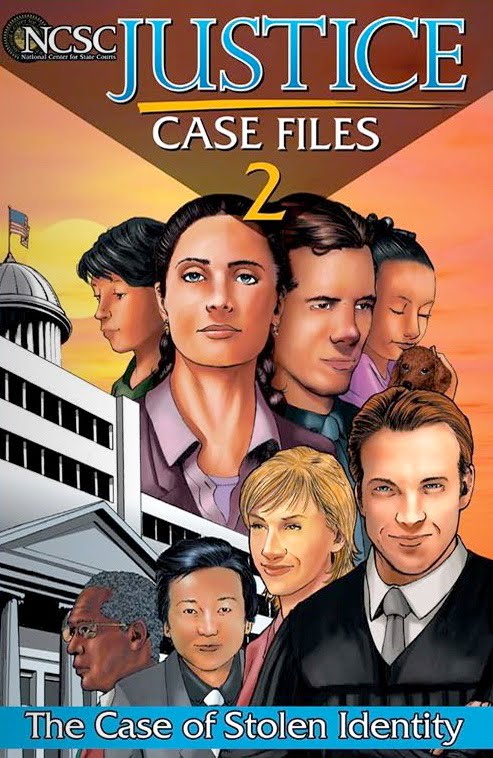
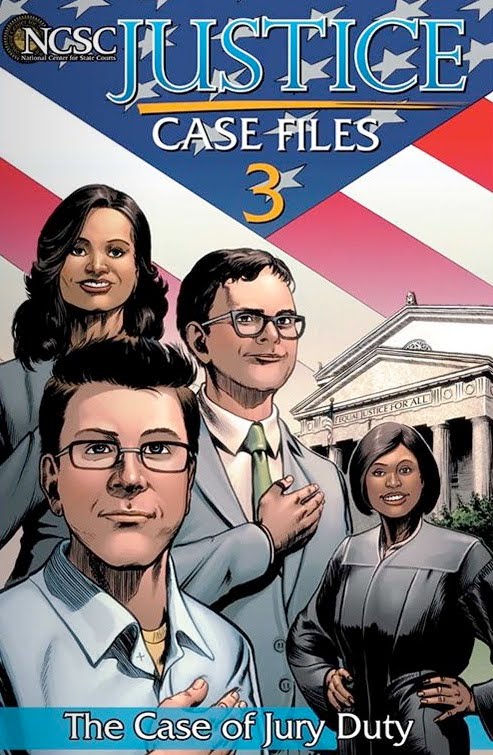
As our regular readers know all too well, we here at Abnormal Use typically adorn our weekly Friday Links posts with legal themed comic books covers. Today, of course, shall be no exception, as we feature the covers of issues #2 and #3 of the NCSC Justice Case Files. However, we must confess that we, as well as our firm of Gallivan, White, & Boyd, P.A., played a role in distributing these comic books to schoolchildren across South Carolina to better acquaint them with the legal process. That’s right, dear readers! We’re now comic book distributors!

Well, kind of.

The comics themselves are actually the brainchild of the National Center for State Courts (NCSC), which sought to advance civics education by creating the three issues, all of which address legal topics in an attempt to educate the public. Our firm, along with another South Carolina firm, purchased more than 3,000 of the comics books to donate to South Carolina teachers. Apparently, they’re a hot property, as 65 schools requested them for their students.

So, now we here are now just bloggers, we’re in the comics industry! Who knows what will be next? Perhaps DC Comics will now ask us to write a few issues of Batman?

(Side note: Don’t you think the guy holding his hand to his heart on the cover of issue #3 – depicted below – looks a lot like Dwight Schrute?)

See here for our official press release on this project.

Soda: The New Carcinogen?

“Every absurdity has a champion to defend it.” – Oliver Goldsmith. Here’s another thought: Drinking a soda is just as detrimental to your health as smoking an entire pack of cigarettes. Now, we here at Abnormal Use don’t have any proof for that last statement, but we’re sure you’ll soon see the campaign about the evils of “caramel color.” According to the Center for Science in the Public Interest, the caramel coloring in popular colas contains carcinogens.

The culprit it seems, is 4-Methylimidazole, an innocent-sounding substance, don’t you think? Do not be fooled. The Executive Director of CSPI, Michael Jacobson, has taken to the Huffington Post, where all great news stories are faithfully told, to spread the word that cola contains cancer causing agents. California has added 4-Methylimidazole to its Proposition 65 list [PDF]. 4-Meth has caused various types of cancers in lab rats. CSPI has even gone so far to warn us of this danger by concocting a Toxi-Cola graphic, showing all of the terrible things in the product.

Let us first say that we do not trust the public interest. We look after our own interest, and, as rational people all look after their individual interests, order and efficiency are maintained. Second, while we do occasionally wear tin foil hats, we have to believe that, if cola really caused cancer, we as a society would have figured it out before now. Such is the opinion of the author of the appropriately named CSPIscam website. Ben Forer of ABC News filed this report quoting one Dr. Fred Guengerich, a biochemist, who appears to be a very smart dude:

“Is it a carcinogen? The tests have shown in mice it can increase the risk of cancer. On the other hand, there is also evidence in male rats, it prevented several kinds of cancer,” said Guengerich. “Basically my advice would be just to relax . . . I did some simple math. … If you look at the study in terms of what the mice got, in terms of causing any effect, a human being would have to drink more than 1,000 sodas a day.”

We don’t know of any associate that drinks 1,000 sodas a day, but this has all the makings of a nice lawsuit. A Plaintiff sues and claims that caffeine addicted him to cola and that he drank hundreds of colas per day, ingesting tons of carcinogens and high fructose corn syrup. Hey, that’s not his fault, purports his attorney. Someone should have told him that its perilous to drink hundreds of colas per day. How else was he to know, after all?

We think the best option is a class action settlement where the settlement includes a lifetime supply of cola. Perhaps this is an advertising gambit of Pepsi to bring back the long lost product Crystal Pepsi, which we know we have all spent the past 18 years pining for. Nevertheless, be on the lookout for junk science, and take pride in your caramel-colored beverage.

When is a Product Sold? We Now Have the Answer!

Many months ago, we here at Abnormal Use discussed the critical question, “When does a bucket truck become a bucket truck?” At that time, we were discussing Campbell v. Altec Indus., Inc., 605 F.3d 839 (11th Cir. 2010) [PDF], which involved a plaintiff allegedly injured when a cylinder on a bucket truck owned by Georgia Power failed. The plaintiff sued not only the manufacturer of the truck but that of the lift cylinder, as well. The problem for the plaintiff, however, was the statute of repose, which limited the action to “ten years from the date of the first sale or use or consumption of the personal property causing or otherwise bringing about the injury.” If that seems unclear to you, well, the Eleventh Circuit wasn’t so sure about what it all meant, either. So, they certified the following question to the Georgia Supreme Court: Does the ten-year statute of repose begin to run when:

(1) a component part causing an injury is assembled or tested, (2) a finished product, which includes an injuring component part, is assembled, or, (3) a finished product, which includes an injuring component part is delivered to its initial purchaser?

Well, we finally have our answer. The Georgia Supreme Court recently issued its decision in Campbell v. Altec Indus., Inc., —S.E.2d—, 2011 WL 356110 (Ga. Feb. 7, 2011) [PDF]. The Court held that the statute of repose began to run on the action when the truck was delivered as new to its intended consumer (choice number 3 in the excerpt above, in case you are keeping track).
In coming to its decision, the Court relied heavily on statutory interpretation of OCGA section 51-1-11(b)(1), which imposes liability on a manufacturer “of any personal property sold as new property directly or through a dealer or any other person” when a person is injured because the manufacturer’s product “when sold by the manufacturer was not merchantable and reasonably suited to the use intended, and its condition when sold is the proximate cause of the injury sustained.” The Court reasoned that:

In crafting OCGA § 51-1-11(b), the General Assembly did not choose to begin the period of repose “on the date of the ‘first sale’ of a product by its manufacturer. [Rather, OCGA § 51-1-11(b)(2) ] provides that the period of repose commences on the date of the ‘first sale for use or consumption.’ The General Assembly could have chosen to begin the period of repose on the date that the product was last in the hands of the manufacturer, but it did not. The choice of “the date of the first sale for use or consumption” to trigger the running of the statute of repose is in keeping with OCGA § 51-1-11(b)(1)’s imposition of liability on a manufacturer who sells its product “directly or through a dealer or any other person” as new; regardless of any chain of middlemen, the end sale of the product as new is what brings the manufacturer within the ambit of OCGA § 51-1-11(b)(1), if the other conditions for imposing liability exist.

In so holding, the Court specifically overruled the prior decision of Johnson v. Ford Motor Co., 281 Ga. App. 166, 637 S.E.2d 202 (2006), which the Court called “wrongly decided.” The Court of Appeals had held in that case that the statute of repose began to run when a defective switch, the cause of the plaintiff’s injuries in that case, was installed in the Ford automobile (choice number 2 from the certified question above). Instead, the Campbell Court adopted the reasoning of Pafford v. Biomet, 264 Ga. 540, 448 S.E.2d 347 (1994), which drew the distinction between the sale of a product to “the individual who initially purchased a manufactured product for mere static retention in his inventory” and the individual who purchases the product and intends to actually use it. It is only when the purchase is made to the user that the statute of repose begins to run, because, in the words of the Pafford Court “it is that individual who is the intended beneficiary of the liability imposed” through the statute.

This ruling means that a manufacturer of a defective component part will not be able to avoid liability to an injured plaintiff when the end-product simply sits on the retailer’s shelf for a long time before being sold to the user, effectively shortening the statute of repose. The decision does not undermine a plaintiff’s burden to prove that the product is actually defective, or that the allegedly defective product proximately caused his or her injuries; it simply closes the procedural loophole that Johnson created.