Friday Links

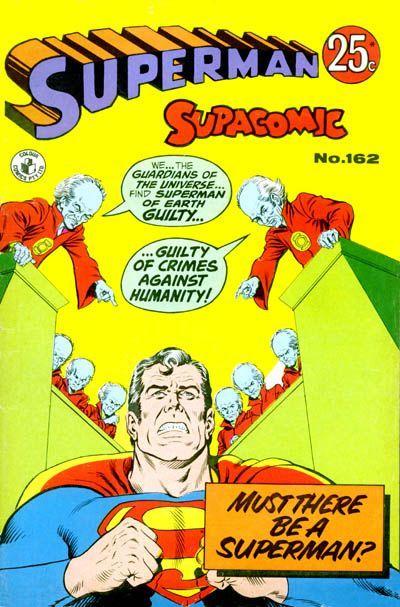
  • Sometimes, Superman can’t catch a break. Above, in the cover to Superman Supacomic #162, he is found guilty of “crimes against humanity” by the Guardians of the Universe. We think there may be a few appellate issues here, though. First, why are a group of aliens judging Superman’s treatment of humans? For that matter, Superman is an alien himself, but the Guardians of the Universe, whether judges, members of a jury, or both, don’t appear to be his peers. But the most peculiar component of this judicial procedure is that one of the judges feels comfortable completing the sentence of the other. Yikes.
  • An aside: This past week, one of the contributors of Abnormal Use got in some hot water for mentioning in front of a friend’s toddlers that Superman was, in fact, an “illegal alien.” This revelation, though certainly true, is apparently not for young ears. Don’t try and guess which one of us did committed that social faux pas. Please.
  • Alan H. Crede over at the Boston Personal Injury Lawyer Blog speculates that “Someday A Legal Blog Will Win A Pulitzer.” Yeah, maybe, but we here at Abnormal Use are seeking something a bit more respectable than that: an EGOT.
  • Friend of the blog Jeff Richardson, author of the great iPhone J.D. blog, summarizes this week’s iPhone and iPad related news here, including his thoughts on the recent revelation that one’s iPhone may be tracking more personal location information than previously thought. He does not seemed too alarmed about the news, nor do we.
  • Don’t forget: You can follow Abnormal Use on Twitter at @gwblawfirm.

Four Loko: PBJ or Goober Grape?

Manufacturers love to combine two independently successful products and pass the combination off to consumers as a new and original idea. After the surge in popularity of energy drinks and the advent of Red Bull-vodka cocktails, it came as no surprise that the alcoholic energy drink was born. Unfortunately, just like Smucker’s Goober Grape, the results were less than stellar.

Last November, the Food and Drug Administration (“FDA”) warned four manufacturers of alcoholic energy drinks that the caffeine added to their product was an “unsafe food additive.” Citing concerns that caffeine may mask the effects of alcohol, the FDA instructed manufacturers to cease adding caffeine to their product or face the possibility of “further action” under federal law. The FDA made no mention of the after-market mixture of caffeine and alcohol. The FDA’s warning was only the beginning of the bad news for alcoholic energy drink manufacturers.

Recently, a New Jersey man sued Phusion Projects, the manufacturer of the popular Four Loko beverage, in state court, claiming that the product caused heart damage. The plaintiff, 22-year-old Michael Mustica, alleges that he developed a heart arrhythmia after drinking two-and-a-half cans of Four Loko over the course of one evening. Each 23.5 ounce can of Four Loko contains 12 percent alcohol, the equivalent of four beers, and 135 milligrams of caffeine, the equivalent of two cups of coffee. Ironically, the plaintiff claims to have fallen asleep prior to waking with a racing heart and difficulty breathing. Along with his claim of negligence, he also alleges that Phusion Projects failed to warn him of the potential danger of combining caffeine and alcohol. The report was silent as to whether these events took place before or after the November FDA warning.

We may want to withhold judgment until more facts surface. First, the plaintiff claims that his heart condition is the result of one night of Four Loko consumption. However, further investigation could reveal that the plaintiff – like many other 20-somethings – has a significant history of caffeine and/or alcohol consumption. A history of this nature can cause heart arrhythmia even without the consumption of Four Loko. Second, while the FDA’s warning about alcoholic energy drinks did not come until November 2010, concerns over energy drink consumption have been expressed since as early as 2008. Four Loko may have lacked a warning, but certainly, the plaintiff was likely aware of the potential health concerns from drinking 70.5 ounces of an energy drink in the span of one evening.

Furthermore, while we here at Abnormal Use have no medical evidence to refute the FDA study, it would seem illogical to hold Phusion Projects liable under these circumstances. At its essence, Four Loko is nothing more than a manufactured version of a cocktail served in every bar in America. If the combination of caffeine and alcohol is as dangerous as the FDA believes, then why hasn’t it – or some other government agency or official – issued a similar report concerning the safety of after-market mixing? We can only surmise that the FDA, just like the rest of us, likes its peanut butter and jelly sandwiches, but hates its Goober Grape.

Which Came First? The Salmonella or the Punitive Damages?

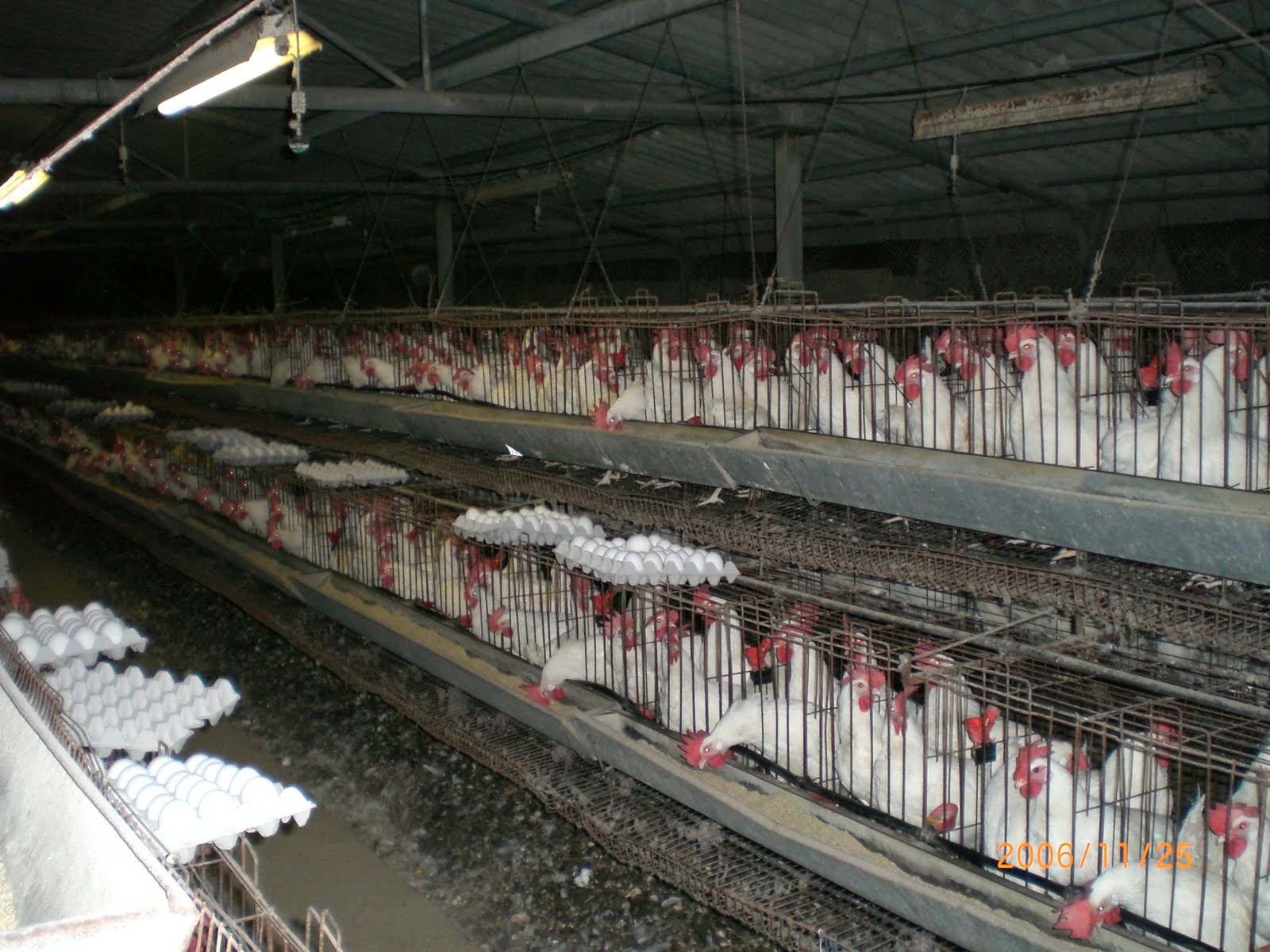
Mmmmmm, salmonella. It will be a while before I enjoy an omelet again. You can read Holt v. Quality Egg, LLC, 2011 WL 1113780 (N.D. Iowa March 25, 2011) and see why. Due to a 2010 outbreak of salmonella allegedly stemming from the defendant’s products, the plaintiffs sought punitive damages, and Quality Egg moved to dismiss those claims. Quality Egg’s motions were denied. In short, the plaintiffs were able to use offensively information from an FDA form that found some “problems” at the egg facilities in (John) Galt, Iowa, and the facts set forth in this opinion surely reflect the unabashed capitalism set forth in the made for Tea Party movie, Atlas Shrugged. The FDA found the following physical manifestations of grossness:

Chicken manure located in the manure pits below the egg laying operations was observed to be approximately 4 feet high to 8 feet high

Un-baited, unsealed holes appearing to be rodent burrows located along the second floor baseboards

Dark liquid which appeared to be manure was observed seeping through the concrete foundation to the outside of the laying houses

The house entrance door to access both House 11 and 12 was blocked with excessive amounts of manure in the manure pits

Live and dead flies too numerous to count were observed at the following locations inside the egg laying houses

It’s not a stretch to say that the plaintiffs pleaded that Quality Egg ran its business in a manner where salmonella contamination was likely to occur. Frequently, I like to wax economical, and I have to agree with the defendant’s course of business here. Given the facts, I think any rational actor choosing between cleaning up 8 feet of chicken manure and the chance of having to pay punitive damages would pay the punitive damages. Other trial strategies of the defendant include using real evidence rather than demonstratives. The smell of the manure will truncate jury deliberations.

I suppose that the lesson learned from this case is that grossness will support a claim for punitive damages. Or that business practices should be reviewed in light of the potential for litigation. Maybe the Quality Egg officers looked at those large piles of dung and thought that nothing would happen, or that the piles would take care of themselves. That was not the case. This is probably a case where some good science and statistics could have informed the egg laying practices: Small piles of manure – small chance of passing salmonella to eggs. Big piles of manure – big chance of passing salmonella. We posted earlier that the industry standard should be allowed a little more weight as a method of explaining business practices to a jury, but I can’t think that the industry standard would be of much help here. The small problems of today can compound and become mountains of manure that are hard to handle in the future.

The cost of preventing pre-term births: questions of ethics, public policy, and potential liability

Here’s the good news: a new drug called Makena manufactured by a company called KV Pharmaceutical was recently approved by the FDA for the treatment and prevention of pre-term births. But the approval has not come without controversy, as reported by media outlets all over the country. [For additional coverage, see here and here]. The problem? The drug, which must be administered by a shot once a week for about 20 weeks, was running about $20/dose prior to the approval. After the FDA gave the drug a nod, however, the price shot up to $1,500/dose. We’ll do the calculation for you: that’s $30,000 over the course of one pregnancy. [Note: the FDA has no control over pricing.] Now, the company has since reduced the price of each dose to $690, as reported by NBC, which would reduce the total price tag to $13,800.00. Nevertheless, the March of Dimes decided to end its relationship with the company.

This is not a new issue for drug companies, or for the people who need the drugs they manufacture. As KV Pharmaceutical pointed out to The Washington Post, the company is spending approximately $200 million developing the drug and having it approved by the FDA.

This is not atypical for the pharmaceutical industry; research and development are very expensive. In order for the company to stay in business and keep finding and manufacturing drugs that are of use to the public, the company should be entitled to recoup those costs and make a profit. But what duty do these companies have to the human race in general? This question can be posed not only to KV, but to the manufacturers of drugs used to treat cancer and other life-threatening conditions. What responsibility do these companies have to all people, and not just the people who have insurance that is willing to pay for these drugs, or others who can open their wallets and foot the bill themselves? It’s a chicken-and-egg problem that doesn’t seem to have a clear answer. For now, there are companies like Ther-Rx, a division of KV, which has developed a program for women who cannot afford the cost of Makena. The company also indicated it might be willing to develop a cheaper generic version.

Even more interesting from our point of view is the potential legal liability companies risk. The Washington Post indicated that “outside experts said the FTC could sue KV if it concludes the company is illegally impairing competition.” A Washington Post article on the subject interviewed an antitrust lawyer on the subject:

“It threatens to extract significant competitive harm on extremely vulnerable pregnant women, and it threatens to significantly inflate health-care costs at a time when controlling health-care costs is a critical national priority,” said David Balto, a Washington antitrust lawyer who worked at the FTC.

This is an issue that will continue to force some tough choices. And, cynical though it may seem, we are certain that litigation about this very issue is inevitable, if not with this drug than with the next one down the line.

Good News for Toyota (at last)

For many, the year 2009 will be remembered as the launching point for several successful careers. President Obama was inaugurated. Chesley Sullenberger became America’s hero. Taylor Swift released 2009’s top selling album leading to her 2010 Grammy. For the Toyota Motor Corporation, however, the year was not so kind.

For Toyota, 2009 marked the beginning of the largest vehicle recall in the company’s history. Initially, Toyota was forced to recall some 3.8 million vehicles upon the discovery that removable floor mats could cause accelerator pedals to stick in the depressed position. Toyota later broadened the recall after determining that the accelerator pedals could stick even without the aid of the mats. In total, over 6 million Toyota vehicles were recalled. As of February 2010, 2,262 incidents of unintended acceleration had been reported. That figure included 815 crashes, 341 injuries, and 19 deaths. Not surprisingly, Toyota became a popular defendant in a plethora of subsequent lawsuits. Reports estimated that these lawsuits could cost Toyota over $3 billion. Certainly, 2009 was a year Toyota would just as soon forget.

Recently, Toyota’s misfortunes took an unexpected turn when the first of these recall-related lawsuits went to trial. In Sitafalwalla v. Toyota Motor Sales, U.SA., Inc., No. 08-CV-3001 (E.D.N.Y. 2011), the plaintiff, Dr. Amir Sitafalwalla, sued Toyota in a New York federal court, claiming that a defect, in either the electronic throttle system or the floor mats of his 2005 Scion, caused his car to suddenly accelerate into a tree. After the plaintiff’s expert testified that the accident was caused by an unsecured driver floor mat, the defense moved to exclude any evidence related to the electronic system. Judge E. Thomas Boyle, the U.S. magistrate presiding, granted Toyota’s motion. With evidence of the electronic system excluded, counsel for Toyota argued that the accident was caused by the driver – not the floor mat. After deliberating for less than one hour, the jury agreed with Toyota.

Jury forewoman, Regina Desio, indicated that after weighing all of the evidence, the jury “came to the conclusion that there was not a defect with the automobile.” Toyota is touting the jury’s conclusion as precedent for the hundreds of other lawsuits yet to be decided. Toyota spokeswoman, Celeste Migliore said:

[The case] clearly demonstrates a plaintiff’s inability to identify, let alone prove the existence of, an alleged electronic defect in Toyota vehicles that could cause unintended acceleration.

While we here at Abnormal Use share Toyota’s enthusiasm with the jury’s decision, it may be premature to accurately forecast the outcome of the outstanding lawsuits. First, jury verdicts lack precedential value. Unfortunately, we have all experienced the enigma of the unpredictable jury. Second, we do not know how much the plaintiff’s own conduct may have influenced the jury’s decision. Certainly, a jury may treat a plaintiff driving at an excessive rate of speed on a neighborhood street differently than a plaintiff gently rolling away from a stop sign prior to the “unintended acceleration.” The plaintiff alleges that his car accelerated as he shifted from drive to park with his foot on the brake. We do not know how credible the jury found these allegations, only that it found Toyota was not liable. Finally, no evidence was actually presented to the jury regarding an alleged electronic defect. Because Judge Boyle disallowed the plaintiff’s evidence on the electronic system, at best, Toyota may cite the jury verdict as evidence that the floor mats were not defective.

Whether this decision is a foreshadowing of things to come or an outlier in a long series of jury verdicts, only time will tell. For the moment, however, we should let Toyota enjoy the good news. Its been awhile.

Friday Links

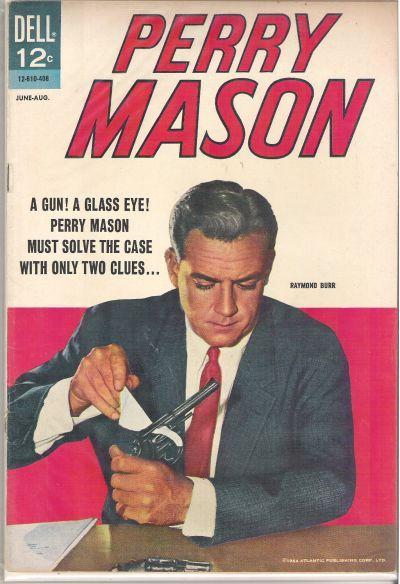
Depicted above is the cover of the Perry Mason Mystery Magazine #1, published way, way back in 1964. Perry Mason is, of course, the archetypal lawyer, but we’re not quite certain what he is doing with the firearm in his possession. The text on the cover tells us that the gun is one of only two clues Perry has to solve a case, but it seems like what he is doing is evidence tampering. Spoliation, anyone? And what did he do with the glass eye?

Steve Bradford at the Business Law Prof Blog has an interesting post on the ethical issues surrounding attorneys seeking colleagues’ advice on Internet listservs and email lists. Apparently, the Oregon State Bar recently addressed the issue. The only point the Oregon State Bar apparently neglected to address is why anyone is still using listservs in 2011.

We send our congratulations to Robert Wilcox, who was selected this week as the new dean of the University of South Carolina School of Law. Wilcox had previously served as the associate dean for academic affairs at the school.

Friend of the blog Jeff Richardson offers these thoughts about the 2011 ABA Techshow at his site, iPhone J.D. As huge followers of the latest technological trends, we sure wish we could have been there. Unfortunately, we could not make it this year. Alas.

Findlaw’s Decided blog has the latest on the ultimate fate of the appeal of the Winklevoss twins in their continuing legal dispute with Facebook. (Yes, yes, we saw The Social Network and dug it and its many deposition scenes, despite the inaccuracy of them.). Oh, and does any duo sound more like a pair of comic book villains that the Winklevoss twins?

Of Lawn Mowers and Industry Standards in Minnesota

Today is not a day of lighter fare, but it is a day to examine the notion of industry standards determining safety and other matters. The opening sentence in Sobolik v. Briggs & Stratton Power Products Group, LLC, No. 09-1785, 2011 WL 1258503 (D. Minn. March 30, 2011) gives the main operative fact: a lawn tractor user was killed when the lawn tractor rolled over near a ditch. The complaint stated claims on design defect and failure to warn, and that the lawn tractor should have had some device protecting against rollover.

Before we get started, feel free to search for “lawn mower rollover protective device” and see the number of law firms that specialize in lawn mower accidents. You’ll notice that the plaintiff’s attorney in this case has a website advocating the use of roll over protective devices and YouTube videos showing how evil all the manufacturers of lawn tractors are for not using these devices.

These type of sites feed the theory that big corporations are out to make dangerous products as cheaply as possible to sell them and take advantage of an uneducated public. Necessarily, all the big corporations conspire to make sure that some company that doesn’t care about profit can’t make its products any safer than the rest. In the lawn tractor industry, it is not the norm to require some roll over protective device. Surely there are enough players in the lawn tractor market that prevent this industry standard from arising out of some massive conspiracy to sell lawn tractors as cheaply as possible to the detriment of consumer safety. There must be some sound business principle for not mandating a roll over protective device. In looking to the industry standard, I am not advocating that the standard be given some preclusive effect. But I think that the industry standard is more than merely some evidence that any particular design is not defective. While juries usually ferret out the truth, I am a little skittish about a jury being able to say that an entire industry is wrong and all of their respective designs are defective and could be made safer. That reminds me slightly of Homer Simpson’s car design that was to be the epitome of everyman’s desire.

Furthermore, in an effort to generate some comment, let me state that the use of such devices would not necessarily make anything safer. Please refer to the Peltzman effect to see what I mean. I don’t mean to imply that I am up to date on seat belt design data, and that you should not wear seat belts, but, for a while, there were some questions regarding whether seat belts lower risk or merely redistribute it in response to the perceived safety benefit of the seat belts. If you really wanted to make people drive more safely, you would make cars less safe and accidents more expensive. Wouldn’t you drive more safely if a manufacturer installed an axe blade in the steering wheel, and that was part of the safety features of the car? Obviously you couldn’t do this, because safety on the roads depends in part on the choices of all of the other people on the road that you interact with. I’m not willing to increase my risk of serious accident because there are others on the road who may not value my life or theirs as much as I do. But I am unsure if line of reasoning holds true with products that are mostly used in isolation, i.e., a lawn tractor.

I’m not sure you would or could make the argument that the lack of a roll over protective device on a lawn mower increases safety. Certainly when I’ve used a mower near an embankment, I am conscious of the roll over risk, and I change my behaviour in response to that risk. I think it’s certainly arguable that, at least in theory, that if you mandate installation of a roll over protective device you may merely redistribute risk into some other form of accident rather than reducing it. While alternate designs are considered by business, unfortunately, in cases such as the above, that involve serious injury or death, arguing that a roll over protective device doesn’t necessarily increase safety probably doesn’t play well in front of a jury. Which is why allowing a company to rely on industry standards is important. A jury may not be able to hear that the installation of a safety device is a bad idea, but it may be more receptive to the argument that this particular company designed their product in accordance with industry standards. As shown by this District of Minnesota opinion, conforming with the industry standard, is merely evidence that the design was not defective, and perhaps in a jury case that is the best that can be done.

The Peanut Butter Products Liability Litigation Blues

As a defense lawyer, we are often place in the strange position of having to prove a negative. Sure, it’s supposed to be the plaintiffs’ burden to prove his or her case, and in theory, at least, everyone is innocent, er, not liable unless proven otherwise.

But we all know it doesn’t happen that way sometimes.

Take the recent case of the contaminated and recalled peanut butter. You remember all that, right? In 2007, ConAgra Foods peanut butter, marketed under the national brand Peter Pan and Wal-Mart store brand Great Value, were linked to several hundred cases of salmonella poisoning, and a massive recall was issued for the spreads. [Read more about that recall here.]

What followed this recall, dear readers? You guessed it! Massive amounts of litigation! So much, in fact, that it was all consolidated by the MDL Panel, at least for pretrial proceedings.

Since 2007, the slow wheels of justice have been turning. On March 23, the Northern District of Georgia ruled on ConAgra’s motion for summary judgment in In re ConAgra Peanut Butter Products Liability Litigation, 2011 WL 1060990 (N.D. Ga. March 23, 2011).

Not to get too graphic, but there are only a few ways to prove if a person has in fact contracted salmonella poisoning, or if they just have a nasty case of the stomach bug. You guessed it: they test one’s blood and other bodily fluids. The Court officially noted: “[T]hese samples are important in determining causation.” So, a number of plaintiffs stepped up to the proverbial plate and supplied samples. When some samples came up negative for salmonella poisoning, ConAgra moved for summary judgment based on lack of causation. Slam dunk, right?

Apparently not.

The Court denied the motion for summary judgment without prejudice because “without the plaintiffs’ individual medical records, it is unclear when the sample was taken and whether there is a scientific or medical explanation–other than another illness–for a negative test. Therefore, ConAgra is not entitled to summary judgment before individual discovery on plaintiffs’ medical records is complete.”

We’re not sure exactly what the parties have been doing for the four years since this whole thing started, but apparently, the plaintiffs have not been trying to gather medical records or retain experts to satisfy their burden. Nevertheless, the Court granted them additional time to hold ConAgra hostage – otherwise known as “satisfy their burden” – in these cases.

Potential Class Action Suit Involving Keyless Locks Allegedly Easily Breached with Magnet

Eleven lawsuits against lock industry leader Kaba Corporation, a Swiss company with operations in North Carolina, have been consolidated into one potential class-action lawsuit in federal court in Cleveland, Ohio. Cleveland.com reports that the allegations involve the company’s push-button door locks, which the plaintiffs allege can be easily breached with the use of a magnet that fits right in the palm of a would-be intruder’s hand.

The plaintiffs allege that the locks, which can be purchased for less than $200 or more than $1,000 each, depending on the particular model, are defective in design. They also include causes of action for deceptive trade practices, common-law fraud, and negligence. The plaintiffs are demanding that the company replace the locks, pay compensatory damages, and even turn over all of its profits made from the locks. This demand is made in spite of the fact that Kaba has reportedly already developed an upgrade to solve the problem, which it now utilizes and reports could be effectively applied to existing installations. In any event, the plaintiffs are represented by three heavy hitters in the legal community, including Louisiana based attorneys Richard J. Arsenault and Daniel E. Becnel Jr., and Los Angeles-based Mark Geragos (the “celebrity lawyer” who has represented Winona Ryder, Scott Peterson, and musician Chris Brown, among others).

The Kaba locks at issue are widely used within hospitals, airports, casinos, banks, retail stores, jails, and even within the Department of Defense. But interestingly, the lead plaintiffs are not government officials or business owners, but are Orthodox Jews who use the push-button locks on their homes so they can secure their homes without use of a key. During observance of the traditional Sabbath from sundown Friday to nighttime Saturday, adherents do not leave their homes with anything in their pockets. This has made the keyless locks a popular solution.

To date, the plaintiffs have not identified any criminal acts such as robberies that have occurred as a result of any breach of a lock. There still has been some harsh criticism against Kaba, though, by those who claim that the company has essentially taken the position that all locks are capable of being breached; they also point out that the company has not proactively offered to replace or fix the previously sold locks. Another writer at Forbes notes [link includes video of magnetic breach] that Kaba has taken the issue seriously and moved to fix it in its current models, but question why it has not published a warning in the media.

While it sounds like a good idea to alert consumers of the potential breach, though, this similarly would alert the public-at-large that the locks are capable of an “easy” breach. It certainly is a difficult situation to navigate for the company, which likely will be faced with significant costs no matter which path it chooses.

Manufacturer of Text Message System in Truck Has No Duty to Third Party

While litigation drives change and can be an important medium of social commentary, many times it is no more than a less than well thought out attempt to get at a deep pocket. In Durkee v. C.H. Robinson Worldwide, Inc., No. 1:09cv449, 2011 WL 309693 (W.D.N.C. Jan. 28, 2011), there is such an attempt. While the facts are unfortunate, the limits of liability are not. A car with four passengers is struck by a tractor trailer, and the passengers are seriously injured. In the tractor trailer is a text message system that allows a driver to send and receive text messages while the vehicle is in operation. The passengers brought a products liability action against the manufacturer of the text messaging system, alleging that the design and manufacture was defective because an incoming text message could distract a driver.

The manufacturer won on a no duty argument. Note that there was no factual allegation that the driver received a text before the accident, or was in any other way distracted by that system, just that it’s possible that a driver might possibly be distracted. The court correctly found that the plaintiffs were not users of the product, and the magistrate judge noted that if anticipating misuse that could cause foreseeable harm to others was the test, then “no vehicle would be capable of traveling above the speed limit, car ignitions would be equipped with ignition interlock devices, and guns would not be sold to persons with poor judgment.”

Not only that, but anything that could distract, including cell phones, would be subject to a products liability claim. The focus is not on the dangerousness of the product, or the conduct of a distributor, but on the carelessness of the user, and there is already a tort for that. To the extent that this lawsuit is a cry to ban texting while driving or to further restrict drivers, then that’s fine. But the law can’t support finding liability against manufacturers from third parties injured by a user’s careless use of a product. If a brick mason carelessly tosses a brick that strikes a passerby, I don’t think anyone could argue that a viable products action lies with the injured party against the brick manufacturer. Would anyone want a brick that would disintegrate harmlessly if tossed through the air? You can think of endless examples. (Why would anyone design a truck that could jackknife?)

Serious injuries are serious. Injuries are unfortunate, and money is the best substitute that we have come up with for compensating injury. But that money can’t come from anyone, and manufacturers can’t be held responsible by third parties for the carelessness of users, when the product is being used as it should be used.